Part 1 of 6
Before the first day, and what the centre has to know
British Columbia's Child Care Licensing Regulation sets out exactly what a centre must know about a child before care begins. This page walks section 57 and section 58 line by line, explains what a care plan is, and corrects the widespread belief that a child must be immunized to attend daycare in BC.
By Tracy, Owner and Principal
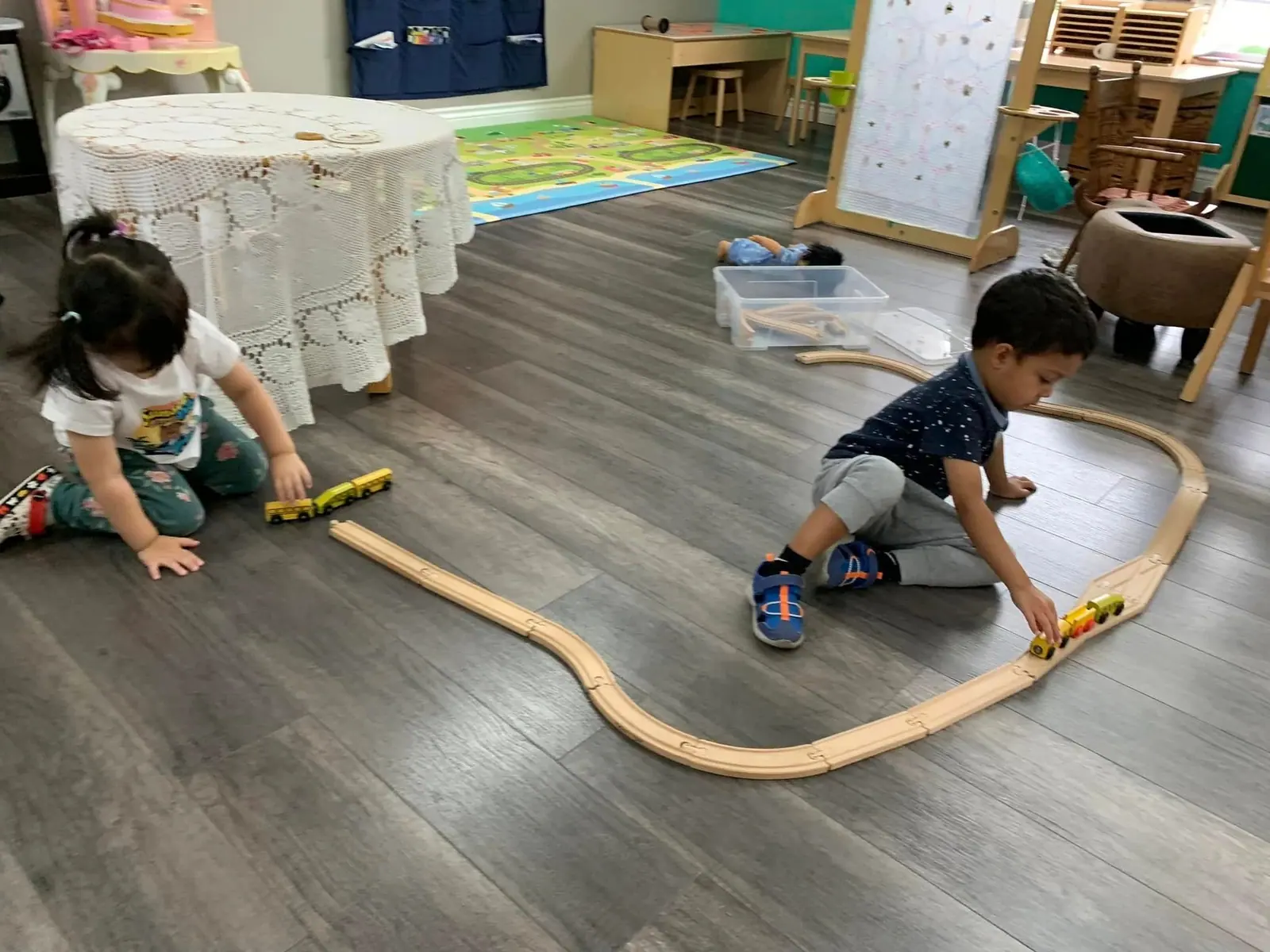
The enrolment paperwork is the least discussed part of starting daycare and the only part with a regulation behind it. A centre that asks for a medical insurance plan number is not being nosy. It is meeting section 57 of the Child Care Licensing Regulation, which lists precisely what a licensee must hold for every child in its care.
Reading that list once, as a parent, changes how the enrolment conversation feels. Every question has a reason, and the reasons are public.
What section 57 requires
The licensee must keep a current record for each child showing:
- the child's name, sex and date of birth
- the medical insurance plan number
- the child's immunization status
- the date of enrolment at the facility
- a daily attendance record
- the name and telephone number of a parent
- the name and telephone number of a medical practitioner
- the name and telephone number of an emergency contact
- any illness, allergy or medical disability the child or parent has disclosed
- any medication administered to the child
The record must be kept for at least two years from the date the child is discharged from the facility. That retention period is not administrative habit. It exists so a licensing officer investigating a complaint months after the fact can still examine what the centre recorded when it mattered.
Some of these look redundant until you consider the moment they are for. The medical insurance plan number and the practitioner's name sit together in the record because a centre dealing with an injury needs both immediately, and searching for them while a child needs attention is exactly the wrong time. The daily attendance record matters for the same reason a school register does: in an evacuation, somebody has to know who is in the building.
Immunization status is recorded, not required
This is the single most misunderstood item on the list, and it is worth separating carefully.
Section 57 requires the centre to record the child's immunization status. It does not require the child to be immunized. British Columbia has no law making immunization a condition of attending a licensed child care centre.
The confusion comes from a genuinely existing rule that covers a different setting. The Vaccination Status Reporting Regulation, B.C. Reg. 146/2019, came into force on 1 July 2019 and requires immunization status to be reported for students from kindergarten to grade 12, in public and independent schools, into the Provincial Immunization Registry. Under it, a child whose record is not provided is noted as unimmunized, and during an outbreak of a vaccine-preventable disease at their school may be asked to stay home until it is safe to return.
That regulation covers schools. It does not reach child care. A family who has heard about the school rule and assumed it applies to daycare has heard something true about the wrong setting.
Two practical points follow. First, bring the immunization record to the enrolment conversation, because a status recorded from a source document is accurate and one recalled from memory is not. Second, individual centres set their own admission policies within the law, so if a centre's own policy matters to your family, ask that centre directly. The provincial position is the floor, not the whole answer.
Care plans, for children needing extra support
Section 58 sits alongside section 57 and applies only to a child who requires extra support. Where it applies, the licensee must keep a current care plan showing the diagnoses relevant to the child's requirement for extra support, the recommendations of the health professionals involved, the resources available to the centre, any adaptation the facility is making, and any modification to the program.
Two features of section 58 are worth knowing as a parent. The plan is written in consultation with the family rather than handed to them finished. And it is reviewed annually, so a plan written for a two year old does not silently follow a four year old who has moved well past it.
A child with no extra support needs does not have a care plan, and the absence of one is not a gap in the file.
Safe release, and who may collect
Section 56 requires a licensee to keep written policies and procedures for the safe release of children, and separately, written policies and procedures to guide employees in the care and supervision of children.
In practice this means the centre holds a list of the people authorized to collect each child, and will not release a child to anyone else. The friction this creates is entirely deliberate. When a grandparent is collecting on a Thursday because of a work meeting, tell the centre before the Thursday rather than at the door, and expect identification to be checked if the educator on shift has not met them.
What the centre asks that the regulation does not
Beyond the legal minimum, La Vie Est Belle asks families to share the child's daily routine, sleep and eating habits, allergies or medical needs, toileting or diapering needs, interests, comfort items, preferred language, and any developmental or emotional support they may require.
The clinical items are obvious. The interests are the ones parents tend to skip, and they are more useful than they look. An educator who knows a child is currently obsessed with excavators has something specific to offer at the door on a hard morning. An educator who knows nothing about the child has only generic comfort to offer, which works less well.
Preferred language belongs in the same category. The centre runs French, Mandarin and English as separate language programs rather than mixing all three in one group, so knowing what a child hears at home shapes where they are placed and how an educator speaks to them in the first week.
Allergies, before anything else
Allergies and dietary restrictions must be reported before the child starts. This is the one disclosure with no acceptable delay.
The information is documented and shared with the educators responsible for the child, and individualized care and emergency plans are followed where they are required. The centre is nut free, which shapes what every family packs in a lunch.
Because families provide all meals and snacks at this centre, the nut-free policy is a rule every family follows on behalf of every other family's child. It is the clearest example on this page of a policy that only works if everyone treats it as theirs.
Who can see the file, and for how long
Two questions families ask once they realise how much the centre holds.
The records under section 57 must be kept for at least two years from the date the child is discharged from the facility. A family who leaves in June 2026 should expect their child's file to exist into 2028. The reason is oversight rather than administration: a licensing officer investigating a complaint some months after the event needs to examine what the centre recorded at the time, and a file destroyed at the moment a child left would defeat that entirely.
On access, the file is a licensing record, so a licensing officer from Fraser Health may examine it as part of a routine inspection or an investigation. Within the centre, the information is shared with the educators who need it to care for the child safely, which is why an allergy is known to the people supervising lunch rather than held only in an office.
If you want to know what your own child's file contains, ask. The information in it came from your family in the first place, and reviewing it after a year is a reasonable way to catch the details that have quietly gone out of date.
The details that go stale
The section 57 record is required to be current, not merely complete, and three items drift without anyone noticing.
Phone numbers are the most consequential. Section 55 requires the centre to notify a parent or the emergency contact immediately when a child becomes ill or is injured, and that duty runs through the numbers in the file. A mobile number changed in March and not reported is a gap that only shows itself on the day it matters.
Emergency contacts drift too. The friend named at enrolment may have moved across the country since, and an emergency contact who cannot reach the centre within a reasonable time is not performing the function.
Medical information changes as children grow. A newly diagnosed condition, a medication started, an allergy identified after a reaction at home: each one belongs in the file rather than mentioned once at the door. Under the BCCDC's guidance a symptom consistent with a previously diagnosed condition is not a reason to keep a child home, and that exception only works if the diagnosis is recorded.
The visit before the start date
Families are welcome to arrange a visit with their child before the official start date, meeting the educators and seeing the classrooms, the learning and play areas, the nap spaces, the washrooms and the outdoor environment.
Take it. It does something the paperwork cannot: it converts the building from an unknown place into a place the child has already been. A first morning is a much smaller event when the room is familiar and the adult at the door has a face the child recognises.
A tour runs about 30 minutes and is by appointment, best arranged outside busy drop-off and pick-up times, outdoor playtime and nap periods. Families are encouraged to bring their child. At the end the centre asks the child's age, the preferred start date, the days and hours needed, and any individual needs or family priorities, then answers questions and covers availability, registration or the waitlist.
Availability changes through the year and depends on the child's age, the start date and the schedule required. Some age groups, particularly children under three, may have a waiting list. Contact the centre for current availability, including weekend and drop-in options.
Next
Once the file is complete and the start date is set, the next question is how the first days are structured. That is the settling-in period, which covers phased starts and what a normal settling curve looks like. The morning itself is covered in drop-off and goodbyes. For the wider picture of what a licence commits a centre to, see licensed child care in British Columbia.
Questions parents ask
Frequently asked questions
Starting daycare