October 9, 2026
The autumn illness season at daycare, and what a first winter is really like
Why a child's first autumn in group care brings one cold after another, what RSV and influenza actually look like, what BC offers free, and the difference between a child who is unwell and a child who is infectious.
By Tracy, Owner and Principal
Some time in October, every year, a parent says a version of the same sentence to me. He has been sick since he started. Is something wrong with him.
Nothing is wrong with him. But almost nobody warns families what a first autumn in group care is actually like, so it lands as a shock rather than as a thing that was always going to happen.
This post is the warning nobody gave you, plus the small number of things that genuinely help.
Why the first winter is like this
A young child at home meets a modest number of viruses. The same child in a room with other children meets a great many, over a short period, most of them for the first time.
Each one produces an illness, because that is what meeting a virus for the first time involves. There are a large number of distinct common respiratory viruses in circulation, and immunity to one gives no protection against the next.
So a child comes out of one cold and goes into another, and from a parent's side of it the child appears to have been ill continuously since September. Often they nearly have been. This is the ordinary pattern for a first autumn and winter in group care rather than evidence of a weak immune system.
The genuinely encouraging part: it improves. A child in their second year of group care has already met many of the viruses circulating, and the third year is easier again. The bad winter is mostly the first one.
The distinction that helps most
Here is the thing that makes daily decisions easier, and almost no one makes it explicitly.
Unwell and infectious are two different questions.
Most common respiratory viruses spread hardest in the day or two before anyone realises the child has anything. By the time you can see a runny nose, the spreading has largely already happened, usually at the centre, over the preceding days.
Two consequences follow, and both are useful.
First, keeping a visibly snotty but otherwise well child at home does much less to protect other children than it feels like it does. The transmission window has mostly closed.
Second, the question worth asking in the morning is not about any single symptom. It is: how is this child doing? Can they take part in a normal day? Do they need more care than an educator can give while also looking after a group of other children?
That is what the centre's guidance turns on, and our post on when to keep your child home sick from daycare sets out the specifics, including the conditions that do require exclusion regardless of how well the child seems.
RSV, in plain terms
RSV comes up a great deal in autumn and generates more alarm than it usually warrants for a preschooler.
HealthLink BC describes its symptoms as a cough, a stuffy or runny nose, a mild sore throat, an earache and a fever. For most healthy children past infancy, that is a bad cold.
Who is genuinely at higher risk of severe illness, according to HealthLink BC: babies younger than 6 months, especially those born prematurely, and adults older than 65, along with people with immune system, heart or lung problems.
That last group is worth pausing on if you have a new baby at home. A four-year-old bringing RSV back from daycare is a mild event for the four-year-old and a more serious one for a six-week-old sibling. If you have a young infant or a grandparent in the house, that is worth raising with your health care provider, because there are protective options for infants and eligibility rules change from season to season.
On duration, HealthLink BC states that children with only upper respiratory symptoms usually recover in about 10 to 14 days, and that RSV infections go away on their own in about 10 to 14 days. A cough hanging on after everything else has cleared is common, and once a child is otherwise well it is not by itself a reason to stay home.
How it actually spreads, and why both habits matter
HealthLink BC describes RSV spreading through respiratory droplets when an infected person coughs or sneezes, or by touching a contaminated surface and then your face. It also notes that the virus can survive for more than 6 hours on countertops.
Both halves of that sentence matter. Droplets in the air explain why distance and covering coughs help. Six hours on a countertop explains why hand washing and surface cleaning matter just as much, and why neither one alone is sufficient.
For a group of two-year-olds, who put their hands on everything and then their fingers in their mouths, the surface route is doing a great deal of the work.
What BC gives you free, and the detail families miss
Two things worth acting on rather than reading.
Influenza immunization. The Province states that all B.C. residents 6 months and older can get an influenza immunization free of charge in the fall and winter, and that vaccines will be available in fall 2026 during viral respiratory illness season.
The two-dose detail. Children under 9 who have never had an influenza vaccine need 2 doses, 4 weeks apart. This is the single most commonly missed piece of information in this whole area. A family who takes their three-year-old for one shot in their first year of immunization has given them half a course and will reasonably wonder why it did not seem to work.
Beyond influenza, your health care provider or local public health unit can tell you what immunizations your child is due for and what they are eligible for.
What actually helps at home
The honest list is short, because a first winter of frequent colds is largely unavoidable.
Hand washing at the front door. Coming home, before eating, after the washroom. This is the highest-value single habit and it takes twenty seconds.
Teach coughing into an elbow. Young children will not do it reliably, and the ones who half-manage it still reduce the spread. It takes many months to become a habit and the months have to start somewhere.
Sleep. A child in group care is working hard all day and needs the amount of sleep appropriate for their age. Our post on sleep regressions and daycare naps covers the disruptions that make this harder.
Keep your contact details current. When a child becomes unwell during the day, the centre needs to reach you. A number that goes to voicemail is the most common reason a sick child waits longer than they should.
Do not reach for over-the-counter cough and cold products. They are not recommended for young children. Speak to a pharmacist or health care provider. You can also call 8-1-1 at any hour to speak to a HealthLink BC nurse, which is a genuinely useful service at two in the morning when you cannot tell how worried to be.
What happens at the centre
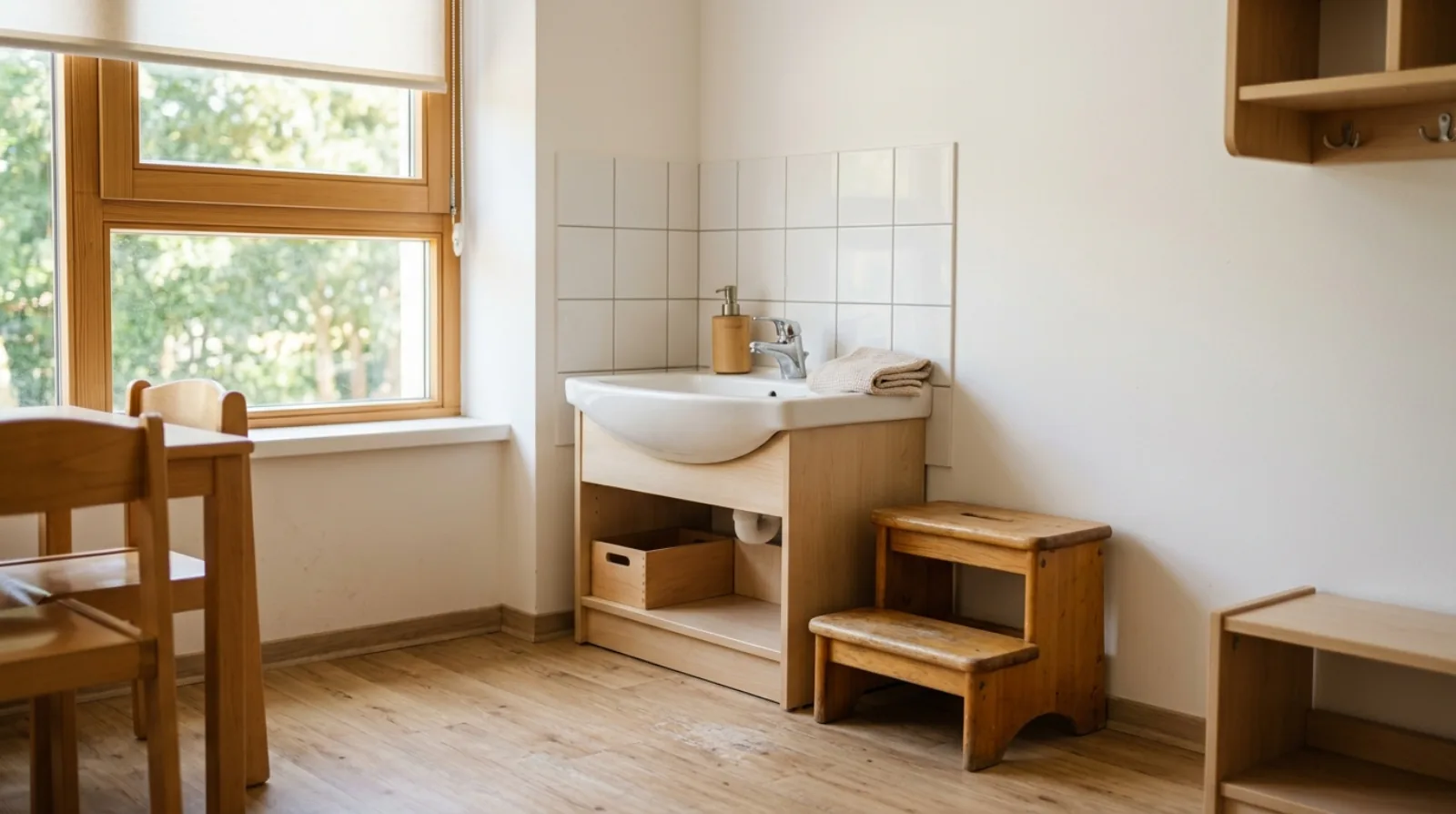
Educators follow the centre's health and hygiene routines, including hand washing and cleaning, and families are contacted when a child becomes unwell during the day.
Licensed centres in British Columbia operate under the Child Care Licensing Regulation, which sets health requirements and includes reporting obligations to the health authority in certain communicable disease situations. Our guide to health, illness and medication in licensed care sets out what those rules require, and our post on how to check a Port Coquitlam daycare's licence explains how to look up any centre's inspection history yourself.
Medication is never sent in a child's bag. It is handed directly to an educator with the required authorization and instructions.
One thing that is not true of this centre: children do not go outside in rain or snow. On wet days educators run indoor movement and gross-motor activities instead, which our post on what happens on a rainy day describes. Whatever you have heard about cold air causing colds, viruses cause colds, and they spread best indoors in winter because that is where everyone is.
The part to hold onto in February
By about February of a first year in care, a lot of families are worn down. Two parents have used all their sick days, the child has had six colds, and it feels like a mistake.
It is not a mistake, and it is not permanent. The child is building immunity the only way it gets built, which is by meeting things. The following winter is noticeably easier, and the one after that is unremarkable.
That is not much comfort at four in the morning with a coughing toddler. It is, however, true.
Frequently asked questions
How many winters does this frequent-illness phase last?
The first autumn and winter in group care is the heaviest, because a child is meeting a large number of common viruses for the first time and each one produces an illness. The frequency generally drops in following years, since immunity to a virus already met carries forward. Most families describe the second winter as noticeably easier than the first and the third as unremarkable.
How long do these illnesses usually last?
HealthLink BC states that children who have only upper respiratory symptoms from RSV usually recover in about 10 to 14 days, and that RSV infections generally go away on their own in about 10 to 14 days. A cough that lingers after everything else has resolved is common and is not by itself a reason to keep a child home once they are otherwise well.
What is RSV and how serious is it?
Respiratory syncytial virus is a common respiratory infection. HealthLink BC lists its symptoms as a cough, a stuffy or runny nose, a mild sore throat, an earache and a fever. It identifies babies younger than 6 months, especially those born prematurely, and adults older than 65 as being at increased risk of severe illness, along with people with immune system, heart or lung problems. For most healthy children over that age it presents as a bad cold.
Is the flu vaccine free for my child in BC?
Yes. The Province states that all B.C. residents 6 months and older can get an influenza immunization free of charge in the fall and winter. One detail that catches families out is that children under 9 who have never had an influenza vaccine need 2 doses, 4 weeks apart. A single dose in a child's first year of immunization is only half the course.
How do these viruses actually spread?
HealthLink BC describes RSV spreading through respiratory droplets when an infected person coughs or sneezes, or by touching a contaminated surface and then your face. It also notes that the virus can survive for more than 6 hours on countertops. That combination is why hand washing and surface cleaning both matter in a group setting, and why neither alone is enough.
When do I keep my child home?
The centre's guidance turns on how the child is doing rather than on any single symptom. A child who is feverish, who cannot take part in normal activities, who needs more care than educators can give while also caring for the group, or who has a specific excludable condition stays home. Our post on when to keep your child home sick sets out the detail.
Does a runny nose mean my child is contagious?
Not reliably, in either direction. Most respiratory viruses spread most in the day or two before symptoms are obvious, so by the time a nose is running the transmission has largely already happened. A clear runny nose in an otherwise well, active child is not by itself a reason to stay home, and the absence of one does not prove a child is not infectious.
What can we do at home that actually reduces illness?
Hand washing at the front door on arriving home, before eating, and after the washroom is the highest-value habit. Keep influenza immunization up to date and speak to a health care provider about other eligible immunizations. Sleep matters, and a child in group care needs the amount appropriate to their age. Beyond that, a first winter of frequent colds is largely unavoidable.
Should I give my child cough and cold medicine?
Over-the-counter cough and cold products are not recommended for young children, and you should speak to a pharmacist or health care provider rather than choosing one yourself. Fluids, rest and comfort are what most viral illnesses need. Call 8-1-1 to speak to a HealthLink BC nurse at any hour if you are unsure, or contact your health care provider.
What does the centre do when illness is going around?
Educators follow the centre's health and hygiene routines, including hand washing and cleaning, and contact families when a child becomes unwell during the day. The centre operates under the Child Care Licensing Regulation, and licensed centres must follow health requirements and report certain communicable disease situations to the health authority. Families are asked to keep contact details current so they can be reached quickly.
Before you visit
If you are choosing care for a first winter and want to ask how illness is handled here, ask it directly on a tour. Tours run about thirty minutes by appointment. Contact us to arrange one.
Copies a ready-written post, then opens LinkedIn.