6-part guide
Choosing a daycare in British Columbia, start to finish
Choosing a daycare takes most families four to six months and starts long before a tour. This guide walks the whole process: shortlisting licensed centres, booking tours, reading the room, asking questions whose answers actually tell you something, understanding waitlists, and comparing two or three finalists against each other.
By Tracy, Owner and Principal
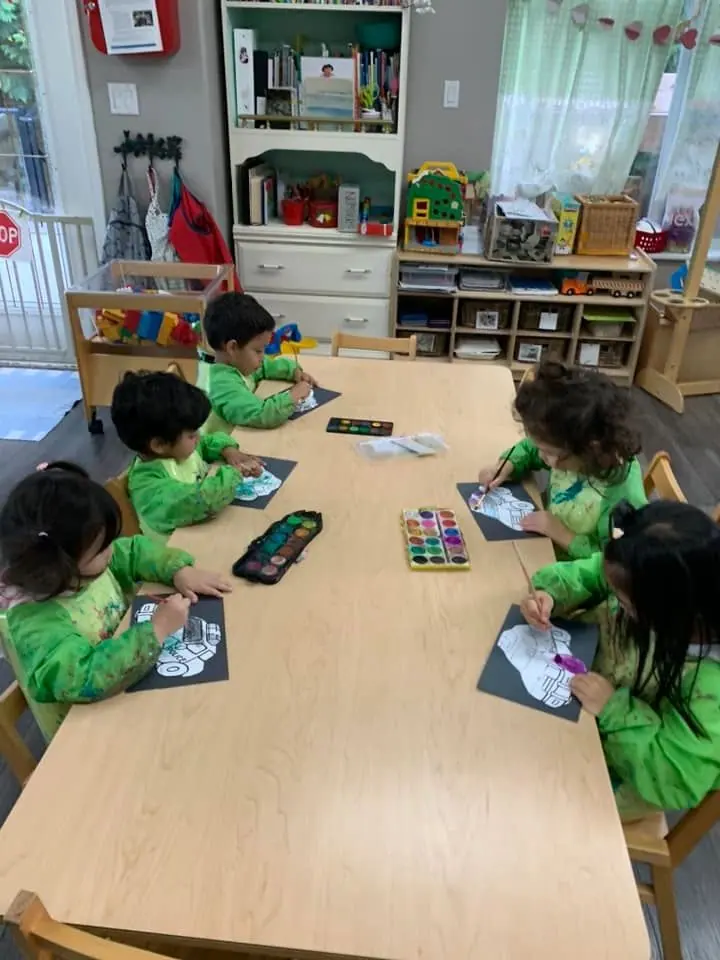
Choosing a daycare is the decision parents overthink and under-prepare. Most families spend four to six months on it. Infant families in the Tri-Cities often spend more. The Province recommends starting the search as early as you can, because the scarce side of the market is licensed infant and toddler care, where a one-to-four ratio caps the number of children a centre can take.
The research breaks down naturally into four stages: finding the centres that exist, visiting the ones that match your schedule, asking the questions whose answers actually tell you something, and comparing the two or three you took seriously against each other.
Nothing in it is secret. Most of it is in the regulation, in the health authority's inspection database, and in a thirty-minute tour. What follows is the shape of the process, in the order a family meets it, with the common mistakes marked.
Who the regulation protects, and from what
Licensed child care in British Columbia operates under the Community Care and Assisted Living Act and the Child Care Licensing Regulation. The regulation sets ten care programs, each with its own age range, maximum group size and staffing ratio, listed in Schedule E. It sets how much indoor and outdoor space a facility must provide. It sets what educators have to be certified in, how children's records must be held, what food must look like, what sleeping space must look like, and what the licensee must do if something goes wrong.
A regional health authority, Fraser Health in the Tri-Cities, issues the licence and inspects the facility at a frequency set by its risk rating. Every inspection report and every substantiated complaint investigation is published in a public database the health authority maintains, searchable by facility.
What this gives a parent is accountability. A licensed centre has a public record. An unlicensed one has whatever its own reputation carries, which is not nothing but is also not inspectable. The licence does not guarantee a good day for your child; it just means a public body is checking that the things that are supposed to be true are true.
If you have not yet thought about the regulation, the licensed child care in British Columbia guide walks it in detail: ratios, qualifications, space, health, inspections and complaints. The sections most relevant to the choice are the ten care types, because the type decides the group size your child will be in, and inspections and reports, because the reports are where you check your work.
Four stages, and how long each one takes
Stage one, finding the centres
Spend an evening on this. Three sources together give the complete list of licensed centres near you: the Province's own Child Care Map at childcaremap.ca, the regional health authority's licensed-facility database (Fraser Health for the Tri-Cities), and a local directory such as the licensed childcare finder on this site, which draws from the same provincial open dataset.
What you are producing is a list of facilities within a commute you can live with. Twenty to thirty entries is normal for a Tri-Cities postcode. Note each one's licence type, age range, hours and whether it participates in the ChildCareBC fee reduction. Mark anything that does not match your schedule and set it aside.
Stage two, shortlisting and booking tours
Most of the twenty will drop out at this stage. Some will have no space in the age band you need and no near-term waitlist movement. Some will not match your hours, especially if you work evenings, weekends or shift schedules. Some will not teach a language you want. Some will be centre-based when you wanted family care, or the other way around.
Aim for five to seven tour bookings and expect three or four to be the ones you take seriously. Book them one or two per week rather than back to back; touring two centres in an afternoon blurs them.
Stage three, touring
A tour is thirty minutes with a centre administrator or the owner. The point is not to be sold on the centre. The point is to see the ordinary teaching day, meet the educator who will spend eight hours a day with your child, and ask the small number of questions whose answers tell you how the place actually runs.
The sub-pages below cover the two halves of this: what to notice without being told, and what to ask so the answers mean something.
Stage four, comparing and deciding
Once you have three strong tours behind you, stop. The point of a shortlist is to shorten it, not to tour every centre within fifteen kilometres. Compare the finalists on a short set of factors, score them, and if the totals are close, pick on the commute.
The one thing worth knowing before any tour
Buildings matter less than you think. Programs matter less than their descriptions suggest. The lead educator matters more than everything else combined.
A certified early childhood educator holding the regulation's floor is a very different experience from one who tracks each child closely, notices what interests them, and names it. One is doing the job to code. The other is teaching. A child's day sits mostly in the hands of this one person, and a tour that does not include watching this person work for a few minutes is a tour you learned less from than you could have.
The practical test is specifics. An educator who can tell you what three particular children in the room have been working on this week, in the kind of detail that could only have come from paying attention, is almost always the person you want. An educator who can only speak in generalities about the program is not necessarily bad, but you have not seen the thing that matters most.
Common mistakes
Starting too late. If you need an infant spot, start eight to twelve months out. The ratios make this scarcity structural, not a market quirk.
Touring too many. The research literature on choice overload is thin for daycare specifically, but every centre tour costs an hour and a half with travel, and six tours is nine hours of memory to compare. Three tours sorted on paper first beats six tours remembered dimly.
Judging the room on the tidiness. A classroom at the end of a Monday morning is not a mess, it is a working room. The question is not whether the mats are stacked but whether the educator has an eye on every child while she talks to you.
Choosing on branding. A website with a tasteful palette tells you nothing about whether an educator notices a shy child. The reverse is also true: an old-fashioned website hides many excellent centres.
Not reading the inspection report. The reports take five minutes to find and ten minutes to read, and families who skip them often discover something afterwards they would have asked about on the tour.
Treating the waitlist like a queue. Most centre waitlists are not strict first-come-first-served, because a space that opens in a particular age band has to go to a family whose child fits that age band. Being on three waitlists at once is normal and expected; the centre you tour at twelve months may call you at nine, or at twenty.
What to look for on the tour
Six things, in rough order of importance.
The educator-to-child interaction, which is almost everything.
The feel of the room. A room where children are absorbed in work is quiet in a particular way, with pockets of focused activity rather than one loud shared one.
The space itself, measured honestly. The regulation requires 3.7 square metres of indoor activity space per child and 7 square metres of outdoor play space per child. A centre at the floor of this is not deficient but has less slack than one with more.
The washroom and the diapering area, which tell you how seriously the centre takes hygiene. These rooms are the hardest to make look good superficially.
The sign-in and sign-out system, because an electronic one tracks the daily roll required by section 57 of the regulation, and a paper one does the same if it is actually filled in.
The outdoor space, which the regulation requires to be fenced and separated from vehicle traffic. Look at how the gate works, because a licensing officer will.
The six sub-pages below take each half of this process in detail: what to look for, what to ask, how a waitlist actually runs, how to match a program to a particular child, how a schedule like yours fits different centres, and how to compare the finalists without second-guessing yourself.
What this hub does not cover
Starting daycare, once you have accepted a space, is a different exercise. The starting daycare hub covers the paperwork, the settling-in period, the goodbye at drop-off, the bag, the nap, and the first illness.
Cost is the other half of the choice. The cost of child care in British Columbia guide covers the Child Care Fee Reduction Initiative, the Affordable Child Care Benefit and the $10 a Day ChildCareBC Program, how each one works, and how they stack. The number a family pays is almost never the number on the centre's price list.
If you are weighing a language program, the raising a bilingual child guide covers what the paediatric and speech-language evidence actually supports.
Where to start
If you have not yet thought about which licence type suits your child, read the ten types of licensed care. Then come back to the sub-pages below, which walk the choice from the first tour to the final decision.
To arrange a visit to La Vie Est Belle, contact the centre directly. Tours run about thirty minutes by appointment, outside drop-off, pick-up, outdoor play and nap periods, so you see the room in an ordinary teaching mode rather than a transition one. Families are welcome to bring their child.
The full guide
Every part of this guide
On the tour
- Part 1What to notice on a tourThe six things worth watching for on a thirty-minute tour, in rough order of importance, and the small details that reveal more than a scripted walk-through would.Read part 1
- Part 2Questions worth askingTwelve questions in rough priority order, and the shape of the answers that mean the person showing you around actually runs the centre. The right questions are specific, not reassuring.Read part 2
Before you decide
- Part 3How waitlists workThere is no central waitlist in BC. Each licensed centre runs its own, and the order is rarely strict first-come first-served. How ages, siblings, schedules and funding programs shape who moves up, and what to do with your own list in the meantime.Read part 3
- Part 4Matching program to childDaycares differ most in group size, structure, routine and language. A quiet two-year-old thrives in a different room from a boisterous one. How to read a centre's actual day and work out whether it fits your particular child, not a generic one.Read part 4
- Part 5Fitting the scheduleFull-time, part-time, extended-hours, weekend and drop-in care are different products on the licence, with different fee implications and different trade-offs. How to pick the schedule your family actually needs, not the one that sounds standard.Read part 5
Questions parents ask