Part 2 of 6
Tour questions whose answers actually tell you something
The useful questions on a daycare tour are the ones whose answers cannot be scripted. Who is the licensing officer. When was the last inspection, and what did it find. How are allergies held and shared. What happens if an educator is away sick. Twelve questions, with notes on what a strong answer sounds like.
By Tracy, Owner and Principal
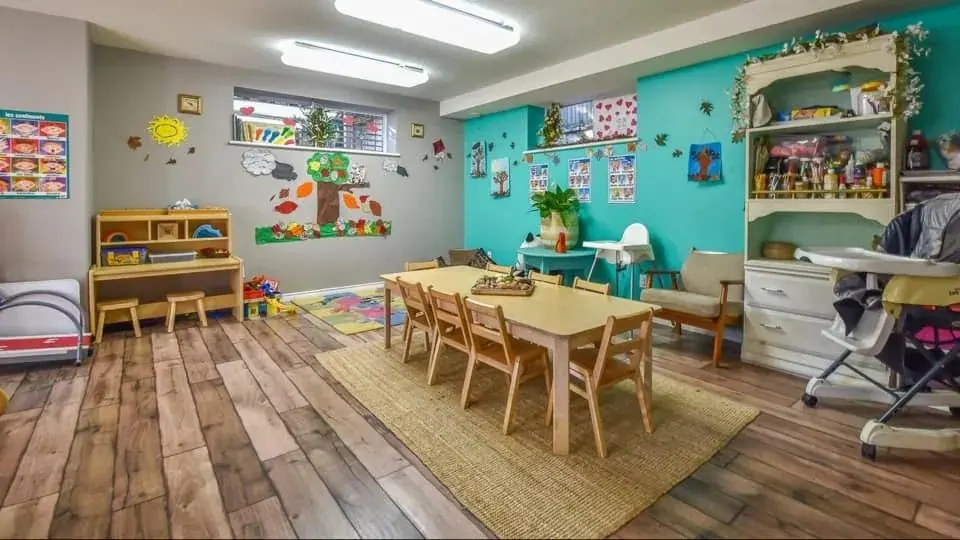
Most tour questions have an obvious right answer and tell you nothing. "Do you have outdoor time?" has one answer. "What is your philosophy?" has a hundred versions of the same answer. "Can my child start in October?" is useful but is about you, not about the centre.
The useful questions have answers that cannot be scripted, because the answer is specific. A good administrator can describe the day in detail because she lives it. A less engaged one will reach for general language.
Twelve questions follow, in rough priority order. Carry three or four, not twelve.
The licensing relationship
Who is the licensing officer for this facility, and when did she last visit?
Every licensed facility in British Columbia has a specific licensing officer assigned by its health authority. Fraser Health recommends contacting that officer as part of choosing a centre, which means the centre knows who they are. A centre that can name the officer immediately, without checking, is one where that relationship is a working part of the operation.
What did the most recent inspection look at, and did it find anything?
The inspection reports are public, so this question is checkable later. The useful part is whether the person giving the tour has read the report. An administrator who summarises it voluntarily, including anything the officer flagged, is signalling that she takes the public record seriously. An administrator who refers you to the website without further comment is signalling something else.
Can I see the posted licence?
A simple ask with a simple answer. Section 11 of the Child Care Licensing Regulation requires the licence to be posted. The response and the location of the posting are the information you want. The licence should name each care program the centre may run and the maximum children allowed on the premises at one time.
The specific educator
Who will be the lead educator in my child's room, and how long has she been at the centre?
The regulation sets a minimum qualification. The person is what you are choosing. The second half of the question is the harder one, and the answer is the one you need. A centre with low turnover will tell you plainly. A centre with high turnover will answer in general terms about hiring standards.
What is her certification, and does she hold any additional qualifications?
Three provincial certifications matter: early childhood educator (ECE), infant and toddler educator, and special needs early childhood educator. The regulation requires the ECE for the senior person leading each group; the other two apply to specific programs. The answer tells you both what the educator is qualified for and whether the centre has gone beyond the minimum.
The ordinary edges of the day
What happens if the lead educator is away sick?
The required staff-to-child ratio applies either way. The question is whether the covering adult is familiar to the room. A strong answer names one or two regular substitutes who the children know. A weak answer refers to a staffing agency and leaves it there.
What happens if my child develops a fever during the day?
Pick a specific scenario rather than asking in general. "At eleven in the morning" is specific enough. A good answer walks you through the sequence: how the parent is reached, where the child is cared for in the meantime, who stays with them, and how the readmission decision works. The BCCDC's 2023 guidance sets the test at the child being well enough to take part in regular activities, and a centre that cites it is a centre that reads it.
How is allergy information held and shared?
An allergic reaction unfolds in minutes. The useful answer names where the information physically lives (the kitchen fridge, the educator's clipboard, the sign-in area), who has read it, and how a substitute is briefed on day one. A vague answer that mentions "a form on file" is not sufficient. The centre is nut free, which shapes what any family may pack.
Safety and release
What is the sign-in and sign-out process, and who may pick my child up?
The regulation requires written policies for the safe release of children, and the section 57 record holds the authorization. The useful part of the answer is the edge case: what happens if a grandparent nobody has met arrives at four thirty on a Tuesday. A centre with a defined answer has thought about it.
What is the outdoor time policy in rain, cold or poor air quality?
Section 44(3) of the regulation requires outdoor play daily unless weather conditions would make it unreasonable. The specific answer tells you what the year will actually look like. La Vie Est Belle does not take children outside in rain or snow, and runs indoor movement and gross-motor activities on those days.
Children and behaviour
What do the educators do if a two-year-old bites another child?
A specific scenario forces a specific answer. The useful answer names the sequence: care for the bitten child first, help the biting child regulate, inform both parents, track the pattern if it recurs. A general answer about positive guidance tells you less, because every centre answers that way.
How does a child move between rooms as they grow?
If your child will move between age-grouped rooms during their time at the centre, the transition itself is a stressor. A graduated process (visits, a familiar educator moving with them, a conversation with the family) produces a smoother move than an abrupt date-driven change. The question is only useful if your child's time at the centre will cross a transition.
Language, if a language program is part of your choice
Which educator leads each language, how much of the day is spent in each, and what happens if my child prefers one over the others?
A strong bilingual or multilingual program names specific educators, specific proportions of the day, and specific flexibility. A weaker one answers in general terms about exposure. La Vie Est Belle runs French, Mandarin and English as separate language programs, each with a designated educator, so children can get focused, age-appropriate instruction in the language the family selects. See raising a bilingual child for the underlying evidence.
Three questions not worth asking
Not every question earns an answer worth having.
"What is your philosophy?" Every centre has an answer rehearsed enough to sound distinctive and empty. If the question tells you anything, it is whether the person speaking believes what she is saying, which is harder to judge from a philosophy answer than from a specific one.
"How do I know this is a good centre?" The person giving the tour has a stake. The inspection reports, the licensing officer, and the lead educator you are watching tell you more.
"Is this a $10 a Day centre?" The $10 a Day ChildCareBC Program is a separate list and must be checked against the Province's published roster rather than taken on the tour's word. The question is worth asking only in the form "is this centre on the Province's $10 a Day list and can I see the confirmation", because the general answer can be interpreted several ways. The cost side of the choice is covered in the cost of child care in British Columbia guide, which walks all three provincial programs separately.
Three more that are worth asking at the right moment
"May I speak briefly with the lead educator in my child's room?"
Not every centre can arrange this on a thirty-minute tour, especially if the educator is leading an activity. Ask whether a short conversation at the end is possible, or whether the centre can set up a brief call. Hearing the educator describe her own room, in her own words, is worth more than hearing the administrator describe it on her behalf. It is also a soft test: a centre comfortable with you speaking to its staff is a centre with nothing to coach.
"How does the centre handle an inspection finding when it comes up?"
This question is useful because every centre has inspection findings eventually. A strong answer names the specific sequence: how the finding is corrected, how parents are informed if the matter touches their child, and how the follow-up inspection confirms the correction. A weak answer describes findings as rare and the centre as fault-free, which is statistically implausible across any multi-year licensing history and tells you the centre is answering a question about its reputation rather than about its process.
"Can I come back for a second visit before deciding?"
A centre that welcomes a second visit is confident in what you will see. Some centres restrict the number of tours per family because they prefer to protect staff attention; that policy is reasonable, and a clear answer with a reason is a different thing from a reluctant one. A short second visit, by appointment, at a different time of day, gives you a second sample of the educator you watched and a second impression of the room's sound.
What to do with the answers
Write them down the same day, before touring the next centre. A week later the specifics blur, which defeats the point of asking specific questions in the first place. A short set of notes per centre, written on the kitchen table that evening, is what the comparison stage will depend on.
A simple format works: question on the left, the answer in the centre's words on the right, your reading of the answer in the margin. A specific, detailed answer in a particular voice beats a general reassurance every time, and the shape of the answer is often more useful than the content. An administrator who answers "I will have to check" and then checks is usually more trustworthy than one who answers smoothly without pausing.
When no answer is forthcoming
Any single unanswered question is not disqualifying. A specific policy on one Tuesday morning is not something every administrator carries in her head. The follow-up matters more than the first response.
The pattern to watch is a centre that cannot answer any of the specific questions. If the licensing officer is unknown, the last inspection has not been read, the covering educator is unnamed, and the sick-child sequence is described in general terms, the pattern is itself the answer. A centre runs on specifics or it runs on vagueness, and the specifics are what a licensing officer, a parent, and a four-year-old all need to count on.
The next piece
The next piece, daycare waitlists in British Columbia, covers what happens between the tour and a space opening up.
Questions parents ask
Frequently asked questions
Choosing a daycare