Part 1 of 8
The ten types of licensed child care in British Columbia
British Columbia's Child Care Licensing Regulation prescribes ten separate care programs, each with its own age range, group size limit and staffing rule. Knowing which one a centre holds tells you more than its name does.
By Tracy, Owner and Principal
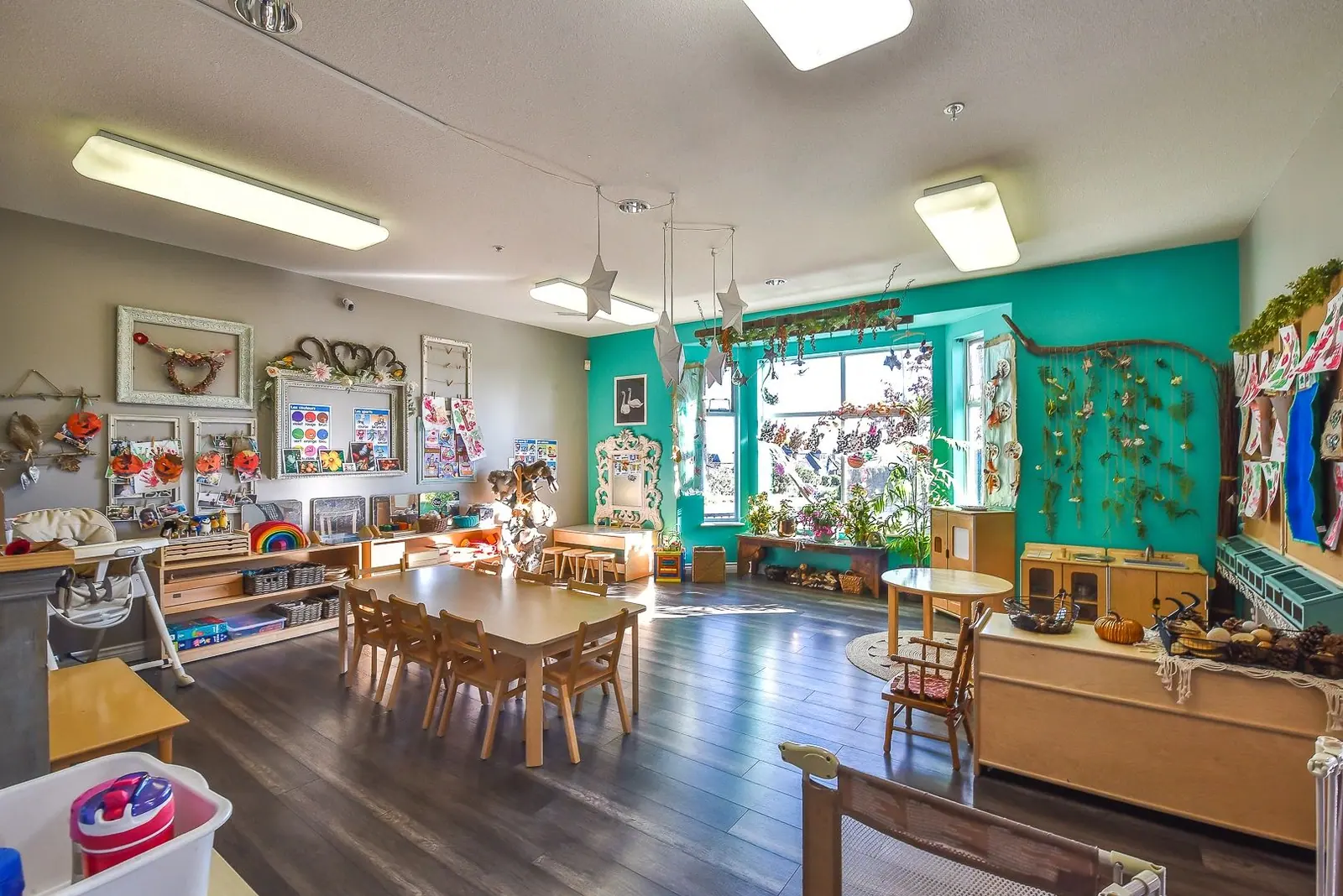
Parents compare daycares by name, by photographs and by how the room felt. Very few compare them by licence type, which is a shame, because the licence type decides more about the day than almost anything else on the tour.
It sets how many children may be together in one group. It sets how many adults must be with them and what training those adults need. It sets the age range. Two centres a block apart can look almost identical and be running under rules that differ by a factor of three.
Section 2 of the Child Care Licensing Regulation prescribes ten care programs. Here is what each one is.
The three Group Child Care programs
Group Child Care (Under 36 Months) is infant and toddler care. It serves children younger than three. The maximum group size is 12, and the regulation adds a condition no other program has: there must be a separate area designated for each group. Staffing is the strictest in the regulation. Up to four children need one infant and toddler educator. Five to eight need that educator plus one more educator. Nine to twelve need the infant and toddler educator, another educator, and an assistant.
Group Child Care (30 Months to School Age) is the full-day program most people picture when they hear the word daycare. Maximum group size is 25, with no more than two children under 36 months in a single group. Staffing steps up in three bands: one educator for up to 8 children, one educator and an assistant for 9 to 16, and one educator and two assistants for 17 to 25.
Group Child Care (School Age) covers before-school, after-school and school closure days for children who attend school, including kindergarten. Two different limits apply depending on who is present. If any preschool child or child in grade 1 is in the group, the maximum is 24 and staffing is one responsible adult up to 12, two above that. If none is present, the maximum rises to 30 with one responsible adult up to 15.
Preschool
Preschool (30 Months to School Age) looks like Group Child Care and is regulated differently. The group cap is 20 rather than 25. Staffing is one educator for up to 10 children and one educator with an assistant for 11 to 20.
The entry rule is unusual and worth knowing if your child has an autumn birthday. A child must be at least 30 months old when they start, and turn 36 months by 31 December of the year they enter. A child who turns three in February cannot start the previous September.
There is also a rare exception on staffing. A preschool may run without an assistant if it has a parent education program approved by the medical health officer, a parent who has completed that program is present to assist, and the medical health officer has approved the arrangement in writing.
The two home-based programs
Family Child Care is one person caring for up to 7 children in their own home. The licensee must be a responsible adult and personally provides the care. Composition limits apply inside that 7. If any child under 12 months is present, no more than 3 children may be under 48 months and only one of those may be under 12 months. If no child under 12 months is present, up to 4 may be under 48 months, of whom no more than 2 may be under 24 months.
In-Home Multi-Age Child Care is the same idea with one more child and a higher bar. Up to 8 children of various ages, in the licensee's own home, but the licensee must hold an early childhood educator certificate. Family Child Care requires only a responsible adult.
That single difference is the most useful thing on this page for a parent choosing between two home daycares. The extra child is paid for with a qualification.
Multi-Age Child Care
Multi-Age Child Care is a mixed-age group of up to 8 children, run in a facility rather than a home. No more than 3 may be under 36 months, and if any child under 12 months is present, only one may be that young. One certified educator may have the whole group of 8.
Multi-age groups suit siblings, and they suit children who do better with older or younger peers than with a room of children born the same year. They are also the reason a centre's total capacity rarely tells you the room size: a centre licensed for 16 multi-age spaces is running two separate groups of 8, not one group of 16.
Occasional, school-grounds and recreational care
Occasional Child Care provides care on an occasional or short-term basis to preschool children at least 18 months old. Maximum 16 when any child under 36 months is present, 20 when none is. It is exempt from the outdoor play area requirement and from providing outdoor activities.
School Age Care on School Grounds is before and after school care delivered at a school. Most of the facility rules in section 14 do not apply to it, since the building is a school rather than a purpose-built centre.
Recreational Care is drop-in after-school care run by a local government, an Indigenous governing body, or a charitable or not-for-profit organisation, and it may not be provided in a single family dwelling. It has its own relaxed space rule in section 14.1.
Child-minding
Child-minding is the eleventh category and applies narrowly. It covers care provided alongside a government-funded program serving immigrants in English as a Second Language, settlement or labour market integration, where a parent must be on the same premises and immediately reachable the whole time. Child-minding services may not agree to give a child regular medication and may not take children off the premises without a parent.
What is exempt from licensing altogether
Section 3 exempts several programs from the Act entirely. Early learning programs under the School Act. Courses whose only purpose is teaching a specific recreational, artistic, musical or athletic skill, or religious instruction. Tutoring aimed only at academic skills. Summer camps for children aged 6 and up that run no more than 13 weeks between June and September on days of school closure. Day camps on school closure days for children aged 5 and up who attend school.
An exempt program is not inspected by a health authority and is not held to the ratios in Schedule E. That is not a criticism of any particular camp. It is a fact worth knowing before assuming that a program for young children carries the same oversight as a daycare.
The ten programs side by side
Maximum group size is the ceiling on a single group, taken from Column 2 of Schedule E. It is not the centre's capacity.
| Care program | Ages served | Max group | Fewest staff for a full group |
|---|---|---|---|
| Group Child Care (Under 36 Months) | Under 3 years | 12 | Infant and toddler educator, another educator, one assistant |
| Group Child Care (30 Months to School Age) | 30 months to school age | 25 | One educator, two assistants |
| Preschool (30 Months to School Age) | 30 months to school age | 20 | One educator, one assistant |
| Group Child Care (School Age) | School age, including kindergarten | 24 or 30 | Two responsible adults |
| Family Child Care | Mixed, in the licensee's home | 7 | The licensee |
| Occasional Child Care | 18 months to school age | 16 or 20 | Three or four responsible adults |
| Multi-Age Child Care | Mixed ages | 8 | One educator |
| In-Home Multi-Age Child Care | Mixed, in the licensee's home | 8 | The licensee, who must be a certified educator |
| School Age Care on School Grounds | School age, at a school | 24 or 30 | Two responsible adults |
| Recreational Care | School age, drop-in | Set by the licence | Set by the licence |
How a centre's capacity is built from these
Capacity and group size are different numbers, and mixing them up is the most common misreading of a public licensing list.
Take a centre licensed for 24 children made up of 8 Group Child Care spaces for 30 months to school age and 16 Multi-Age spaces. The 8 sit in one group. The 16 cannot, because Multi-Age caps a group at 8, so those spaces are two separate groups in two separate spaces. That centre runs three groups, not one room of 24, and it needs at least one educator for the group of 8 under Group Child Care plus one educator for each Multi-Age group.
Work backwards from the licence and you can usually tell how a building is arranged before you walk into it.
How this changes what you ask on a tour
Once you know the licence type, the questions change. In a Group Child Care room for 30 months to school age, the useful question is where in the 8, 16 and 25 bands the group actually sits, because the staffing changes at each step. In a Multi-Age room, the group is 8 whatever happens, so the question is who the educator is and what happens when they are away. In a home-based program, the question is which of the two licences the person holds, because one requires an ECE certificate and the other does not.
Next, ratios and group sizes sets out the full staffing table, or read licensed, registered and unlicensed care if you are weighing a home caregiver who is not licensed at all.
Questions parents ask
Frequently asked questions
Licensed child care in BC