Part 3 of 8
Staff-to-child ratios and group sizes in BC, in full
Schedule E of the Child Care Licensing Regulation sets the largest group permitted and the staff required at each group size, for every licensed care program in British Columbia. Here is the whole table and what it means on a tour.
By Tracy, Owner and Principal
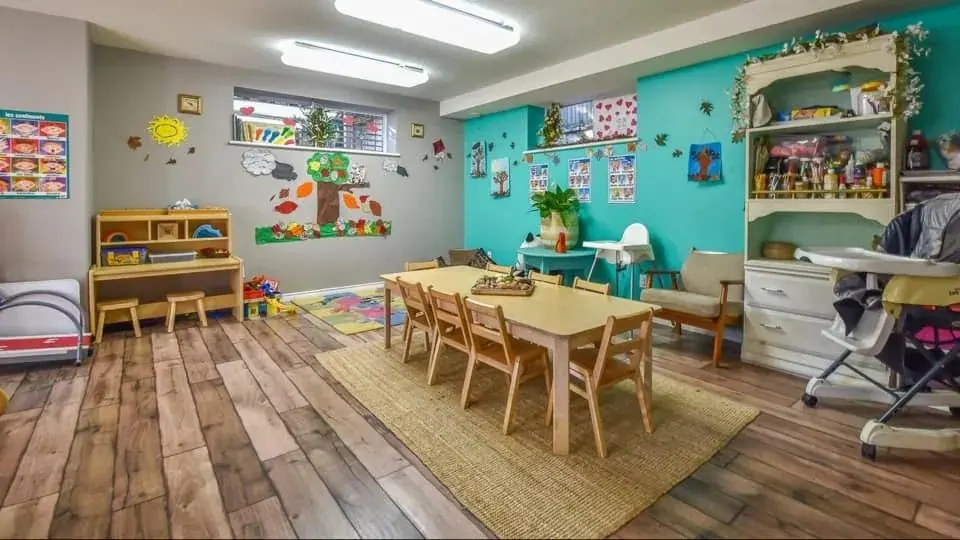
If you only check one thing about a licensed centre, check this.
Schedule E of the Child Care Licensing Regulation is a single table. It sets, for each of the ten licensed care programs, the largest group permitted and exactly how many staff must be with that group at each size. It is the most concrete quality signal in the whole regulation, and it is public.
Below is the full table, in plain language, followed by the parts that are easy to misread.
How the table works
Schedule E has four columns. Column 1 names the care program. Column 2 gives the maximum group size. Column 3 gives a band of children per group. Column 4 gives the staff required for that band.
A licensee must divide children into groups no larger than Column 2 allows, and must staff each group at no less than Column 4 requires for the band that group falls into.
Three words carry legal weight and mean different things:
- Educator means a person holding an early childhood educator certificate.
- Infant and toddler educator means an educator who additionally holds an infant and toddler educator certificate.
- Assistant means a person holding an early childhood educator assistant certificate.
- Responsible adult means someone at least 19 years old with at least 20 hours of relevant coursework and relevant experience, which is a much lower bar than an educator.
Staff qualifications covers what each of those certificates actually requires.
Group Child Care (Under 36 Months)
Maximum group size 12, with a separate area designated for each group.
| Children in the group | Staff required |
|---|---|
| 4 or fewer | One infant and toddler educator |
| 5 to 8 | One infant and toddler educator and one other educator |
| 9 to 12 | One infant and toddler educator, one other educator and one assistant |
This is the tightest staffing in the regulation, and the only program that requires a specialist certificate as a condition of operating at all.
Group Child Care (30 Months to School Age)
Maximum group size 25, with no more than 2 children younger than 36 months in a single group.
| Children in the group | Staff required |
|---|---|
| 8 or fewer | One educator |
| 9 to 16 | One educator and one assistant |
| 17 to 25 | One educator and two assistants |
The step at 8 is the one to notice. A room with 8 children may lawfully have one adult in it. A room with 9 must have two.
Preschool (30 Months to School Age)
Maximum group size 20.
| Children in the group | Staff required |
|---|---|
| 10 or fewer | One educator |
| 11 to 20 | One educator and one assistant |
A preschool may operate without the assistant only if it runs a parent education program approved by the medical health officer, a parent who has completed that program is present to assist, and the medical health officer has approved the arrangement in writing.
Group Child Care (School Age)
Two different sets of limits, depending on who is in the group.
If any preschool child or child in grade 1 is present, maximum group size 24: one responsible adult for 12 or fewer, two for 13 to 24.
If no preschool child or child in grade 1 is present, maximum group size 30: one responsible adult for 15 or fewer, two for 16 to 30.
School Age Care on School Grounds uses the same two bands.
Multi-Age Child Care
Maximum group size 8, and one educator supervises the whole group.
Composition is capped as well as the count. No more than 3 children may be under 36 months. If any child under 12 months is present, only one child may be that young.
In-Home Multi-Age Child Care
Maximum group size 8, with the same composition limits as Multi-Age. The licensee personally provides the care in their own home, and must be certified as an educator.
Family Child Care
Maximum group size 7, cared for personally by the licensee in their own home.
If any child under 12 months is present: no more than 3 children under 48 months, and only one of those under 12 months.
If no child under 12 months is present: no more than 4 children under 48 months, of whom no more than 2 under 24 months.
In Family Child Care and In-Home Multi-Age Child Care only, the group size does not include a person aged 12 or over who is related to the licensee.
Occasional Child Care
If any child under 36 months is present, maximum 16: one responsible adult for 4 or fewer, two for 5 to 8, three for 9 to 12, four for 13 to 16.
If no child under 36 months is present, maximum 20: one responsible adult for 8 or fewer, two for 9 to 16, three for 17 to 20.
Child-minding
Maximum 24, counted with a weighting: each child under 12 months counts as 2.5 children, each child from 12 to 35 months counts as 2, and each child 36 months or older counts as 1. One responsible adult for 8 or fewer weighted children, two for 9 to 17, three for 18 to 24.
A worked example
Take a centre licensed for 24 children, made up of 8 Group Child Care spaces for 30 months to school age and 16 Multi-Age spaces. That is the licence held by this centre, according to the Fraser Health Fraser North public list printed 27 June 2024.
Work it through with Schedule E.
The 8 Group Child Care spaces sit in one group. At 8 children, the band is "8 or fewer", so the legal minimum is one educator.
The 16 Multi-Age spaces cannot be one group, because Multi-Age caps a group at 8. They are two groups of 8, each needing one educator.
So the legal minimum staffing for a full building of 24 children is three educators across three groups. Not one room, not one adult, and not the ratio you would guess by dividing 24 by anything.
Run the same arithmetic on any centre's published capacity and care types and you learn the shape of the building before you visit it.
What the ratio looks like across a real day
The ratio applies to a group at every moment children are in care, which sounds obvious and has consequences that are easy to miss.
At opening. Few children have arrived, so a group may sit well under its band. This is usually the most generously staffed part of the day.
Mid-morning. Everyone has arrived. This is the moment the group is at its largest and the band that applies is the one that matters most. If a group of 9 in Group Child Care for 30 months to school age has crossed from the "8 or fewer" band into "9 to 16", an assistant must now be present.
Outdoors. The ratio follows the group outside. It is not relaxed for the yard.
On a walk or a field trip. The ratio still applies, and transport adds its own rule. If more than 7 children travel in a single vehicle, at least one responsible adult other than the driver must be aboard, and the driver must be 19 or older holding the right class of licence. Group Child Care (School Age), Family Child Care and In-Home Multi-Age Child Care are exempt from the extra-adult requirement.
At nap. Children under 36 months must have a separate sleeping area away from the activity area, which means a group may be split across two spaces while a single band still governs its staffing.
At pick-up. Numbers fall again, and shifts change. This is the other end of the day where a stretched room shows.
Reading a ratio properly
Two adults is not two educators. "One educator and one assistant" is the legal minimum for a group of 9 to 16 in Group Child Care for 30 months to school age. An assistant certificate requires one course from a basic early childhood education program. An educator certificate requires a full training program plus 500 hours of supervised work experience. Both are adults in the room; they are not interchangeable.
Ratio is a minimum, not a description. Nothing prevents a centre staffing above it, and many do. The question worth asking is not "what is your ratio" but "how many children and how many staff are in this room on a normal Tuesday afternoon".
Group size is per group, not per building. A centre licensed for 24 children is running multiple groups. Ask how many groups run each day, how they are divided, and whether they combine at any point.
Ask about the edges of the day. Early morning and late afternoon are when attendance thins and staff shifts change. That is when the ratio is most likely to be tested.
Ask what happens when someone is sick. A centre that answers this immediately and specifically has thought about it. That single answer tells you more about how a place runs than the ratio itself does.
Next, staff qualifications explains what stands behind each of the roles named in this table.
Questions parents ask
Frequently asked questions
Licensed child care in BC