September 30, 2026
Gross motor play, and how much movement young children actually need
The Canadian 24-Hour Movement Guidelines set real numbers for infants, toddlers and preschoolers. Here is what those numbers mean, what gross motor play looks like in a childcare room, and the guidance about time spent restrained that most parents have never been told.
By Tracy, Owner and Principal
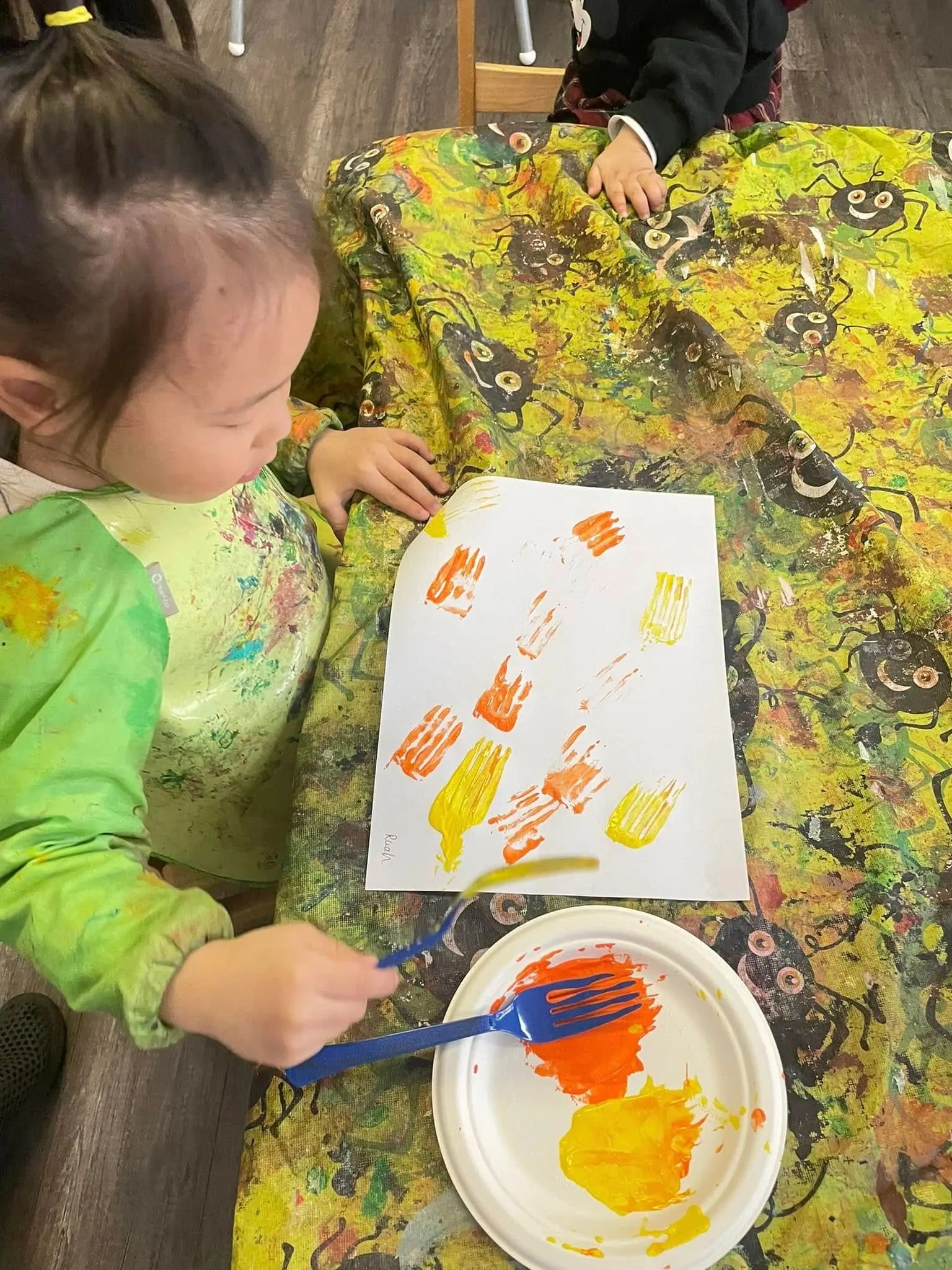
Parents ask how much running around a young child needs, and they usually expect a small answer. The real one comes from the Canadian 24-Hour Movement Guidelines for the Early Years, published by the Canadian Society for Exercise Physiology, and it is larger than most families guess.
For a toddler aged one to two, the recommendation is at least 180 minutes of physical activity at any intensity, including energetic play, spread through the day. For a preschooler aged three to four, it is also at least 180 minutes, and at least 60 of those minutes should be energetic play. Both entries end with the same phrase: more is better.
Three hours sounds like a lot. It stops sounding like a lot once you understand what the guidelines are actually counting.
What counts as physical activity at this age
The guidelines say "at any intensity" for toddlers, and that phrase does most of the work. A child does not need a class, a coach or a piece of equipment to be physically active. Walking from the front door to the car is activity. Crouching to pick up a dropped sock is activity. Pushing a toy across a room, climbing onto a low chair, carrying a basket of blocks from one shelf to another, all of it counts.
This is why the target is reachable. Very little of a young child's waking day is naturally still. Adults impose stillness on children through car seats, high chairs, strollers and screens. Left with a safe room and no instruction, a two year old moves almost continuously.
The preschool guideline adds a second layer. Of the 180 minutes, at least 60 should be energetic. Energetic play is the kind that makes a child breathe faster and feel warm: running, chasing, jumping, climbing, dancing hard to music. This distinction matters because a child can accumulate three hours of gentle pottering without ever reaching the intensity that builds heart and lung fitness.
The tummy time number
For infants under one year, the guidelines set a different shape of target. Babies should be physically active several times daily in a variety of ways, particularly through interactive floor-based play. On top of that, at least 30 minutes of tummy time daily, spread through the day, while the baby is awake.
Two words in that recommendation save a lot of parental stress. The first is "spread". Nobody expects a baby to tolerate half an hour of tummy time in one sitting. Six five-minute sessions through the day reach the same total and are far easier on a baby who protests. The second is "interactive". Floor play with an adult present, talking and responding, is what the guideline describes. A baby alone on a mat is getting less than the recommendation intends.
Tummy time builds the neck, shoulder and trunk strength a baby later uses to sit, crawl and pull to standing. It is the foundation the rest of the gross motor sequence is built on.
The part of the guidelines nobody mentions
Every age band in the Canadian 24-Hour Movement Guidelines carries a line about restraint. Infants should not be restrained for more than one hour at a time. Toddlers, the same. Preschoolers, the same, with the guidelines naming a stroller and a car seat as the examples.
I have had many conversations with parents about how much activity their child gets. I have had almost none about how long their child sits still in one stretch, and yet that is the half of the guidance that is easiest to breach without noticing.
An hour goes quickly. A car seat carried into the house after a drive and left on the kitchen floor while dinner is made. A stroller through a long shop, then a coffee, then the walk home. A high chair that stays occupied for twenty minutes after the meal ended because it is the safest place for a child to be while the table is cleared.
None of that is careless parenting. It is ordinary life, and the guideline exists precisely because ordinary life makes it easy. The fix is small: notice the clock, and give the child floor time between stretches. The concern is the length of one continuous period rather than the total across a day.
The same guidelines cover screens, for the same reason. Screen time is not recommended for children under two. For children aged two to four, no more than one hour, and less is better. The Canadian Paediatric Society gives the same advice, adding that children under two do not learn from screens, with video chatting with a familiar adult as the exception.
What gross motor play looks like in a childcare room
Movement in an early years setting is not a scheduled subject. It is the shape of the whole day, which is what makes the numbers achievable without anybody counting minutes.
Children walk between the classroom, the washroom, the nap area and the outdoor space several times a day. They fetch their own belongings. They put materials back on low shelves, which involves bending, reaching and carrying. During music, they march, sway and dance while playing drums, tambourines, rhythm sticks, shakers, bells and xylophones, with an educator guiding safe use. Free play involves climbing, crawling under and over things, and moving between activities.
Outdoors, generally one to two hours a day depending on weather, air quality and the schedule, is where the energetic 60 minutes usually accumulates. Running in an open space is difficult to replicate indoors at full intensity.
Our post on a day at our centre, hour by hour walks through how those pieces sit in the timetable, and the early learning and play guide covers why play is treated as the method rather than a break from learning.
What happens on wet days
We do not take children outside or on walks during rainy or snowy weather. On the Lower Mainland that removes a meaningful number of days from the calendar between October and March.
On those days educators run indoor movement and gross motor activities instead. Obstacle courses using the furniture and equipment already in the room. Music with instruments and dancing. Games that involve crawling, stretching, balancing and carrying. Parachute play. Movement to stories, where children act out what is being read.
Indoor movement will not always match the intensity of an open outdoor space, which is honest to say. It does keep the day from becoming three hours of sitting, which is the outcome the guidelines are written to prevent. Wildfire smoke in late summer creates the same situation, and the response is the same.
Why this matters beyond fitness
Gross motor development is not a separate track from the rest of early learning. The large muscles develop before the small ones, and control travels outward from the centre of the body.
A child who has spent hours crawling, climbing and carrying has built shoulder and trunk stability. That stability is what later lets them sit upright at a table and control a pencil with the small muscles of the hand. Fine motor skill is built on a gross motor foundation, and children who have not had enough large movement often struggle with the small movements later.
Movement also supports sleep, appetite, mood and the ability to wait and take turns. A child who has not moved enough is harder to settle at nap time and harder to engage in a quiet activity. Educators see this pattern clearly on days when outdoor play was cancelled.
What parents can do without adding another activity
The most useful thing is usually subtraction rather than addition. Fewer stretches in a stroller or car seat. A shorter sit in the high chair once the meal has ended. A little more of the walk done on foot even when it takes longer.
Beyond that, the guidelines are met through ordinary living. Let a child carry their own bag. Let them walk the last block. Give them floor space at home that is safe enough that you do not need to say no every two minutes, because a room where movement is constantly interrupted produces less of it.
If you are weighing what a centre offers on this front, ask how much outdoor time children get on a typical day, what happens when the weather stops it, and what the indoor space allows for large movement. Those three answers tell you more than a printed schedule does.
Frequently asked questions
How many minutes of movement do the Canadian guidelines set for a preschooler?
At least 180 minutes of physical activity spread through the day, of which at least 60 minutes should be energetic play. The guidelines add that more is better. Energetic play means the kind of activity that makes a child breathe faster and feel warm, so running, chasing, climbing and dancing all count.
What does the guideline say about babies under one year old?
Infants should be physically active several times a day in a variety of ways, particularly through interactive floor-based play, and should get at least 30 minutes of tummy time spread through the day while awake. The 30 minutes does not have to happen in one stretch. Short sessions through the day add up to the same total and are usually easier on a baby who dislikes it.
Why does the guidance warn about time in a stroller or high chair?
The Canadian 24-Hour Movement Guidelines recommend that a young child is not restrained for more than one hour at a time, giving a stroller, a high chair and a car seat as examples. A restrained child cannot practise the movements that build strength and balance. The concern is the length of a single stretch rather than the equipment itself.
Does a car seat used indoors count as restraint?
Yes. The guidelines name the car seat directly, and the seat does not change character when it comes inside the house. A baby carrier seat used as a chair while a parent cooks or answers email is the same restraint the guideline describes. Moving the baby to a mat on the floor after the drive resets the clock.
Do the movement guidelines cover screens as well?
They do, because sitting still is part of the same 24 hours. Screen time is not recommended for children under two, and for children aged two to four the guidance is no more than one hour, with less being better. Sleep is included too, so the guidelines describe a whole day rather than an exercise target.
How does a childcare centre fit three hours of movement into a day?
By counting the ordinary parts of the day instead of scheduling movement as a separate lesson. Walking between rooms, tidying materials into low shelves, dancing to instruments, carrying things, climbing on safe equipment and free play outdoors all count. Very little of a well-run early years day involves a child sitting still for long.
What happens to gross motor play at our centre when it rains?
We do not take children outside or on walks in rain or snow. On those days educators run indoor movement and gross motor activities instead, using the space we have for the same kinds of large movement children would otherwise get outdoors.
How much outdoor time does the centre usually provide?
Generally one to two hours a day, depending on weather, air quality and the schedule. Some days allow more and some allow none at all. Air quality during wildfire season is one of the reasons a day may be spent entirely indoors.
Are musical instruments part of gross motor development?
Partly. Drums, tambourines, rhythm sticks, shakers, bells and xylophones bring in rhythm, timing and whole-body movement when children march, sway or dance while playing them. Educators supervise safe use. The larger benefit is coordinating movement with sound, which links what a child hears to what their body does.
Should a child who is very active be slowed down?
The guidelines point the other way. More activity is described as better at every age in the early years, and there is no upper limit set for young children. A child who moves a great deal is usually meeting the target rather than exceeding something. Any specific worry about a child's movement belongs with your family doctor or a paediatrician.
Before you visit
Movement is one of the things worth watching for yourself rather than reading about. On a tour you can see how much floor space children have, what the outdoor area allows, and what the room looks like when the weather has kept everyone inside. If you would like to arrange a visit, or ask how a typical day is structured for your child's age group, contact us and we will find a time that works.
Copies a ready-written post, then opens LinkedIn.