September 21, 2026
Reading aloud to a young child, and the free library programs in the Tri-Cities
What actually happens when you read to a toddler, why asking questions works better than reciting, why the same book over and over is useful, and the free storytime programs at Terry Fox Library in Port Coquitlam and Coquitlam Public Library.
By Tracy, Owner and Principal
A parent apologised to me last week. She had been reading the same book to her son every night for about two months, and she felt she was being lazy about it. She wanted to know whether she should be pushing him towards something new.
She was doing exactly the right thing, and I told her so. The repetition she was embarrassed about is one of the more useful things that can happen between a two-year-old and a book.
Reading aloud is the most recommended activity in early childhood, and also the one families feel most uncertain about doing correctly. Parents ask whether they are reading enough, whether the books are the right level, whether it counts if they read in their first language, and whether a child who will not sit still is getting anything from it. Those are all good questions with fairly clear answers.
What reading aloud is actually doing
The obvious benefit is vocabulary, and it is real. Books use words that do not come up in the ordinary business of getting a family through a day. Nobody says "enormous" or "peered" or "beneath" while wrestling a toddler into a coat. Books do, and repeatedly, in a context that makes the meaning guessable.
The less obvious benefit is print awareness. Long before a child can read, they learn that those marks on the page are what the adult is saying, that English runs left to right and top to bottom, that a page has a front and a back, and that the story stays the same each time. Children pick this up from watching an adult handle a book, without anyone teaching it directly.
There is also story structure. Being read to teaches a child that events happen in an order, that a problem gets resolved, that a character wants something. That structure later underpins how they tell you about their own day, and eventually how they write.
And there is attention. Sitting with one thing for a stretch of time, following it, and holding a thread across several minutes is a skill that grows with practice. Books are a gentle way to practise it.
Ask questions rather than reciting
The way most adults read to a child is to perform the book. You read the words, the child listens, you turn the page. It is pleasant and it does some good.
There is a better version, usually called dialogic reading, and the difference is who does the talking. Instead of reading straight through, you stop and ask things. What do you think is going to happen? What is that dog doing? Why does she look sad? Have you ever done that?
Then you wait. The waiting is the part adults find hardest, because a young child takes several seconds to assemble an answer, and the silence feels like a failure. It is not. Give the time.
The reason this works better is straightforward. A child who is listening receives language. A child who is answering produces it, and producing language is harder and more useful than receiving it. They have to find the word, order the sentence, and check whether you understood. That effort is where the growth happens.
It also means the book takes twenty minutes instead of four, and you may not finish it. That is fine. An unfinished book with ten minutes of conversation in it beats three finished books read in silence.
Why the same book over and over is good news
Back to the parent who was worried about repetition. Here is what is actually happening on the fifteenth reading.
The first time through, a young child is spending everything they have on the plot. What is happening, who is that, what comes next. There is no spare attention for anything else.
By the fifth reading, the plot is known and settled. Now they have room to notice the words. They start anticipating the phrase before you say it. They correct you if you skip a line, which children do with great seriousness.
By the fifteenth, they are noticing details in the pictures they never saw, asking what a particular word means, and using phrases from the book in their own speech during the day. That last one is the goal. A word has moved from something heard to something owned, and that transfer needs repetition.
Children abandon a book on their own once they have finished with it. Following the child on this is more productive than steering them.
Reading in your home language counts completely
This comes up constantly in the Tri-Cities, where a large share of families speak something other than English at home. Parents ask whether they should read English books to help their child get ready for school, even though their own English reading is slow.
Read in the language you read well. The skills a child builds by being read to are not tied to one language. Vocabulary depth, story structure, attention span, print awareness, and the basic understanding that print carries meaning all transfer over when the child later meets English books.
A parent reading fluently in Punjabi, Mandarin, Farsi, Korean or Tagalog gives a child expression, pace, and the ability to stop and discuss the page. The same parent decoding English word by word gives a flatter, shorter and more effortful half hour with no room for conversation. The first version is worth far more.
The British Columbia Early Learning Framework, which applies across child care settings, preschools, StrongStart programs and primary classrooms in this province, treats a child's home language and culture as things educators should actively support. Our post on speaking a second language at home goes into the wider question in more detail.
What the libraries here actually run
Port Coquitlam families are served by the Fraser Valley Regional Library system, and the local branch is Terry Fox Library at 2150 Wilson Avenue. It runs a Storytime program for children aged two to five, described as interactive stories, songs and rhymes for children and caregivers together, and the library says plainly that Storytime prepares children to learn to read. Space is limited.
Coquitlam Public Library operates separately and lists several programs for the youngest children. Baby Story Time is for ages zero to two. Family Story Time is for ages zero to five. Toddler Plus Story Time is for ages two to five. There is also Sensory Playtime for Babies, where babies explore toys with unusual textures, movement or sounds. Locations vary by session.
One important caution: I am deliberately not printing days and times here. Library schedules shift with the season, with staffing, and with school holidays, and a blog post that lists a Tuesday morning will be wrong within a few months while still looking authoritative. Check the events listing on the library's own website before you go. That is the only version that is current.
Cards cost nothing. Coquitlam Public Library issues a free card to anyone who lives in, owns property in, has a business in, or works for the City of Coquitlam, and you can apply online or in a branch. A free card is also available through the provincial BC OneCard program, though you need a card from your own local library system first.
For families new to the area and working out what else is within walking distance, our Citadel neighbourhood guide covers the parks, walking routes and community spots nearby.
The practical problems, and what to do about them
The child will not sit still. Normal for a toddler. Let them stand, wander back, turn pages out of order, or skip to the end. Talking about one picture for five minutes is the activity working, not failing. Sitting quietly through a whole book is a skill that arrives later on its own, and forcing it early mostly teaches a child that books are something to be endured.
There is no time. Ten minutes is enough if it is real. A rushed twenty minutes with a parent checking their phone is worth less than a focused ten. Reading does not have to happen at bedtime either, though bedtime is convenient.
The child interrupts constantly. Those interruptions are the point. A child asking what a word means, or telling you about something the picture reminded them of, is doing the productive part. Answer the question and carry on.
You are bored. Understandable after the fifteenth reading. Change what you do rather than what you read: ask new questions, let the child tell you the story, do the voices differently, or point at a word and ask what letter it starts with. The child gets a fresh experience from the same book.
How this fits with the centre
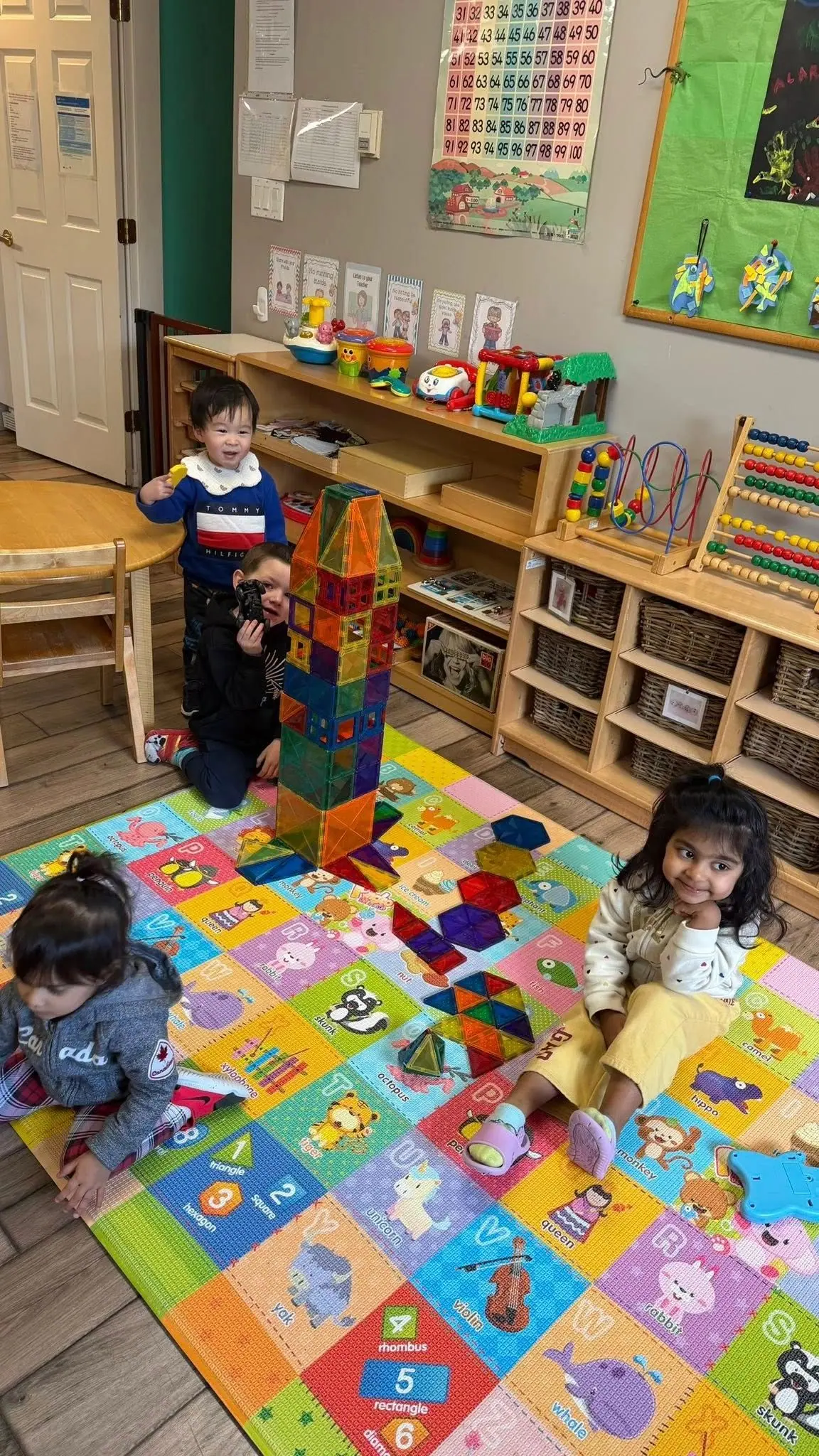
Books are part of the ordinary day here, and they fill the quieter parts of it too. Older children who no longer nap still get a rest period, and after a suitable rest they move on to calm table activities under an educator's supervision. Reading is one of those, along with puzzles and drawing.
The reason it is worth doing in both places is simple arithmetic. A child who is read to at the centre and at home gets roughly twice as much of it as a child who gets it in only one. Neither setting substitutes for the other, and the home version has something the group version cannot match: one adult, one child, and a book chosen because that particular child likes it.
Our guide to early learning and play covers how reading fits alongside the other things that matter in the years before school.
The mother with the repeated book kept reading it. About three weeks later her son started using one of its phrases at breakfast, in the right context, entirely unprompted. That is what fifteen readings buys.
Frequently asked questions
How early can I start reading to my baby?
From birth, and there is no need to wait for a baby who can sit up or focus on the page. At that stage the value sits in your voice, the rhythm of the language and the closeness of being held while it happens. Coquitlam Public Library runs Baby Story Time for children aged zero to two, which reflects how early this is worth starting.
What is dialogic reading and why does it work better?
It means turning the reading into a conversation rather than a performance. You stop and ask what is happening on the page, what the child thinks comes next, or what a character might be feeling, then wait for an answer. The child does more of the talking. Vocabulary grows through their own attempts to say things, which straight recitation gives them no room to do.
My child wants the same book every night. Should I push for variety?
No, follow the child. Repetition is how a young child moves from hearing a word to owning it. Each rereading frees up attention: the first time is the plot, later readings are the words, the pictures and the questions. Children usually drop a book on their own once they have taken what they need from it.
Does reading in my home language count, or should it be English?
It counts fully. The skills a child builds by being read to, including vocabulary, story structure, attention and the awareness that print carries meaning, transfer between languages. A parent reading fluently in their first language gives a child a richer half hour than the same parent working slowly through English.
What free storytime programs run in Port Coquitlam?
Terry Fox Library at 2150 Wilson Avenue in Port Coquitlam, part of the Fraser Valley Regional Library system, runs Storytime for children aged two to five with interactive stories, songs and rhymes. Space is limited. Because days and times change through the year, check the library's own events listing for the current schedule rather than relying on a fixed timetable.
What does Coquitlam Public Library offer for young children?
Its listed programs include Baby Story Time for ages zero to two, Family Story Time for ages zero to five, Toddler Plus Story Time for ages two to five, and Sensory Playtime for Babies, where babies explore toys with unusual textures, movement or sounds. Locations vary by session, so the event listing on the library's site is the place to check.
Do library cards cost anything?
No. Coquitlam Public Library issues a free card to anyone who lives in, owns property in, has a business in, or works for the City of Coquitlam, and you can apply online or in a branch. A free card is also available through the provincial BC OneCard program, which requires you to hold a card from your own local library system first.
Is it a problem if my child will not sit still through a whole book?
It is normal for a toddler, and a short book that holds attention beats a long one that does not. Let the child turn pages out of order, skip ahead, or stop halfway. Talking about one picture for five minutes is doing the work. Sitting quietly through an entire story is a skill that arrives later on its own.
What kinds of books work best for a two or three-year-old?
Books with strong pictures, few words on a page, and something to point at or predict. Rhyme and repeated phrases help because the child can join in, which is when they start producing language rather than just receiving it. Books about the ordinary parts of a child's day are often more engaging to them than adults expect.
Do you read to the children at the centre as well?
Yes, reading is part of the ordinary day and it also fills the quieter parts of it. Children who have finished resting and no longer nap move on to calm table activities under an educator's supervision, and books are one of those. Doing this at the centre and at home means the child gets it in both places rather than only one.
Before you visit
If you would like to see how books and quiet activities fit into a day here, come and look. A tour takes about half an hour, covers the classrooms, the play areas and the rest spaces, and you are welcome to bring your child along. Contact us to arrange a time that works around your schedule.
Copies a ready-written post, then opens LinkedIn.