September 11, 2026
Biting at daycare, why it happens and what we do about it
Biting is common in the toddler years and it is a stage almost every child grows out of. What sits behind it, how educators respond, why the centre will never tell you which child was involved, and what helps at home.
By Tracy, Owner and Principal
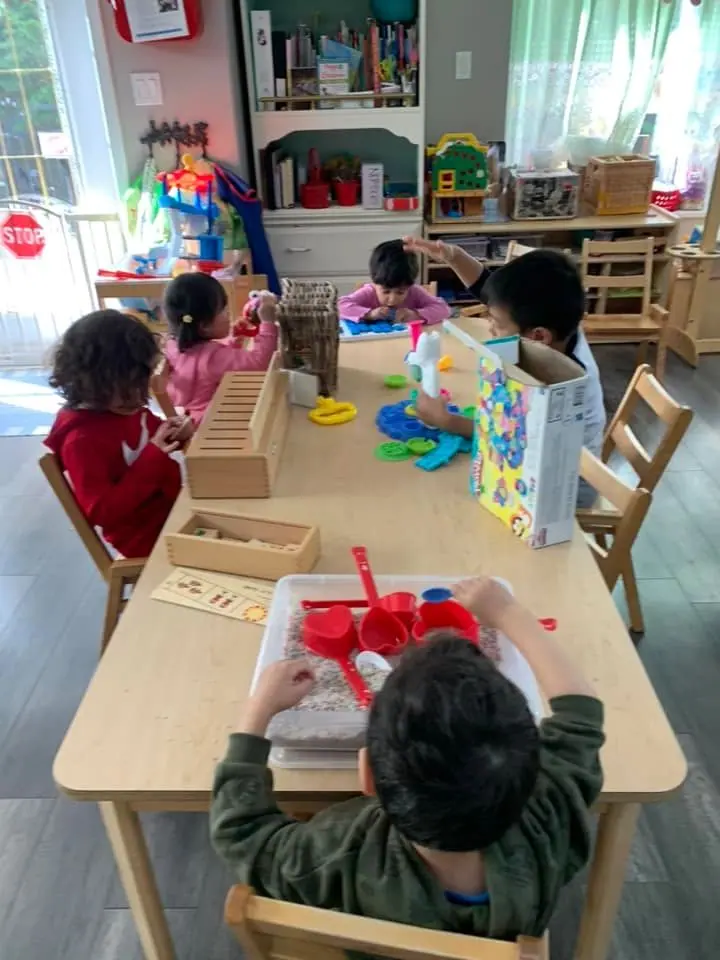
Few things upset a parent faster than a mark on their child's arm at pick-up. And few things upset a parent more than hearing that their own child was the one who made it.
Biting is one of the most common behaviours in group care for children under three, and one of the most misunderstood. Families on both sides of an incident often walk away feeling the centre handled it badly, usually because the centre could not say the thing they most wanted to hear.
This is a plain description of why toddlers bite, what we do when it happens, and what we can and cannot tell you afterward.
What is actually going on when a toddler bites
The Canadian Paediatric Society makes a point that reframes most of this: for a young child, behaviour is a way to communicate. A toddler who bites has a strong feeling and almost no equipment for handling it.
Think about what a two year old is working with. They may have a few dozen words. They cannot reliably wait, negotiate, or ask an adult for help before acting. They feel wanting a toy as an urgent physical sensation. And their mouth is one of the main ways they have explored the world since birth.
Put that child in a room with other children, one popular toy, and a small space, and biting becomes a predictable outcome rather than a surprising one.
The specific triggers cluster in a short list. A child wants an object another child is holding. A child feels crowded and wants space. A child is teething and their gums hurt. A child is tired, or hungry, or has been in a loud room for too long. And sometimes a child has discovered that biting produces an enormous, immediate reaction from every adult nearby, which for a toddler is interesting in itself.
None of that describes cruelty. The adult concept of aggression requires understanding that an action causes pain to another person and choosing it for that reason. A child of two is still building that understanding. The Early Learning Framework describes children as capable and as active participants in their own learning, and part of what a child at this stage is actively learning is how their actions land on other people.
Why the "why" matters more than the punishment
Parents often ask what the consequence is going to be. It is a fair question, and the honest answer is that consequences do very little at this age.
A toddler who bit a child forty minutes ago has limited ability to connect a later consequence to that earlier moment. Long explanations do not land either, because the vocabulary is not there yet. The Canadian Paediatric Society's guidance on positive discipline points adults toward calm reactions, acknowledging feelings, brief and clear communication, and describing the behaviour you do want rather than only naming the one you do not.
What actually reduces biting is changing the conditions that produced it. That is slower and less satisfying than a consequence, and it works.
What happens in the room when a child is bitten
The order matters here, and it is deliberate.
The bitten child is cared for first. An educator comforts them, looks at the skin, cleans the area, and gives whatever first aid is needed. That child gets the attention, the calm voice, and the time.
Only once they are settled does an educator turn to the child who bit. That conversation is short, calm, and at the child's eye level. It names what happened and what to do instead. It is not a lecture and it is not delivered with a raised voice, because neither of those teaches a toddler anything except that adults become frightening sometimes.
The incident is written down. The families involved are told what happened. And the educators start looking for the pattern.
Looking for the pattern
This is the part that does the real work, and it is invisible to parents.
After an incident, educators note the details. What time of day was it. What happened immediately before. Who else was close by. Had the child eaten recently. Were they tired. Was there teething going on. Which part of the room was it in.
Biting almost always clusters. It happens in the twenty minutes before lunch, when children are hungry. It happens at a particular transition when the room is noisy and everybody is moving. It happens over one specific toy that only exists in one copy. It happens to one child who tends to stand very close to other children.
Once the pattern is visible, the fix is usually practical. Bring snack forward by fifteen minutes. Buy two more of the popular toy. Split the transition so fewer children move at once. Put an educator closer to a particular corner at a particular time. Give a teething child something safe to chew.
Families are part of this. If you tell us your child slept badly, or that a molar is coming through, or that things have been unsettled at home, that goes straight into the picture we are building. Our post on a day at our centre hour by hour sets out the shape of the day, which helps when you are trying to place where in the routine something happened.
Why we will not tell you which child it was
This is the hardest conversation, and the answer never changes.
We will not name another family's child to you. We will not name your child to another family. That is true when your child was bitten, and it is true when your child was the one biting.
Parents whose child was hurt sometimes find this maddening in the moment. It helps to picture the reverse. Almost every child who bites is also bitten at some point in these years. The protection you find frustrating today is the same protection that applies to your family when the situation is turned around. It would be worth very little if it only applied in one direction.
What we can tell you is everything about your own child. What happened. When. Where on the body. What care was given. What we are changing in the room. If you want to talk it through in more detail than a doorway conversation allows, we can arrange a private meeting.
What helps at home
Three things make a real difference, and none of them is dramatic.
Give your child the words. Practise short phrases at home that they can actually produce under pressure. "My turn." "Stop." "Mine." A toddler who can say two words has an alternative to biting; a toddler with no words has none.
Watch the same conditions we watch. Tiredness and hunger are the two biggest drivers, and both are more controllable at home than anywhere else. An earlier dinner or an earlier bedtime for a couple of weeks often shows up as calmer days at the centre.
Keep your reaction flat. Calm, brief, and boring beats loud and long. A child who gets an enormous reaction learns that biting is a reliable way to make the room revolve around them.
And do not bite your child back. It does not teach the lesson adults imagine it will. What it teaches is that a trusted adult will hurt them, and that biting is something grown-ups do too.
What the regulation requires
Under the Child Care Licensing Regulation, a licensee must have a written policy on behavioural guidance, and any guidance given to a child must suit that child's age and stage of development. The regulation also lists behaviour by adults that is prohibited in a licensed setting, which sets a floor no centre may go below.
You are entitled to ask any centre to show you that policy before you enrol, and it is a reasonable thing to ask about on a tour. Our post on questions to ask on a daycare tour covers other things worth raising while you are in the building.
When to look further
Almost all biting resolves. It fades as language arrives and as impulse control develops, usually well before the fourth birthday.
A smaller number of children keep going longer, bite harder, or bite in ways that seem unconnected to the ordinary triggers. If that is what you are seeing, the useful next step is a conversation with your family doctor or a public health nurse, who can look at the whole picture including speech development and sleep. A centre can tell you what happens in the room. A health care provider can look at the parts we cannot see.
Frequently asked questions
Why do toddlers bite other children?
Biting in the toddler years usually comes from a gap between what a child wants and what they can yet do or say. A child who wants a toy, wants space, or feels crowded has an urgent feeling and very few tools for handling it. Teething discomfort, tiredness, hunger, overstimulation, and the discovery that biting produces a dramatic reaction all feed into it. Behaviour at this age is a form of communication rather than an intent to hurt.
At what age is biting most common?
It appears most often between roughly the first birthday and age three, which is exactly the window where a child's wants have outgrown their language and their impulse control. As speech develops and a child gains other ways to make themselves understood, biting usually fades on its own. That is why the strongest single response is helping a child find words.
Does biting mean my child is aggressive?
A toddler who bites is showing a stage-typical behaviour rather than a personality trait. The adult idea of aggression involves understanding that an action will hurt someone and choosing it anyway, and a two year old is still developing that understanding. Most children who bite at two show no unusual behaviour at all by four.
Will you tell me which child bit mine?
No, and the same protection applies to your child in the reverse situation. We will tell you exactly what happened, when it happened, what we did to care for your child, and what we are changing in the room. We will not name another family's child to you, and we will not name yours to them. Confidentiality runs both ways and every family at the centre receives it.
What do educators actually do when a child is bitten?
The bitten child comes first. An educator comforts them, checks the skin, cleans the area, and applies whatever first aid is needed. Once that child is settled, an educator speaks to the child who bit, calmly and briefly, at their level. The incident is recorded and the families involved are told. Long lectures do not work at this age, so the response is short, clear, and immediate.
Should I bite my child back to show them how it feels?
No. A young child cannot make the logical connection an adult expects from that, and what they learn instead is that a trusted adult will hurt them and that biting is something grown-ups do. It also gives the behaviour far more attention than it needs. Calm, consistent, unexciting responses work better than dramatic ones.
How does a centre stop biting from happening again?
By looking for the pattern rather than treating each incident as isolated. Educators note the time of day, what happened just before, who was nearby, and whether the child was hungry, tired, or teething. Most biting clusters around identifiable conditions. Once those conditions are known, the room can be changed: more of a popular toy, a quieter corner, an earlier snack, closer supervision at a specific transition.
What should I do at home if my child is biting?
Give them the words. Practise short phrases they can actually use, such as "my turn" or "stop". Watch for the same conditions we watch for, particularly tiredness and hunger, and adjust the routine where you can. Keep your reaction calm and brief. Tell us what you are noticing so we are working on the same pattern from both sides.
Can a bite from another child make my child ill?
Most toddler bites do not break the skin and need only cleaning and comfort. Where skin is broken, the area is cleaned and the injury is recorded, and we will tell you so you can decide whether to speak to your health care provider. If you have any concern about how a bite is healing, your doctor or a nurse line is the right place to ask.
Does a licensed centre have to have a policy on how it handles behaviour?
Under the Child Care Licensing Regulation a licensee must have a written policy on behavioural guidance and must ensure that any guidance given to a child is appropriate to that child's age and development. The regulation also sets out behaviour by adults that is prohibited in a licensed setting. You are welcome to ask any centre to show you its behavioural guidance policy before you enrol.
Before you visit
If your child is in the biting stage, or has been on the receiving end of it, we are used to that conversation and we are not shocked by it. Ask us how we handle it and what we would change in the room. Contact us to arrange a visit and see how the groups are set up.
Copies a ready-written post, then opens LinkedIn.