August 29, 2026
Why your child cries at daycare drop-off, and what helps
Crying at the door is one of the most common things parents ask us about. Here is what the Canadian Paediatric Society says about separation anxiety, the four things we ask you to do at the door, the one thing that makes tomorrow harder, and what the educators do in the ten minutes after you leave.
By Tracy, Owner and Principal
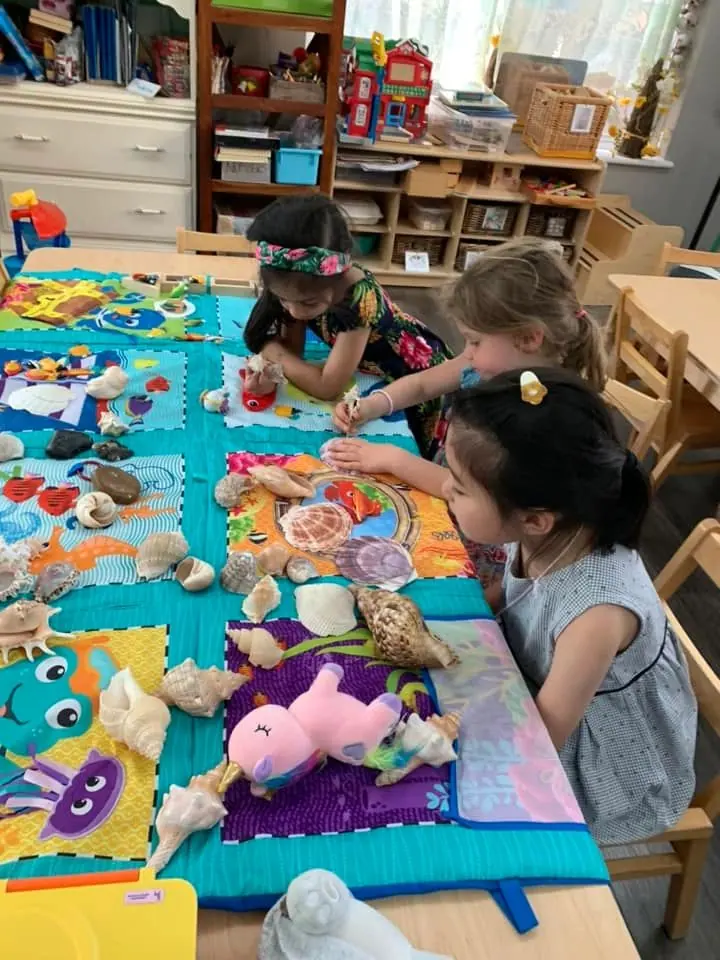
Most children cry at the door at some point. It is the single thing parents ask us about most often, and it is almost never a sign that something is wrong with the centre or with the child.
What follows is what the routine looks like here, what a national paediatric body says about separation at this age, and the one habit that reliably makes the next morning harder.
What separation anxiety actually is
The Canadian Paediatric Society describes separation anxiety as the panic or worry a baby feels when a parent leaves the room, and says it usually peaks around 8 or 9 months. The same handout says that by 3 years old a child should be able to separate from a parent with little clinging or crying.
That is a wide range, and it covers most of the children who start at a centre. A one year old who cries at the door is behaving the way the guidance describes. A three and a half year old who has cried at every drop-off for months is worth a conversation with us and with your doctor, not because something is certainly wrong, but because it is outside what the guidance leads you to expect.
The same organisation makes a second point that families find more reassuring than the first. Healthy attachment is what helps a child manage separations later on, including starting child care, and a baby can form a secure attachment with several caregivers without weakening the bond with a parent. Your child liking their educator does not cost you anything.
The four things we ask you to do
Stay calm, even when you are not. Children read tone and face before they understand sentences.
Give a reassuring goodbye and say it out loud. Not a wave from the hallway.
Tell your child you are coming back, and anchor it to something in their day rather than to a clock. After nap. After snack. Before dinner.
Then go.
That last one is the whole technique. Everything before it is preparation for it.
The four things we ask you not to do
Do not leave without saying goodbye.
Do not draw the farewell out.
Do not come back into the room after you have left.
Try not to let your child see that you are anxious.
The first one deserves more than a line, because it is the one most often suggested by a well-meaning friend or relative, and it is the one that causes the most trouble.
Slipping out while your child is distracted works exactly once. The crying starts later, after you have gone, so you do not see it and it feels like a success. What the child learns is that a parent can vanish without warning. The result is a child who spends the morning checking where you are instead of joining in, and a harder goodbye the next day rather than an easier one.
Coming back in is a smaller version of the same problem. It restarts the goodbye from the beginning, and it teaches that enough crying brings you back.
What happens in the ten minutes after you go
The educator comforts your child, then gently moves them into something familiar. In practice that usually means an activity they had already been looking at before you left, because a child who is upset will accept a known thing more readily than a new one.
Every child is different, but many settle a short time after the parent has actually gone. The gap between how it looked when you left and how it looks ten minutes later is often large enough to surprise parents when we describe it.
You will hear from us by text message or phone. If your child stays distressed, or needs more support than the morning routine gives them, we contact you. That is not something you need to request.
What to actually say
Parents often ask for the words, so here they are. Keep them short, keep them the same every day, and say them in whatever language you use at home. A familiar phrase in a familiar language does more than a careful sentence in English.
A goodbye that works usually has three parts. Name what is happening now. Name who is coming back. Name when, using an event rather than a time.
"You are staying at daycare this morning. Teacher will help you. I will come back after your nap."
Then one hug, one goodbye, and out. Not four more sentences, because each extra sentence tells your child that leaving is negotiable.
What to avoid is asking a question you do not want answered. "Do you want me to go?" hands a two year old a decision they cannot make. So does "are you going to be okay?", which invites the answer no.
If your child is old enough to talk about it later, talk about the day in the evening while it is calm, rather than in the car on the way in. Morning conversations about daycare tend to happen when everybody is already rushed.
If somebody else does the drop-off
Sometimes a different person at the door changes everything, in both directions. A child who cries with one parent may walk straight in with the other, or with a grandparent. That is not a judgement on anyone. It usually means the routine with that person is more settled, or that the goodbye is quicker.
If swapping helps, swap. It is a legitimate solution and we would rather you use it than persist with a morning that is not working.
Two practical points. Tell us in advance who is bringing your child, so the person at the door is expecting them. And remember that releasing your child to somebody other than a parent needs your written consent, which is one of the two consents section 57 of the Child Care Licensing Regulation requires us to hold on file. That consent covers collection, so if a new person is going to be picking up as well, tell us before the day rather than on it.
When crying at the door means something else
Sometimes the crying is not about the separation.
A child who was settled for weeks and has started crying again is common enough that it barely raises an eyebrow here. The usual triggers are a holiday, an illness, a new baby at home, a move, a change of room, or a change in who does the drop-off. Once the first excitement of a new place is gone, the child understands the routine well enough to have an opinion about it.
Sometimes it is physical. A child coming down with something often reacts at the door before any other symptom shows up.
Sometimes it is the morning itself. A rushed breakfast, a missing shoe and a five minute drive with a tense parent will produce tears at the door that have nothing to do with the centre.
None of this is diagnosis, and we are not qualified to give you one. It is the list of things we ask about when a family tells us drop-off has changed, because knowing which one it is changes what we try next.
What you can tell us, and how
Anything you give us in writing about your child's care, and that we agree to, becomes part of the record we are required to keep for them under section 57 of the Child Care Licensing Regulation. That includes special instructions about routines and participation in activities, alongside the health and contact details the regulation lists.
In plain terms: if there is a phrase that works at home, a specific order to the goodbye, or a person your child wants at the door, tell us and we will follow it. Consistency is most of what makes a drop-off routine work, and we cannot be consistent about something nobody has told us.
The honest part
A brief goodbye is better for your child and harder for you. You will hear crying as the door closes and then have no information for a while. That is a real cost and we will not pretend otherwise.
There is also a limit to what any routine achieves. Some children take weeks. Some cry every Monday for a term and are fine by Wednesday. Settling in here is flexible and shaped around each child, with shorter days first where that helps, but nobody at this centre will give you a number of days, because there is not one.
If you want to shorten the uncertain part, the text message is the lever. Ask us to send it at a specific time, and we will.
Frequently asked questions
Is it normal for my toddler to cry every morning at daycare?
Crying at separation is common in young children. The Canadian Paediatric Society describes separation anxiety as usually peaking around 8 or 9 months, and says that by 3 years old a child should be able to separate with little clinging or crying. If crying at the door continues well past that, talk to us and to your doctor.
Should I sneak out if my child is crying?
No. We ask families never to leave without saying goodbye. It can look like it works the first time, because the crying starts after you have gone. What it teaches is that you might disappear at any moment, so the child watches the door instead of joining in.
How long does drop-off crying usually last after I leave?
Every child is different, but many settle within a short time once the parent has actually left. The educators comfort the child and then move them gently into a familiar activity. If your child stays upset, we contact you rather than waiting for pick-up.
Will you call me if my child does not stop crying?
Yes. We update families by text message or phone during the day, and we will contact you if your child remains distressed or needs extra support. You do not have to ask for this and you do not have to wait for it.
Can my child bring a comfort toy from home?
A small comfort toy or security blanket is welcome, and it should be labelled with your child's name. That is different from ordinary toys from home, which we ask you to leave behind, because they cause disputes and get lost.
Does a longer goodbye help my child feel better?
Usually the opposite. A warm but brief goodbye tends to work better than a long one. Stretching out the farewell keeps your child in the hardest moment for longer and often raises the tension for both of you rather than lowering it.
My child was fine for two weeks and now cries. What changed?
This is common and it does not mean something has gone wrong. Children often settle easily at first, then react once the newness has passed and they understand the routine. Illness, a holiday, a new sibling or a change at home can all trigger it. Tell us what has changed.
What can I do at home the night before to make drop-off easier?
Keep the evening and the morning predictable, pack the bag before bed so the morning is not rushed, and talk about the day in simple, concrete terms. Say who will drop off, what happens at the centre, and who will collect them and when.
Before you visit
If you are at the stage of choosing rather than settling, it is worth reading what happens on a first day first, because most of the work happens before the morning it gets hard.
We are at 1103 Confederation Drive in the Citadel neighbourhood of Port Coquitlam. You can meet the people who would be at the door, read about our programs, and arrange a visit with your child along.
Copies a ready-written post, then opens LinkedIn.