September 18, 2026
Dressing a toddler for a Lower Mainland year at daycare
Layers beat one thick coat, clothes a child can manage alone speed up every transition, and labelling is the single most useful thing a parent can do. A practical guide to daycare clothing through a British Columbia year.
By Tracy, Owner and Principal
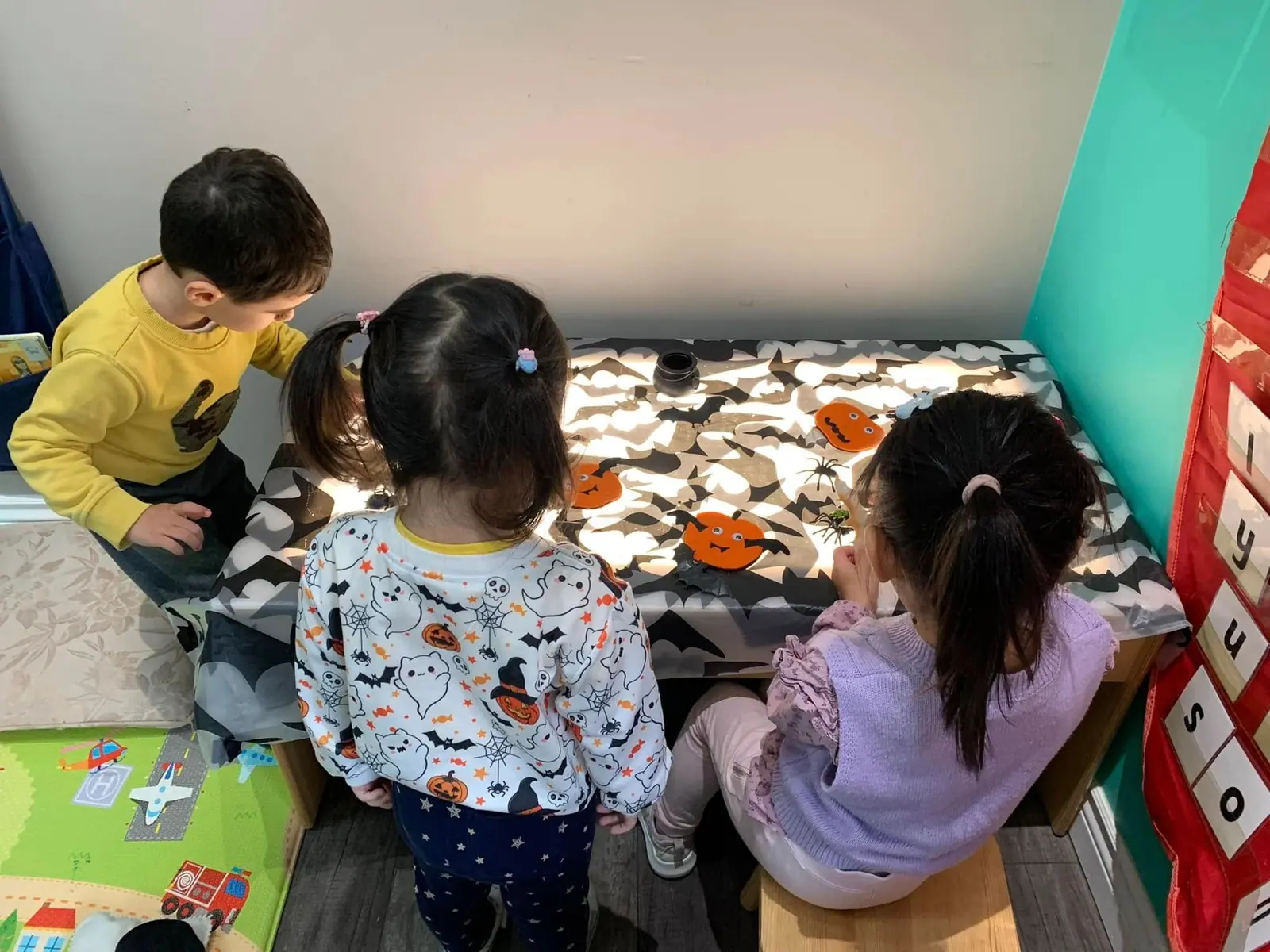
New families ask what their child should wear, and the honest answer is duller than they expect. The things that make a real difference cost very little. The things families spend money on frequently matter less than the packaging suggests.
Three ideas do most of the work: layers beat one thick coat, clothes a child can handle alone are worth more than clothes that look good, and labelling everything is the single highest-value twenty minutes a parent will spend.
Layers, because a Lower Mainland day moves
Drop-off at 7:30 in October can be six degrees with damp air. By eleven it may be sixteen and sunny. By three the cloud is back.
A child in one heavy coat has exactly two states. Coat on, which becomes too warm within ten minutes of active play. Coat off, which is too cold standing still. Neither is right for most of the day, and an adult ends up managing the switch.
Layers solve it. A long sleeved top, a fleece or sweater over it, and a light shell on the outside give four or five workable combinations. The child can add or remove one piece as the day changes, which is a decision they can genuinely make at three or four years old with a bit of practice.
There is a second advantage that shows up more often than the temperature one. Children get things on themselves. Paint, water, lunch, mud. With layers, one item comes off and the child is still dressed. With a single outfit, one spill means a full change, which is the difference between using one spare shirt and using a whole set.
For winter, the outer layer matters more than its thickness. Something that blocks wind and sheds water does more than a bulky coat that soaks through. Bulk also gets in the way of climbing and running, which is what a child is trying to do.
Clothes a child can manage without help
This is the part families underestimate, and it is worth spelling out why it matters beyond convenience.
Elastic waistbands over buttons and stiff fasteners. Large zipper pulls that small fingers can grip. Sleeves that are not so tight they need pulling. Shoes with velcro or elastic closures.
No shoes with laces. We ask families for secure, easy-to-manage footwear. Laces come undone, undone laces are a trip hazard in a room of moving children, and a young child cannot retie them. An educator retying laces is an educator not doing something else, and it happens many times a day across a group.
The reason this matters beyond speed is what happens in the child. A three year old who gets their own jacket on has done something real. They know it. Multiply that across getting dressed for outdoor time, changing after water play, and putting shoes on for a walk, and a child in workable clothing collects several small successes a day that a child in difficult clothing never gets to have.
The Province's Early Learning Framework treats children as capable and active participants in their own learning. That principle lands in something as ordinary as a waistband. Clothing that requires an adult puts an adult in the middle of every transition. Clothing a child can manage hands the task to the person who benefits from doing it.
Labelling, the highest-value thing you will do
Every item. Shirts, trousers, socks, mittens, hats, jackets, boots, the water bottle, the mat cover, the blanket, the comfort item.
The reason is simple arithmetic. Thirty children take off outerwear within the same few minutes each morning. Parents in the same neighbourhood shop at the same handful of stores, so several of those coats are similar and some are identical. An unlabelled navy fleece stops belonging to anybody very quickly.
A name written inside is what sends a garment home with the right child. Nothing else works reliably, because a young child cannot identify their own sweater in a pile with any confidence, and an educator who did not see it arrive has no way to know.
Iron-on or stick-on name labels made for clothing survive washing well. A laundry marker on the care tag works too, refreshed a few times a year. Whatever you use, check them each season. A faded label has stopped doing its job while looking like it is still doing it.
Small items disappear fastest, which is why socks and mittens are worth the extra minute even though labelling socks feels excessive. Our what to pack for daycare checklist lists everything that needs a name on it, in one place.
Spare clothes, and how many is enough
We ask families to keep at least two complete changes of clothes at the centre. A complete change means shirts, trousers, underwear and socks, since a partial set solves half a problem.
Younger children and children who are toilet learning generally need three or more sets, along with enough diapers and wipes. Toilet learning is the period where a family reliably underestimates the number, and running short mid-morning is not a good day for anybody.
The habit worth building is a weekly check. A spare set that was used on Tuesday is not a spare set on Wednesday, and the way families discover this is a phone call. Restocking as clothes come home, rather than when we ask, keeps the supply steady.
Change the sets seasonally as well. Shorts at the bottom of a bag in January are not a change of clothes. Neither is a set two sizes too small, which happens faster than anyone expects at this age.
Rain gear, and what it is actually for
We do not take children on walks or outside during rainy or snowy weather. On those days educators run indoor movement and gross-motor activities instead.
So rain gear is not about outdoor play in the rain here. It is about two other situations, both of which come up plenty in a Port Coquitlam winter.
The first is the journey. The walk from car to front door, or from bus stop to front door, is short and can be very wet. A hooded jacket and pull-on boots handle it, and a child who arrives soaked starts the day using one of their spare sets.
The second is damp days that are not actually raining. The Lower Mainland produces a great many of these. The sky is grey, the ground is wet, and it is not raining, so outdoor time goes ahead. Wet ground means wet trousers and wet shoes, and a child dressed for that is comfortable while a child in canvas shoes is not.
Rain boots are worth keeping at the centre through winter, along with a spare pair of dry socks. Wet feet ruin an afternoon faster than almost anything else.
Summer, sun hats and water
Families provide a labelled sun hat, a reusable water bottle, and sunscreen suitable for their child, and replace them as needed.
For hot days, light and loose clothing that covers the skin does more work than most parents assume. HealthLink BC's guidance on sun safety for children points to covering up as a first line, with hats and shade alongside it. The spots that burn are the ones nobody is watching: the back of the neck, the tops of the shoulders, the tops of the ears. A shirt that covers the shoulders solves two of those without anyone reapplying anything.
Water bottles need labels for the same reason everything else does, and they need to be ones your child can open themselves. A bottle a three year old cannot open is a bottle they do not drink from.
What to leave at home
We ask families not to send jewellery, valuables, small objects that could be a choking hazard, or personal toys. Necklaces and bracelets on a child in active play carry a risk that is not worth the wear.
Drawstrings around the neck or hood are worth avoiding on anything a child wears in a play space, for reasons that are obvious once stated.
Medication never goes in a child's bag. It is handed directly to an educator with the required authorisation and instructions, which is a licensing matter as well as a safety one.
The short version
Buy less, label more, and choose things your child can put on themselves. The jacket that photographs well is rarely the jacket that survives a February at daycare. What survives is simple, replaceable, easy to fasten, and has a name written inside it.
Frequently asked questions
How should I dress my toddler for daycare in the fall and winter?
In layers rather than one thick coat. A long sleeved top, a fleece or sweater, and a light outer shell give a child several settings for a day that starts cold and warms up by lunch. Layers also mean one wet or dirty item can come off without the whole outfit needing replacement, which is the situation that actually arises most days.
Why do you recommend layers instead of a warm coat?
A Lower Mainland day frequently moves ten degrees between morning drop-off and midday. A child in a single heavy coat has two options, wearing it or not, and neither is right for most of the day. Layers let the child adjust as conditions change, and adjusting is something a three year old can learn to do without an adult managing it.
What kind of shoes work best at daycare?
Secure, easy-to-manage footwear with no laces. Laces come undone, they are a trip hazard in a room full of moving children, and a young child cannot retie them alone. Velcro or elastic closures let a child put their own shoes on, which speeds up every transition and gives them something real to be proud of.
How many spare clothes should stay at the centre?
At least two complete changes kept here, meaning shirts, pants, underwear and socks. Younger children and children who are toilet learning generally need three or more sets, along with enough diapers and wipes. Check the bag weekly, because a set that has already been used is not a spare.
Does everything really need to be labelled, including socks?
Yes, everything, socks included. Thirty children remove outerwear within the same few minutes each morning and a good number own something similar. A name written inside a garment is what returns it. Unlabelled items end up in a lost property basket where nobody can prove ownership, and small things disappear fastest.
What is the best way to label clothing that survives washing?
Iron-on or stick-on name labels made for clothing hold up well, and a laundry marker on the care tag works if you refresh it a few times a year. Whichever method you choose, check the labels each season, since names fade after enough wash cycles and a faded label does the same job as no label.
Does my child need rain gear if the centre stays inside when it rains?
They need it for the walk between the car or bus and the front door, which in a Port Coquitlam winter is a genuinely wet few minutes. Rain gear also matters on damp days that are not actually raining, when the ground is wet and outdoor time goes ahead. A jacket with a hood and boots that pull on cover both situations.
What should my child wear on a hot summer day?
Light, loose clothing that covers the skin, plus a labelled sun hat, which families provide. Send sunscreen suitable for your child, and a reusable labelled water bottle. Clothing that covers the shoulders and the back of the neck does more than most parents expect, since those are the spots that burn while everyone is watching the face.
Are there clothes or accessories you ask families not to send?
No jewellery, no valuables, and nothing small enough to be a choking hazard. Personal toys stay at home as well. Drawstrings around the neck or hood are worth avoiding on anything worn in a play space. Medication never goes in a child's bag and is handed directly to an educator with the required authorisation.
How does what my child wears affect their independence?
Considerably. A child who can pull on their own trousers, work their own zipper and fasten their own shoes is doing several small tasks a day without adult help, and each one is practice. Difficult clothing removes that practice and puts an adult in the middle of every transition, which is slower for the group and less useful for the child.
Before you visit
If you are getting ready for a first day and are unsure what to send, ask us. We would rather answer a clothing question in advance than have a family discover the gap in week one. Contact us with your questions, or to arrange a visit.
Copies a ready-written post, then opens LinkedIn.