September 28, 2026
Why toddlers cannot share on demand, and what actually helps
Sharing depends on impulse control and understanding another person's point of view, both of which are still developing through the preschool years. What comes first, why forced handovers teach the wrong lesson, and how educators support turn-taking instead.
By Tracy, Owner and Principal
Two children, one red bucket. An adult says "share", one child gives it up in tears, and the adult feels the situation has been handled. The bucket has moved. Very little else has.
Sharing is one of the things adults expect earliest from young children and understand least well. It is genuinely difficult, it depends on capacities that are still under construction for years, and the way most of us were taught to enforce it does not build the skill it is meant to build.
What sharing actually requires
Think about what a two-year-old has to do to hand over a toy they want.
First, stop themselves. There is a strong impulse to hold on, and interrupting an impulse in the moment is the work of a part of the brain that develops slowly across early childhood and keeps developing well past it.
Second, understand that the other child has their own mind. That child wants the bucket, feels something about not having it, and that feeling is real even though it is happening inside a different person. Recognising another person's separate point of view is a substantial cognitive step.
Third, decide the second child's want outweighs their own right now, and act on that decision while still feeling the original want.
That is three demanding things at once, under emotional pressure, from a person who has been alive for about two years. The Canadian Paediatric Society lists asking toddlers to share directly among examples of expecting a child to do something beyond their skill or developmental level.
None of this means a child is being difficult. It means the request is ahead of the equipment.
Parallel play comes first
Before children play together, they play near each other. The Canadian Paediatric Society notes that at 12 to 18 months children usually begin to take part in parallel play, playing alongside but not directly with other children.
Adults sometimes read this as a child failing to be social. It is the opposite. A child in parallel play is watching intently, copying what the other child does, tolerating someone in their space, and gradually building a sense of the other person as a play partner. Cooperative play grows out of it.
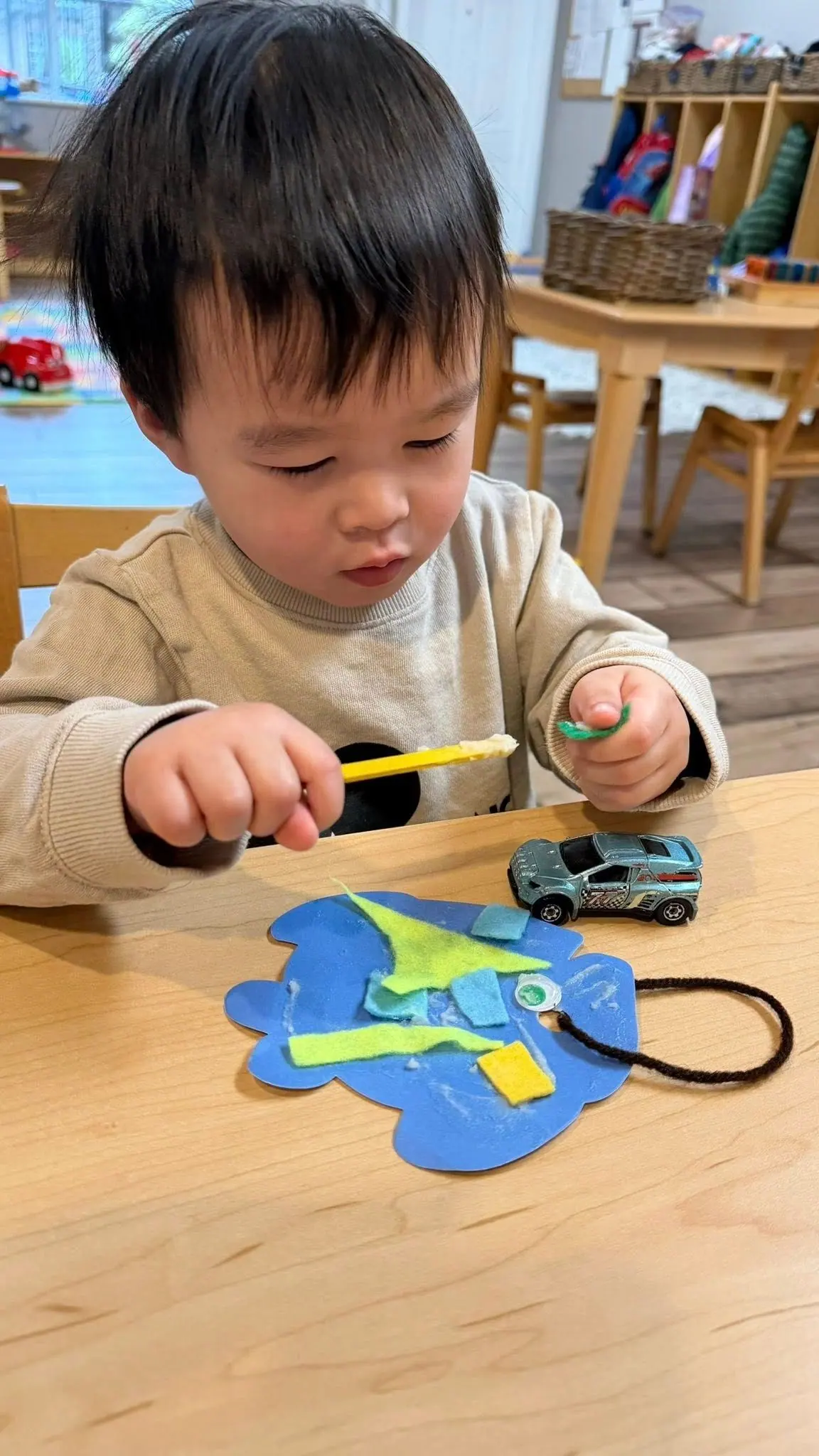
A two-year-old at a table beside another two-year-old, each with their own dough, is doing developmental work. The temptation to push them into a joint project usually produces less than leaving them to it.
Turn-taking is the achievable version
Here is the practical shift that changes how these moments go.
Sharing asks a child to give something up. Turn-taking asks a child to hold something for a while and then pass it on, with a return in view. Those are very different demands, and the second is within reach far earlier than the first.
The structure that works is simple: "He has it now. You can have it next."
The whole thing rests on one condition. The next turn has to actually happen, and an adult has to make sure it does. If "next" reliably arrives, a child learns that waiting works, that the adult can be trusted, and that giving something up is temporary rather than permanent loss. If "next" is a phrase adults say to end an argument and then forget, a child learns that waiting gets them nothing, and they will grab harder next time.
Delivering the next turn is the part adults skip, and it is the part that does the teaching.
Why forced handovers teach the wrong thing
Picture what a child learns when an adult removes a toy from their hands and gives it to another child.
The lesson available is that a bigger person can take things from a smaller person when they decide to. That is a lesson about power. Nothing in the exchange helped the child stop their own impulse, notice the other child's feelings, or choose to act on them, because the adult did all of it for them.
The child who received the toy learns something too: that adult intervention is the way to get what you want. Which produces the appeal to a nearby grown-up rather than an attempt to negotiate.
Slower approaches feel less decisive and teach considerably more.
What an educator does in the moment
The Early Learning Framework, British Columbia's provincial guidance for early years practice, asks educators to reflect on exactly this. Among the questions it puts to educators: what is the role of the educator in solving conflicts between children, and is there a right way to do it? It asks them to notice whether children are developing relationships and learning to negotiate within them. It describes materials as things children gather around to investigate, negotiate, converse and share.
The framework treats conflict as a place where learning happens rather than a problem to eliminate. In practice that means:
Staying close rather than intervening instantly. Many disputes resolve without an adult, and the ones that do teach the most.
Naming what each child wants. "You want the truck. He is using the truck." This sounds obvious to an adult and it is genuinely informative to a two-year-old, who may not have processed that the other child's behaviour comes from a want at all.
Acknowledging the feeling. The Canadian Paediatric Society suggests acknowledging a child's feelings, saying something like "I can see that you're upset", even when they are misbehaving. A child whose distress is recognised calms faster than one who is told not to be upset.
Describing the behaviour you want, without lecturing. Telling a child what they can do works better than a general instruction about kindness.
Offering a structure, not a verdict. A turn with an end point, a second similar item, or an option neither child thought of.
Redirecting where the situation is beyond the child. Redirection, switching from one activity to another, works well with toddlers, and there are moments where it is the right answer rather than a way of dodging one.
The practical version at home
Put the most treasured toys away before a friend arrives. The Canadian Paediatric Society suggests exactly this to reduce the chance of conflict, and it is not cheating. There will be many opportunities to practise sharing without staking them on the one object your child cannot yet give up.
Have duplicates where you sensibly can. Two similar diggers remove a great deal of pressure while the underlying skills develop.
Use a real next turn. Follow through on it every time, including the times it is inconvenient.
Let small disputes run a little longer than is comfortable. Step in for safety. Otherwise, give them a few seconds. Children work things out more often than adults expect, and each time they do, they get better at it.
Notice when a child does manage it. A child who waits, or offers a turn unprompted, has done something genuinely hard. Saying what you noticed is more useful than a general "good sharing".
Where this shows up in a centre day
Group care gives children far more practice at this than most home settings, because there are more children, more shared materials, and more moments where two people want the same thing.
Water play and messy play here involve practice at sharing and taking turns, with clear safety boundaries, age-appropriate materials, and active supervision. Those activities suit this particularly well: the materials are communal by nature, nobody owns the water table, and turn-taking comes up naturally many times in a session without an adult having to manufacture it. Activities stop if conditions become unsafe.
The same thing happens with the instruments, the blocks and the dress-up basket. Dozens of small negotiations a day, most of them handled by the children with an adult nearby.
If you want a fuller picture of what children are working on across a day, our post on what your child actually learns at daycare covers the wider set of skills, and our guide to early learning and play sets out how play connects to development.
What to expect, honestly
Progress is not linear. A child who took turns beautifully in September may grab in January, particularly when tired, unwell, or dealing with change at home. Impulse control is fragile in early childhood and it is the first thing to go under stress.
Children also share differently in different settings. The classroom is easier than home for a lot of children, because classroom materials belong to everybody and the expectation is consistent. A favourite toy at home is a much bigger ask.
The Canadian Paediatric Society's general point about development applies here as much as anywhere: children develop skills at different times, and it is normal for a child to be behind in some areas and ahead in others. A child who is slower to share is not a child who is unkind.
Frequently asked questions
At what age can a child genuinely share without being told to?
There is no single age, and it arrives later than most families expect. Spontaneous sharing depends on impulse control and on understanding that another person has their own wants and feelings, and both keep developing through the preschool years and beyond. Many children manage supported turn-taking well before they manage unprompted sharing. Treating four as an age when sharing should be reliable sets an expectation most four-year-olds will not consistently meet.
Is it wrong to make my toddler hand over a toy?
It moves the object without building the skill. The Canadian Paediatric Society lists asking toddlers to share among the things that can be beyond a child's developmental level, and a forced handover mainly demonstrates that a larger person can take things. Offering a turn-taking structure instead, with a next turn that genuinely arrives, gives the child something they can learn from.
What is parallel play and should I be worried about it?
Parallel play is playing alongside another child rather than directly with them, and the Canadian Paediatric Society notes children usually begin taking part in it at around 12 to 18 months. It is a normal and necessary stage. Children in parallel play are watching each other closely and copying what they see, which is how cooperative play is built. A two-year-old playing beside a friend rather than with them is doing exactly what that age does.
How does turn-taking differ from sharing?
Turn-taking keeps the child in possession for a defined period and promises a return, which is a much smaller demand than giving something up with nothing in view. It also has an adult holding the structure, so the child does not have to manage the whole negotiation alone. Sharing in the full sense means voluntarily giving up something you want because someone else wants it, which requires more of a child. Turn-taking comes first and it is the route to the other thing.
Should I stop my children arguing over a toy?
Step in for safety, and think twice before stepping in for peace. A dispute over an object is where children practise stating what they want, hearing that someone else wants it, and finding a way through. An adult who resolves every conflict instantly removes the practice along with the noise. Staying nearby and narrating what is happening usually helps more than deciding the outcome for them.
What does an educator actually do when two children want the same thing?
They usually stay close, name what each child seems to want, and offer a structure rather than a verdict. That might be a turn with a clear end point, a second similar item, or a suggestion the two children had not thought of. The aim is for the children to do as much of the resolving as they can manage, with an adult holding the frame so it does not collapse into grabbing.
Does having two of the same toy help?
Often, yes, particularly with younger children. Duplicate or similar items reduce the number of moments where the whole situation depends on one object, which lowers the pressure while children are still developing the skills to negotiate. It is a reasonable practical step rather than a way of avoiding the lesson: children still get plenty of opportunities to practise sharing without an adult engineering them.
Why does my child share at daycare but not at home?
Home toys are usually the child's own, which changes the situation entirely. A shared item in a classroom belongs to everyone by default and the expectation around it is clear and consistent. A favourite toy at home belongs to that child, and asking them to give it up is a bigger request than the one they meet at the centre. Putting the most treasured items away before a friend visits removes a conflict nobody needed.
How do you handle sharing during water and messy play?
Water and messy play here involve practice at sharing and taking turns, with clear safety boundaries, age-appropriate materials, and active supervision by educators. Those activities are useful for this precisely because the materials are naturally communal, so turn-taking comes up constantly in a low-stakes way. Activities stop if conditions become unsafe.
What should I say instead of "be nice and share"?
Something concrete about the current situation, then something about what happens next. Naming what each child wants makes the situation visible to both of them. Describing the behaviour you want to see, rather than lecturing about kindness, gives a child a clear action to take. "He is using it now, and you can have it when he is finished" gives a young child far more to work with than an instruction to be nice.
Before you visit
Watching how educators handle a dispute over a toy tells you a great deal about a centre. If you would like to see how it works here, contact us to arrange a visit, and we can talk about where your child is with turn-taking and what would help them next.
Copies a ready-written post, then opens LinkedIn.