September 8, 2026
What your child actually learns at daycare, and the framework behind it
British Columbia has a published early learning framework built around four living inquiries rather than a checklist of skills. Here is what it says, why play is treated as the learning rather than a break from it, and how to read a day of block building properly.
By Tracy, Owner and Principal
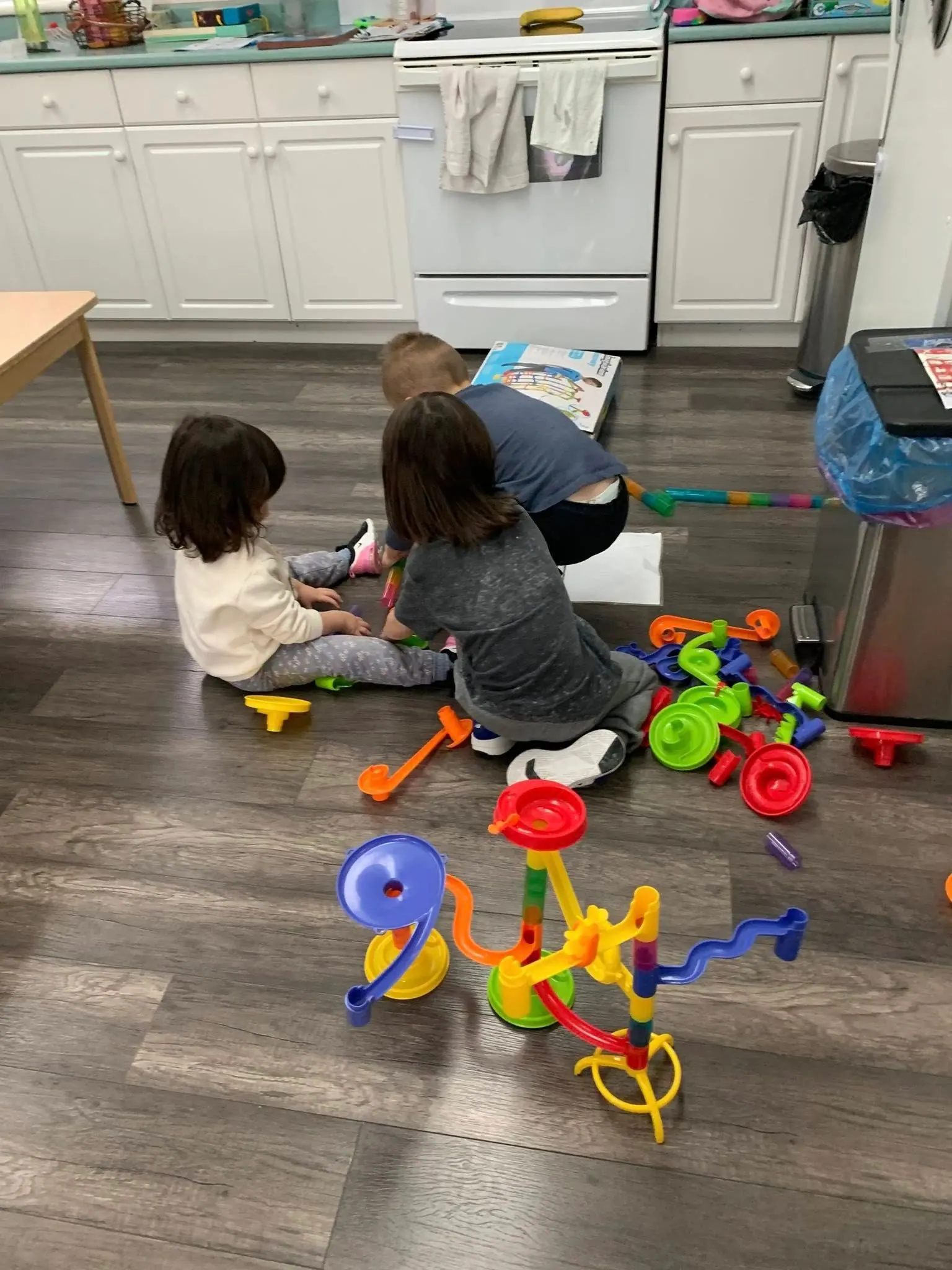
Parents ask a version of this question on almost every tour, usually after watching a room for a few minutes. It comes out politely, but the real question underneath is: is any of this teaching, or is it just supervised playing?
British Columbia has published an answer, and it is more interesting than most families expect.
There is a framework, and it is public
The British Columbia Early Learning Framework is a Ministry of Education document, revised in 2019, and anyone can download it. It runs to over a hundred pages and it is written for educators rather than for marketing.
It applies across settings: StrongStart BC programs, primary classrooms, child care settings, preschools, and other early childhood development or child health programs. That breadth is deliberate, because one of its aims is to connect the early years with the primary years rather than treating the start of kindergarten as a hard boundary.
What it is not is a curriculum with lessons in it. There is no week-by-week plan, no list of things a four-year-old must be able to do, and no assessment schedule. That absence is the design, and understanding why is most of what follows.
The four living inquiries
The framework describes four living inquiries:
Well-being and belonging. Nurturing a sense of well-being and belonging supports children as they learn about and investigate the world around them.
Engagement with others, materials, and the world. Children construct meaning as they engage with materials, other children and adults, the environment, the community, and the world.
Communication and literacies. Children use multiple modes of expressive languages to communicate ideas, participate in relationships, and make meaning in their homes and communities.
Identities, social responsibility, and diversity. A positive personal and cultural identity is the awareness, understanding, and appreciation of all the facets that contribute to a healthy sense of oneself.
The term itself carries meaning. The framework notes that living inquiries are what the Ministry of Education calls areas of learning, and chooses the other phrase on purpose. An inquiry is something a child pursues. An area of learning is something an adult delivers.
The framework is also explicit that there are no pre-set ways to engage with the four, and that pedagogy should be grounded in the place, land, families, histories and cultures of local communities. So two centres following the same framework will look different from each other, and that is intended rather than a failure of standardisation.
Why play is the learning
The framework states that living inquiries are rooted in the belief that children learn by doing when they are engaged in projects and inquiries that extend their interests.
That sentence is the whole argument, so it is worth unpacking with something concrete.
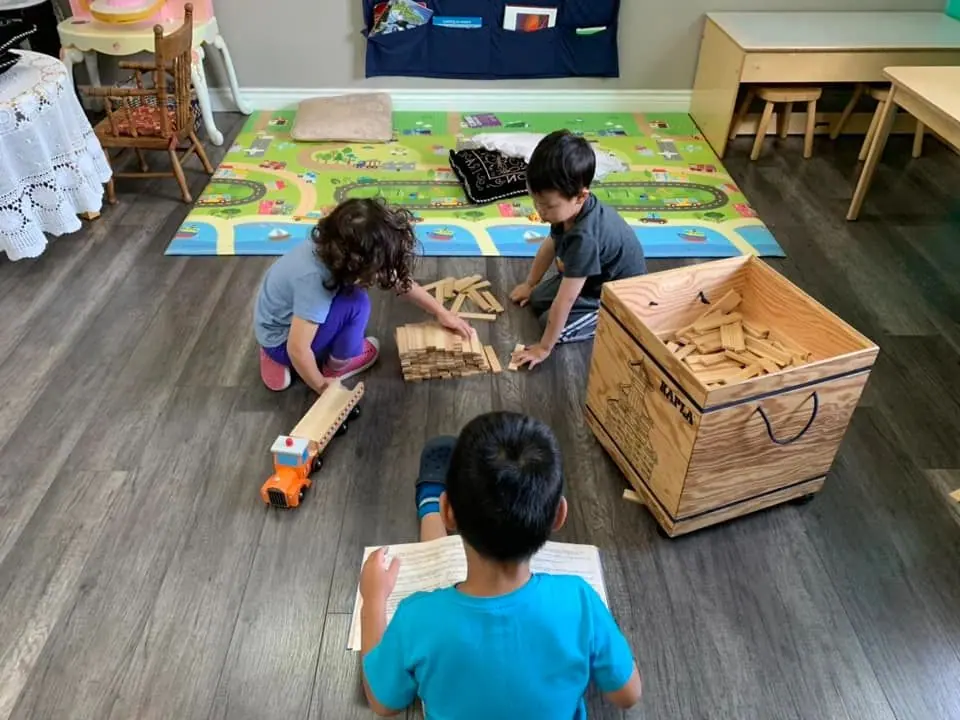
A child spends forty minutes building a tower with wooden blocks. It falls over four times. On the fifth attempt they widen the base without being told to.
What happened in those forty minutes: a hypothesis about balance, tested and revised. A sequence held in mind. Tolerance of failure repeated four times without giving up, which is the single hardest thing on this list. Probably a negotiation with another child about whose blocks these are. Vocabulary, if an adult was nearby naming what was happening. And the physical work of placing a small object precisely with hands that are still learning to do that.
An adult watching for "learning" sees a child playing with blocks. An educator watching sees a child working through balance, sequence, persistence and negotiation at the same time, and knows that interrupting to run a letters activity would end all of it.
This is why educators protect long stretches of uninterrupted play rather than filling a day with short activities. The framework's position is that the engagement is the mechanism, and a day chopped into fifteen-minute blocks never lets a child get deep enough into anything for it to work.
What communication and literacies actually means
This is the inquiry families most often shrink down to reading and writing, and the framework is broader than that on purpose.
The wording is multiple modes of expressive languages. A child communicates by talking, by drawing, by building, by moving, by singing, by pointing at a picture board, by dressing up as somebody else. Those are all treated as ways of making meaning rather than as steps toward the only real one.
That matters particularly for a centre running three separate language programs. A child working in French with Teacher Clara, or in Mandarin with Teachers Anita and Beth, or in English with Teachers Lana and Victoria, is doing exactly what this inquiry describes. There is more on how that works in what learning two languages actually does for a toddler and a fuller treatment in our guide to raising a bilingual child.
It also reframes music and art. Instruments here include drums, tambourines, rhythm sticks, shakers, bells and xylophones, with educators guiding safe use while children explore rhythm, sound, movement and expression. Under this framework that is communication work, not a break from the learning part of the day.
Belonging comes first for a reason
Well-being and belonging is listed first, and the ordering is not accidental.
A child who does not feel secure in a room does not explore it. They stay near the door, or near one adult, and they do not take the small risks that learning requires: trying the thing that might not work, joining a group already playing, saying the word they are not sure of.
Which means that the settling-in period, the goodbye at the door, and whether an educator knows your child's comfort item are not preliminaries to the learning. They are the first inquiry, being worked on directly. The framework also notes that learning is not an individual act but happens in relationship with people, materials and place.
That is worth remembering during a hard fortnight at the start. A child who is crying at drop-off and settling ten minutes later is doing the work of the first inquiry, and there is more on that in why your child cries at drop-off.
How anyone knows what a child is learning
Without a checklist, the reasonable next question is how educators track any of this.
The framework's answer is pedagogical narration: documenting what children do and reflecting on it, individually and with colleagues, to understand what a child is actually pursuing. Alongside that it describes a pedagogy of listening, critical reflection, and collaborative dialogue.
In plain terms, an educator notices that three children have spent a week building increasingly elaborate roads, thinks about what they are working on, and puts out something that extends it rather than replacing it with a planned activity about something else.
At this centre, what reaches you is a conversation. Educators give families regular verbal updates at pick-up covering daily experiences, interests, social interactions, communication, emotional wellbeing, developing skills, routines, participation, and anything where working together with you would help. There is no fixed schedule of written reports, and a private meeting can be arranged whenever a longer conversation would be useful, requested by either of us.
Some families prefer paper. The trade is real and worth naming: a form filled in quarterly is easier to file and much further from what actually happened on Tuesday.
Reading the day yourself
If you want to see the framework in a room rather than in a document, these are the things to watch for.
Long stretches on one thing. A child deep in an activity for half an hour is the framework working. A room where everything changes every ten minutes is not.
Materials that can be more than one thing. Blocks, fabric, boxes, water, sand. Open-ended materials support inquiry in a way that a toy with one correct use does not.
Adults at child height, listening. Educators sitting alongside and asking about what a child is doing, rather than directing from above.
Children's own work on the walls, rather than twenty identical crafts made from the same template.
An answer to a specific question. Ask an educator what your child was working on this week. An answer describing a real child doing a real thing tells you more than any printed curriculum, because noticing is the skill the whole framework runs on.
Where the framework sits alongside the rules
Two separate things govern a licensed centre and it helps to keep them apart.
The Child Care Licensing Regulation is law. It sets ratios, qualifications, space, records, health and safety, and Fraser Health inspects against it. A centre either complies or it does not.
The Early Learning Framework is guidance about pedagogy. It shapes how educators think about what they are doing. It is not something a licensing officer scores.
Both matter, and neither substitutes for the other. There is a fuller account of the regulated side in our guide to licensed child care in British Columbia, and a practical walkthrough of checking any facility's record in how to check a daycare's licence.
Frequently asked questions
Does British Columbia have a curriculum for daycare?
It has the British Columbia Early Learning Framework, published by the Province and revised in 2019. It is a framework rather than a curriculum with set lessons, and it applies across child care settings, preschools, StrongStart BC programs and primary classrooms.
What are the four living inquiries in the BC Early Learning Framework?
Well-being and belonging; engagement with others, materials, and the world; communication and literacies; and identities, social responsibility, and diversity. The framework calls them living inquiries rather than subjects, and says there are no pre-set ways to engage with them.
Why does the framework say living inquiries instead of areas of learning?
The framework notes that living inquiries are what the B.C. Ministry of Education has called areas of learning, and it uses the different term deliberately. The word inquiry signals something children pursue rather than something delivered to them on a timetable.
Is my child learning anything if they play all day?
The framework is built on the view that children learn by doing when they are engaged in projects and inquiries that extend their interests. A child stacking blocks is working on balance, sequence, negotiation and persistence at once, which is why educators protect that time rather than interrupting it.
Should my child know their letters and numbers before kindergarten?
The framework does not set out benchmarks a child must hit by a given age, and it treats communication as covering multiple ways of expressing meaning rather than only reading and writing. Talk to your child's health care provider about any development concern rather than measuring against another child.
How do educators know what a child is learning if there is no checklist?
Through pedagogical narration, which the framework describes as a way of documenting and reflecting on what children do, and through daily observation. At this centre that turns into a conversation with you at pick-up rather than a written report on a schedule.
Does the framework connect to what happens in kindergarten?
Yes. The framework states that the living inquiries are closely linked to the B.C. curriculum and its core competencies and reflect shared philosophical understandings, which is part of why it was written to span the early years and the primary years.
What does belonging mean in an early learning setting?
The framework describes nurturing a sense of well-being and belonging as supporting children as they learn about and investigate the world around them. In practice it means a child who feels secure in a room will take the risks that learning requires, and a child who does not will stay near the edges.
How can I tell whether a centre takes early learning seriously?
Ask an educator what a specific child was working on this week and why it mattered. An answer that describes a real child doing a real thing is worth more than a printed curriculum on the wall, because the framework is about noticing what children are actually pursuing.
Coming to see it
We are at 1103 Confederation Drive in the Citadel neighbourhood of Port Coquitlam. The best way to judge any of this is to stand in a room for twenty minutes and watch what the adults do when a child is deep in something. Our daily schedule shows how the day is shaped, and you are welcome to arrange a visit and see it for yourself.
Copies a ready-written post, then opens LinkedIn.