September 22, 2026
Starting kindergarten in School District 43, and what school readiness really means
How the move from daycare to kindergarten works for Tri-Cities families. Age rules, when registration opens in School District 43, what deferring a year means, and the self-care and social skills that matter far more than reading.
By Tracy, Owner and Principal
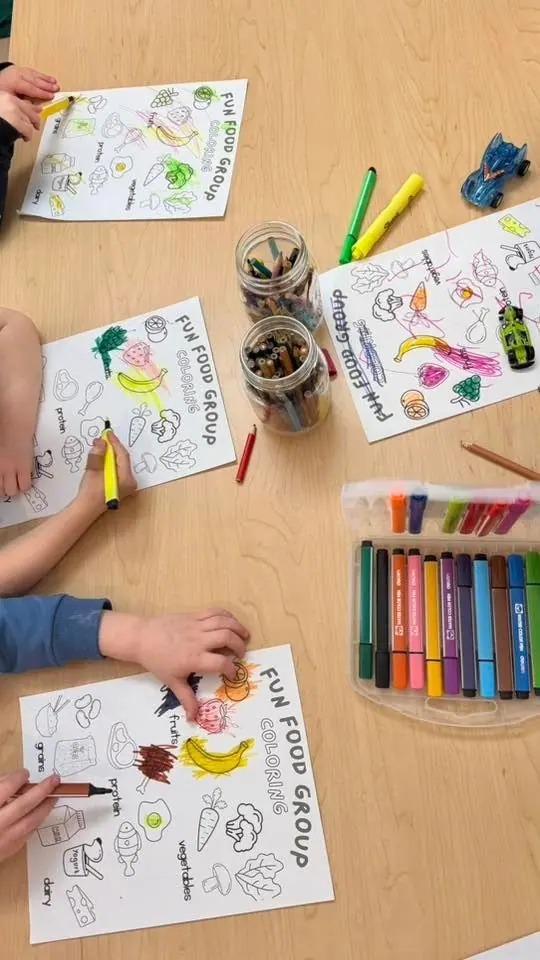
Every January a parent asks me some version of the same question. Should my four-year-old be reading before kindergarten? Should they know their letters? Should we be doing worksheets at home?
The answer is no, and the question itself points at the wrong thing. Kindergarten is where reading gets taught. Arriving without it is what the teachers expect and plan for. What makes the first month easy or hard is a completely different set of skills, and almost none of them are academic.
This is a plain description of how the move from daycare to kindergarten works for families here, what School District 43 requires, and what is genuinely worth working on in the year before school starts.
Who School District 43 covers, and the age rule
School District No. 43 (Coquitlam) serves Coquitlam, Port Coquitlam and Port Moody, plus the villages of Anmore and Belcarra. Families in all five register through the same district. Which school your child attends is set by the catchment area your address falls in rather than by which city you live in, and catchments do not always follow the boundary a parent expects, so it is worth checking rather than assuming.
The age rule in British Columbia is the same everywhere in the province. A person is deemed to be of school age at the beginning of a school year if they will have reached the age of five on or before December 31 of that school year. The district states the same thing from the parent's side: students turning five before December 31 in the current year may register for kindergarten in February of that year.
The effect surprises some families. A child born in January and a child born the following December start kindergarten in the same September, which puts nearly a full year of development between the oldest and the youngest child in the room. Teachers know this and plan around it. It is worth knowing as a parent too, because a young-for-the-year child who seems behind in October often looks entirely typical by spring.
When registration happens
Registration opens for a short window in early February for entry the following September. For September 2027 entry, School District 43 has published February 1 to 4, 2027.
I am giving you a specific year on purpose, and I want to be clear about why. These dates move every single year, and the format has changed too: registration for September 2026 entry ran online only from February 2 to February 5, 2026. A blog post that prints one year's window and leaves it there becomes wrong very quickly while still looking confident. Check the district's own kindergarten registration page in the autumn before you plan to register. That is the only current version.
Missing the window is not a disaster. The district accepts a New Student Registration Form and the required documents by email to your catchment school outside the February period, though schools are closed through July and August. Registering during the published window is still better, because the enrolment numbers gathered then shape staffing and how classes get organised for September.
You will need supporting documents alongside the form. These typically include the child's birth certificate, proof of citizenship or immigration status, and proof of your address in the catchment. The district has allowed families to send scans or photographs of the verification documents rather than attending the school in person, which removes a trip for working parents.
Families interested in French Immersion, Mandarin Bilingual or Montessori should note that those Programs of Choice have run on an earlier application period in early January, separate from the ordinary kindergarten registration in February. That is a different deadline, a few weeks sooner, and missing it is the most common scheduling error I hear about.
Deferring a year
Some families consider holding a child back a year, most often when a child has a late birthday and seems young for the group.
This is allowed. The Province advises that parents who choose to delay school enrolment for their five-year-old should discuss the best placement for their child with the school principal. The limit is that a child must be registered for school or homeschooling by the calendar year in which they turn six. So the deferral is for one year, and after that, entry is required.
Whether it is a good idea depends on the child rather than on the birth date. A conversation with the principal, and with the educators who see your child every day, is worth having before deciding. The educators here can tell you what your child does in a group of other children, which is the thing a parent has the least chance to observe directly.
What school readiness actually means
Here is what makes the difference in the first weeks, in rough order of how much it matters.
Managing their own things. Coat on and off. Shoes on and off. Opening a lunch container and a water bottle. Putting a backpack where it goes and finding it again. A kindergarten teacher has roughly twenty children and no time to dress anyone. A child who cannot open their own lunch may simply not eat.
Separating from a parent. Saying goodbye and then joining what is happening in the room. Children who have been at a centre have usually practised this for years. Children coming straight from home sometimes meet it for the first time in September, which is a difficult week to meet it in.
Following a group instruction. School gives instructions to the room. "Everybody put your books away and come to the carpet" is directed at nobody by name, and a child has to work out that it includes them. This is a genuine step up from being told individually, and it is one of the most common things teachers mention.
Keeping track of belongings. A lunch bag, a water bottle, a jacket, a library book, a note that needs to get home. Children who have practised this at daycare do it half-consciously. Children who have not are learning it while also learning everything else.
Staying with something difficult. Not giving up the moment a task gets hard, and asking for help with words rather than by melting down. This one keeps developing for years, and any progress before September helps.
Using the toilet independently. Including managing clothes and washing hands without a reminder.
Notice what is absent from that list. Letters, numbers, sight words, writing a name. Those are the things parents worry about and the things school is designed to teach. The Province's own guidance on preparing a child points at play rather than instruction, saying extended engagement in play is one of the best ways to prepare a child for school. That fits the British Columbia Early Learning Framework, which applies across child care settings, preschools, StrongStart programs and primary classrooms, and which treats play as the serious business of early childhood rather than a break from learning.
Our post on what your child actually learns at daycare covers the same ground from the other direction, and our guide to early learning and play goes through why play does the work people assume worksheets do.
How the year before school helps
The routines of a group child care day map onto a school day more closely than most parents realise.
Children here move between activities on a schedule rather than when they feel like it. They tidy up before the next thing begins. They sit with a group for stories and circle time. They wait for a turn, share materials, and manage a disagreement with an educator nearby rather than resolving it for them. They put on their own outdoor clothes, at least eventually, and they keep track of their own cup and their own mat cover.
None of that is taught as a school preparation programme. It is simply what a day with a group of children requires. But a child who arrives at kindergarten already fluent in those mechanics has their whole attention free for the new things: a new building, a new adult, a much larger group, and eventually reading.
The social side matters just as much. Learning that another child wants the same toy, that a friend can be upset with you and still be a friend the next day, that an adult will help you sort it out but will not do it for you. Those are the lessons that keep a five-year-old functioning in a room of twenty.
The practical thing families forget
Kindergarten does not end when your workday ends. This catches families out every year.
A full day kindergarten still finishes in the early afternoon, and the school year is full of holidays, spring break and professional development days that a workplace does not observe. Families who assumed school would replace child care find themselves needing before-school care, after-school care, or both, plus something for the non-instructional days.
This is worth sorting out well before the summer. Demand for school-age spaces follows the same pattern as demand for everything else in child care, which our post on how daycare waitlists work in BC covers. August is a bad month to start looking.
The part that is mostly about the parent
One last thing, offered gently. The first day of kindergarten is often harder on the adult than on the child, and children read their parents closely.
A parent who is visibly anxious at the door hands that anxiety over. The same rule that applies to a daycare drop-off applies here: a warm goodbye, a clear statement that you will be back, and then leaving. Standing at the window, or coming back for one more hug, extends the difficulty rather than easing it.
Most children are absolutely fine within a week or two. The ones who take longer are usually not the ones the parents predicted.
Frequently asked questions
Which communities does School District 43 cover?
School District No. 43 (Coquitlam) serves Coquitlam, Port Coquitlam and Port Moody, along with the villages of Anmore and Belcarra. Families across all five register through the same district, though the school your child attends is determined by the catchment area you live in rather than by which city you are in.
How old does my child have to be to start kindergarten in BC?
A child is considered of school age at the start of a school year if they will have reached the age of five on or before December 31 of that school year. In practice that means a child born at any point during a calendar year starts kindergarten in September of the year they turn five, so a December birthday and a January birthday in the same year begin together.
When does kindergarten registration open in School District 43?
Registration runs for a short window in early February for entry the following September, and the district has published February 1 to 4, 2027 for September 2027 entry. The window shifts each year and has previously been online only, so check the district's own kindergarten registration page for the current year rather than relying on last year's dates.
What if I miss the February registration window?
You can still register. The district accepts a New Student Registration Form and the required documents by email to your catchment school outside the February period, though schools are closed through July and August. Registering during the published window is better, because enrolment numbers from that window shape staffing and class organisation for September.
Can I delay my child's start by a year?
Yes. The Province advises parents who choose to delay enrolment for a five-year-old to discuss the best placement with the school principal. A child must be registered for school or homeschooling by the calendar year in which they turn six, so the deferral is for one year and entry after that is not optional.
Does my child need to read or write before kindergarten?
No. Kindergarten is where reading and writing are taught, and arriving without them is expected. The Province's own advice on preparing a child points at play rather than instruction, saying extended engagement in play is one of the best ways to prepare a child for school. Self-care, group routines and separating comfortably matter far more on day one.
What does school readiness actually mean then?
The practical skills a child needs to function in a room of twenty without a dedicated adult. Managing their own coat, shoes and lunch container. Saying goodbye to a parent and joining in. Following an instruction given to the whole group. Keeping track of their belongings. Staying with something difficult for a few minutes before asking for help.
How can daycare help my child get ready for school?
By running the kinds of routines school will expect. Children here move between activities on a schedule, tidy up before the next thing, manage their own belongings, sit with a group for stories and circle, and practise waiting and turn-taking. Those habits transfer directly, and a child who already has them spends far less energy on the mechanics of the day.
What documents do I need to register for kindergarten?
You will need a completed New Student Registration Form plus supporting documents, which typically include your child's birth certificate, proof of citizenship or immigration status, and proof of your address in the catchment. The district has allowed families to send scans or photographs of the verification documents rather than attending the school in person.
Will my child still need child care once kindergarten starts?
Most families find they do, because a kindergarten day is shorter than a working day and the school year has holidays and professional development days a workplace does not. Before-school and after-school arrangements are common, and it is worth sorting out early rather than in August, since demand for school-age spaces follows the same pattern as everything else.
Before you visit
If your child is heading to kindergarten in the next year or two and you want to talk about what the year before school should look like, come and see the rooms. A tour takes about half an hour and you are welcome to bring your child. Contact us and we can go through what would suit your child's age and your family's schedule.
Copies a ready-written post, then opens LinkedIn.