Part 3 of 5
Allergies and anaphylaxis at daycare in British Columbia
What to disclose before day one, how a care plan is written under sections 57 and 58 of the Child Care Licensing Regulation, how an Anaphylaxis Action Plan works at a nut-free centre, and when to ask for a meeting with the educators.
By Tracy, Owner and Principal
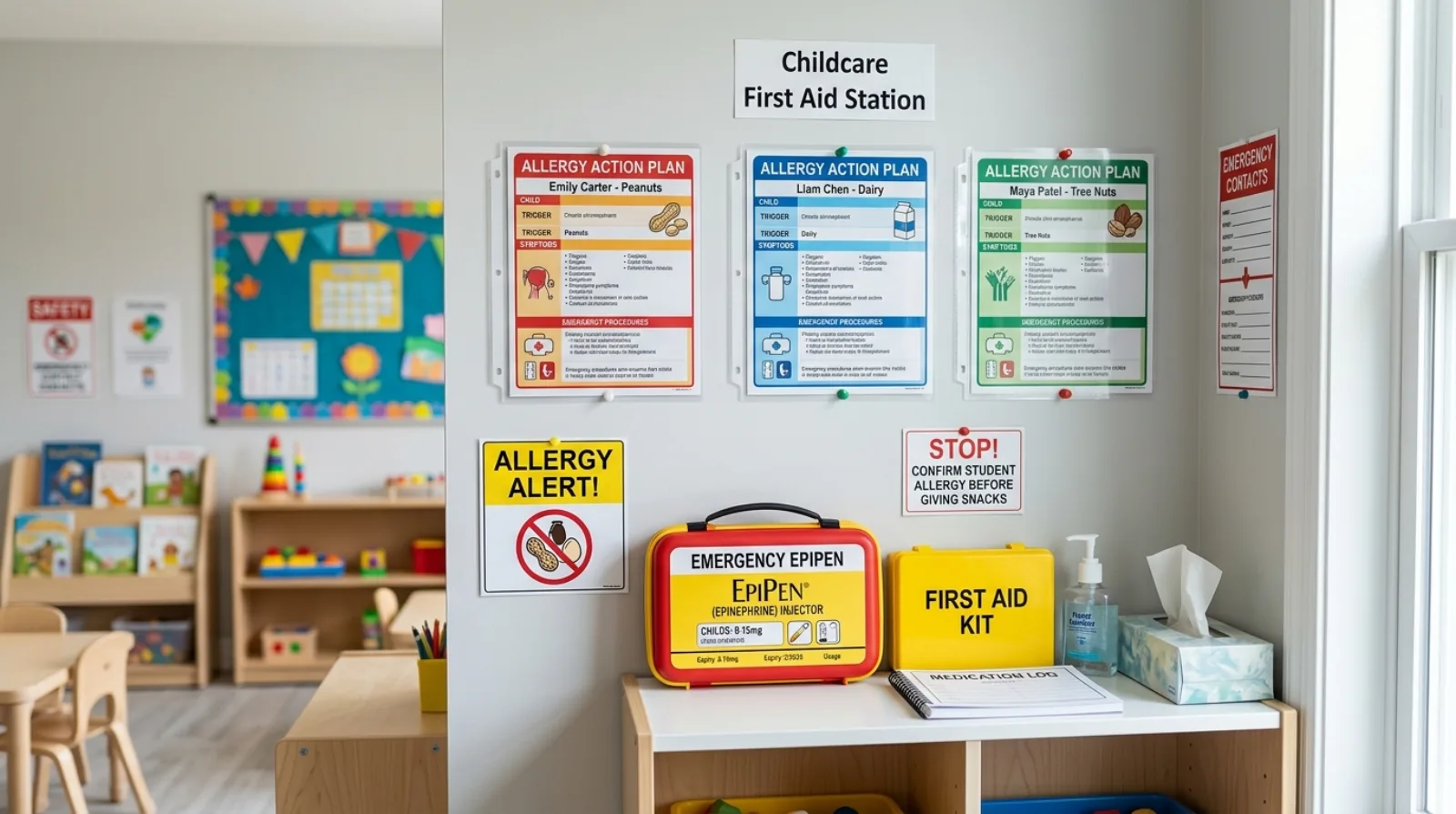
A food allergy at daycare is not a complication. It is a scheduled, documented, planned-for part of running a licensed centre, and the paperwork is more mundane than families expect. What makes it work is doing the paperwork before day one, so the plan already exists on the morning the plan is needed.
The regulation, in two sections
Section 57 of the Child Care Licensing Regulation requires the centre to hold a current record for every child that includes any illness, allergy or medical disability the family has disclosed, along with the parent's contact details, the child's medical practitioner, the emergency contact, immunization status, and any medication given.
Section 58 goes further for a child who needs extra support. It requires a care plan to be developed in consultation with the family, naming the relevant diagnoses, the recommendations of the health professionals who are involved, the resources available at the centre, and any adaptation the centre is making. The plan is reviewed with the family at least once a year, and more often if the circumstances change.
For a child with a severe food allergy, both sections apply. The record under section 57 captures the disclosure; the care plan under section 58 is where the Anaphylaxis Action Plan, the auto-injector protocol and the daily operational detail live.
The Anaphylaxis Action Plan
Food Allergy Canada recommends every child with a severe allergy have an Anaphylaxis Action Plan, and the Canadian Paediatric Society publishes a sample template at caringforkids.cps.ca. The plan is a one-page document, carries the child's name and recent photo, and sets out:
- The specific allergens. Not "nuts" but "peanut, cashew, hazelnut, almond". Not "fish" but "finned fish including salmon, tuna, cod". Precision matters because an educator making a judgement at a shared table needs the exact list.
- The confirmed diagnosis. The allergist's name and the date of the diagnosis, so the plan has a traceable origin.
- The usual symptoms. The child's own pattern. Some children present with hives first; some vomit first; some have no skin signs and go straight to difficulty breathing. The plan names the pattern the family and allergist have seen.
- The emergency treatment. The prescribed epinephrine auto-injector (brand, dose), the exact administration instructions ("remove blue cap, firm press into outer thigh, hold ten seconds, massage ten seconds"), and the next steps (call 911, call parent, transport to hospital).
- The parent and emergency contacts. Multiple numbers, in priority order.
A plain-text or printed plan is enough. A laminated one lives longer. The centre keeps a copy in the child's file, a copy with the auto-injector, and a copy posted discreetly where the educators can find it quickly without reading it in detail in front of the child.
Where the auto-injector sits
Two auto-injectors are the common recommendation, because a reaction can rebound and paramedics are rarely at the door in the first minute. Both stay with the child's primary group through the day, which means they travel with the group to the yard, to the gym, on a field trip and to the room where the group is based.
They do not live in a locked office cupboard. They do not live in the child's lunch bag where another child might pick them up. They live in a designated, educator-accessible spot in the room, and in a labelled kit when the group moves. The expiry date is logged and tracked, because an expired auto-injector may not deliver the full dose.
Food Allergy Canada is explicit that staff practice with a training device. The first time a human presses an auto-injector into a thigh should not be the first time the human has held one. Trainer injectors are inexpensive and available from pharmacies that stock the real device.
The nut-free policy, actually enforced
A nut-free policy only works if every family keeps it. At La Vie Est Belle, where families provide every meal and snack, every family brings food into the building, and every family therefore holds the policy on behalf of every other family's child.
Enforcement in practice is quiet. At drop-off the educator can glance into the lunch bag or confirm with the parent that nothing on the day's menu contains nuts. During the day, nothing from outside the group's lunches enters the room. "May contain" statements on packaged foods are respected as if they were "contains" statements, because shared-equipment traces have reached children with severe allergies before.
The common failures are predictable:
- A granola bar with "may contain almonds" that was in the pantry at home.
- A chocolate bar whose back-of-pack warning no one read.
- A packaged pesto with cashews in the ingredient list.
- A bakery muffin from a store that handles almonds.
None of these are the parent's fault; they are the designed cost of a shared-industry food supply. The policy exists because the alternative is relying on label-reading alone, which has a known failure rate.
Allergy versus intolerance, which look alike and are not
The Canadian Paediatric Society's Caring for Kids site has a clean distinction. A food allergy is an immune response, can be triggered by trace amounts, develops symptoms within minutes to two hours, and can be life-threatening. A food intolerance is a digestive response, generally requires larger quantities, develops symptoms hours later, and is uncomfortable rather than dangerous.
The common intolerances are lactose and gluten. Lactose intolerance means the body cannot digest the sugar in dairy; the symptoms are gas, bloating and loose stool, and lactase enzyme drops or lactose-free dairy fix most cases. Gluten intolerance covers a wider range, from celiac disease (an autoimmune condition requiring a strict gluten-free diet for life) to non-celiac gluten sensitivity (a milder, less-understood condition). Both are disclosed to the centre, but neither requires an auto-injector, and neither triggers the full Anaphylaxis Action Plan.
The daycare still accommodates intolerances. Section 48(2) of the regulation lets a care plan override the Food Guide default, and a child who cannot have dairy is fed accordingly. The paperwork is lighter because the risk is lighter.
The daily operational details
Six quieter things keep an allergy policy actually working:
Hand-washing before and after meals. The regulation already requires this for infection control under section 46, and it doubles as allergen hygiene. A child with peanut residue on their fingers who shares a toy with a peanut-allergic child has created an exposure the air did not create.
Separate serving utensils. In a bring-your-own centre, this is less of a factor than in a cook-on-site centre, because each child has their own container. Still, where food is passed, the serving spoon is washed between children with different allergens.
Educator training. The educators who may use an auto-injector practice with a trainer. The practice is more often than the regulation requires, because muscle memory degrades.
A clear communication path. Any symptoms during the day, even mild ones, are reported to the parent at pick-up. A child who had a few hives at lunch and recovered without an injector is still a child whose parent needs to know, so the allergist can decide whether the exposure pattern is changing.
A yearly review. Section 58 requires the care plan to be reviewed at least annually. Allergies can be outgrown (particularly cow's milk, egg and wheat allergies), new ones can develop, and the auto-injector dose can change as the child grows. Reviewing the plan once a year catches the drift.
No food sharing. This is the single rule children have the hardest time with and the single rule that most prevents an incident. Educators enforce it at every meal and snack: your food is for you, their food is for them.
When to ask for a meeting
Three triggers justify a meeting with the educators, rather than a quick word at pick-up:
- A new allergy or a confirmed diagnosis you did not have before.
- A reaction at home that was more severe than previous ones.
- A change in the auto-injector prescription or dose.
Any of these is enough to request a sit-down review of the Anaphylaxis Action Plan, update section 57 and section 58 records, and talk through what the new information means for the daily routine. The centre expects these meetings; they are not interruptions.
What a family with a newly-diagnosed child can do before day one
A short checklist, in order:
- Get the written diagnosis from the allergist, including the exact allergens.
- Fill in the Anaphylaxis Action Plan with the allergist, including the auto-injector instructions.
- Get a trainer auto-injector from the pharmacy and practice at home.
- Book a meeting with the centre to walk through the plan.
- Deliver two live auto-injectors to the centre, labelled with the child's name and the expiry date.
- Confirm the centre's nut-free (or wider) policy covers your child's allergens.
- Pack the first lunch following the rules in packing a safe nut-free lunch.
That sequence can be done in a week. The point is to have it done before day one, so day one is a day the plan is in effect, not the day the plan starts being drafted.
The pillar page sets the full hub in context, and what a daycare can and cannot serve covers the underlying regulation.
Questions parents ask
Frequently asked questions
Food and meals at daycare