August 29, 2026
Home-based versus centre-based daycare in BC, and how to choose
British Columbia licenses child care in a home and child care in a building under different rules. Group size, staffing, and what happens if a caregiver is sick all change depending on which one you pick.
By Tracy, Owner and Principal
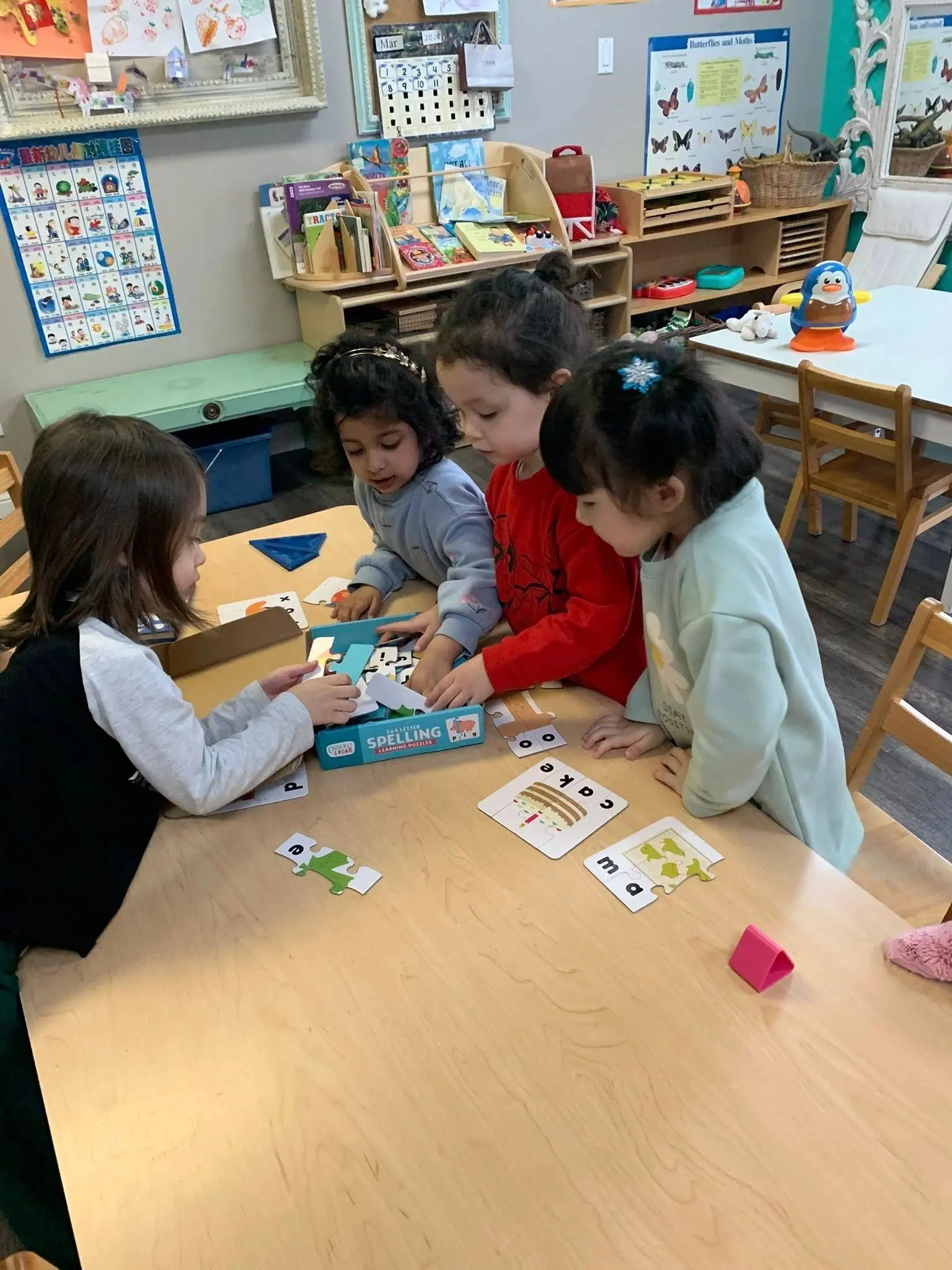
British Columbia licenses two very different kinds of child care under one system: a single person caring for children in their own home, and a staffed program running in a purpose-built facility. Both are legal, both are inspected, and both can be excellent. The real differences are the group size, who covers the room when a caregiver is sick, and how much the day looks the same from one week to the next.
The two settings, in plain terms
Family Child Care is a licensed home-based program. One person, called the licensee, cares for up to 7 children personally in their own home. There is no second staff member. The licensee is the whole team.
Group Child Care is the licensed centre-based program most people picture when they hear the word daycare. It runs in a building set up for the purpose, with more than one staff member and a larger group. For children from 30 months to school age, the maximum group size is 25, though the number of staff required rises as the group gets bigger.
There is also a program that sits between the two. Multi-Age Child Care caps a group at 8 children of mixed ages and can run either in a centre or, under a related program called In-Home Multi-Age Child Care, in someone's home. So "home versus centre" is really a spectrum with a few specific stops on it, not a strict either-or.
All of these are licensed programs. A health authority, Fraser Health in this area, inspects every one of them and holds them to the same Child Care Licensing Regulation, whether the address is a house or a purpose-built centre.
Group size and staffing, side by side
The numbers are set out in Schedule E of the regulation, and they are worth reading before you compare two specific places.
| Program | Setting | Maximum group | Staffing |
|---|---|---|---|
| Family Child Care | Home | 7 children | One licensee, no additional staff |
| In-Home Multi-Age Child Care | Home | 8 children | One licensee, who must hold an educator certificate |
| Multi-Age Child Care | Usually a centre | 8 children | One educator |
| Group Child Care, under 36 months | Centre | 12 children | One infant and toddler educator for 4 or fewer, rising to an educator, another educator and an assistant at 9 to 12 |
| Group Child Care, 30 months to school age | Centre | 25 children | One educator for 8 or fewer, an educator and an assistant for 9 to 16, an educator and two assistants for 17 to 25 |
Two things stand out. First, a home daycare and a Multi-Age group in a centre land on almost the same group size, 7 or 8 children, even though one happens in a house and the other in a building. Second, a large Group Child Care room is not one undivided crowd. A centre licensed for 25 children in that program has stepped up its staffing three times by the time it reaches that number, and a centre running several groups at once, as many do, is really several smaller rooms operating side by side rather than one big one.
Our guide to the ten types of licensed child care works through each program in full, and the ratios and group sizes guide has the complete Schedule E table with worked examples.
What changes when the caregiver is sick
This is the question families tend to skip on a tour, and it is often the one that matters most day to day.
A Family Child Care licensee has no colleague in the building. If they are sick, care for that day typically does not happen, because the person providing it and the person managing the operation are the same one individual. Some home providers arrange backup with another registered or licensed provider nearby, but that is an informal arrangement between two businesses, not something the regulation requires.
A centre with multiple groups and multiple educators has more room to absorb an absence. It might call in a relief educator, temporarily combine two groups where the licence and the ratio allow it, or in a difficult week reduce the number of children it can take that day. None of this is guaranteed either, since a small centre with thin staffing can be stretched almost as easily as a single home provider. The honest way to learn how a specific place handles this is to ask directly: what happens on a day when a staff member calls in sick.
What stays the same, and what a child actually experiences
A licence sets a floor for safety, staffing and record keeping. It does not describe the feeling of a room.
A home daycare of 7 children, all cared for by the same adult every day, offers a kind of steadiness that is hard for any centre to match: one relationship, one routine, one person who knows every child well because there are so few of them. The trade-off is that this single relationship is also the single point of failure described above, and there is no second adult to bring a different skill or a different pair of eyes into the day.
A centre spreads that risk across more people, which means a child is less dependent on any one person being available, but also means the day includes staff changes a home setting would not have. Educators leave, move rooms, or work different shifts across the week. A child in a centre may have one lead educator most days and a different one on a Friday afternoon, in a way a home daycare's single provider does not create.
Neither pattern is universally right. A younger toddler who takes a long time to warm up to new people may do better with the constancy of one home provider. A child who adapts quickly and enjoys a wider social group may do just as well, or better, in a larger centre room. The Multi-Age program, whether run in a home or a centre, is worth a specific look for families weighing this, since it keeps the small group size of a home setting while still requiring the caregiver to hold a full educator certificate.
The funding question does not depend on the setting
A common assumption is that a home daycare is always cheaper, or that a centre always qualifies for more government support. Neither is automatically true. What decides funding eligibility is licensing status, not whether the address is a house or a building.
Both Family Child Care and Group Child Care are licensed programs, and both qualify for the Affordable Child Care Benefit at the same rate table. Both can participate in the Child Care Fee Reduction Initiative if the specific provider has enrolled, and both can be an approved $10 a Day ChildCareBC site if the specific provider has been approved. None of this is guaranteed by the setting. It depends on whether that individual provider, home-based or centre-based, has actually enrolled in each program, which is a question to ask directly rather than assume from the type of care. Our guide to how the three funding programs stack walks through the difference between the three programs in full.
What is not eligible, in either setting, is unlicensed or licence-not-required care above the two-child threshold for the Fee Reduction Initiative or $10 a Day. Licensing, not location, is what those two programs check.
Checking that either one is actually licensed
A home address does not mean a lower bar for verification, and a centre's building does not mean a higher one. Both types are supposed to appear on the same public list.
Search the health authority's public list of licensed facilities for your area. In Port Coquitlam that is Fraser Health's Fraser North list, which names the care program and the licensed capacity for every facility on it, whether that facility is a house or a purpose-built centre. Our licensed childcare finder searches the Province's own open dataset by name, street or postal code, and our guide to checking a daycare's licence covers exactly what each list shows and what it leaves out.
If a home-based provider is not on the list, ask directly whether they are licensed, registered as licence-not-required, or neither, and how many children who are not their own they care for at one time. A licensed home provider will be able to name their care program and point you to the same public list a centre would.
What to ask, whichever setting you are considering
A tour of a home daycare and a tour of a centre should include some of the same practical questions, even though the settings look very different.
Ask what happens if the caregiver or an educator is sick that day. Ask how many children are actually present on a normal day, since a maximum group size is a ceiling, not a description of a typical Tuesday. Ask how long the current staff, or the licensee, has been doing this work, since continuity matters more in a smaller setting where one person's departure changes everything. Ask whether the facility is on the health authority's public list, and if so, what its licensed capacity and care type are.
The setting, home or centre, tells you the shape of the group and the staffing rules that apply to it. It does not tell you whether a specific place is warm, well-run, or right for your child. That still comes from the visit, the questions, and what you see when you are actually in the room.
Frequently asked questions
What is the real difference between home daycare and centre daycare in BC?
The setting and the group size. Home-based licensed care, called Family Child Care, is one person caring for up to 7 children in their own home. Centre-based licensed care, called Group Child Care, happens in a purpose-built facility and runs larger groups with more than one staff member. Both are inspected by a health authority and bound by the same Child Care Licensing Regulation, just with different numbers attached.
Is a licensed home daycare the same as a licensed centre?
Both hold a Community Care Facility Licence and are inspected by a health authority, but the programs are named and regulated separately. Family Child Care and In-Home Multi-Age Child Care are the two licensed home-based programs. Group Child Care, Preschool and Multi-Age Child Care are usually run in a centre, though Multi-Age Child Care can operate in either setting.
How many children are in a home daycare compared to a centre group?
Family Child Care allows up to 7 children with one licensee providing the care personally. A centre's Group Child Care program for 30 months to school age allows up to 25 children in one group, though it needs more staff at that size: one educator for 8 or fewer, one educator and an assistant for 9 to 16, and one educator and two assistants for 17 to 25.
What happens if a home daycare provider gets sick?
Care usually stops for the day, because Family Child Care is one licensee caring for children personally with no live-in colleague to take over. A centre with several groups and several educators can often cover a staff absence by calling in relief staff or, at worst, combining or reducing a group while still meeting the required ratio. This is one of the most practical questions to ask either type of provider directly.
Does my child get more one-on-one attention in a home daycare?
Not automatically. A Family Child Care provider is alone with up to 7 children of mixed ages, while a centre's Multi-Age Child Care program caps a group at 8 with one educator, a similar ratio in a different building. The honest answer depends on the specific provider, the specific room, and how many children are actually present that day, not on the setting alone.
Which setting has more consistency, home or centre daycare?
A home daycare can offer more consistency of who cares for your child, since it is usually the same licensee every day with no staff schedule to manage. A centre has staff turnover and shift changes, so a child may see different educators across the week even within one group. A home setting has no colleague to cover illness or holidays, so the trade-off runs in both directions.
Can I get government funding for either type of daycare?
Yes, if the provider is licensed. Both Family Child Care and Group Child Care are licensed programs, so both qualify for the Affordable Child Care Benefit, the Child Care Fee Reduction Initiative where the provider participates, and the $10 a Day ChildCareBC program where the site has been approved. An unlicensed or licence-not-required caregiver cannot enrol in the Fee Reduction Initiative or $10 a Day, regardless of setting.
How do I check whether a home daycare or a centre is actually licensed?
Search the health authority's public list of licensed facilities for your area. For Port Coquitlam that is Fraser Health's Fraser North list, which names the care program and the licensed capacity for every facility, whether it operates from a home or a building. Our own licensed childcare finder searches the Province's open dataset by name, street or postal code for the same purpose.
Is centre-based care always better for socializing with other children?
A larger Group Child Care room does put more same-age children together at once, which some families want. But a home daycare or a Multi-Age group often mixes ages, which some children do better in, particularly a younger child learning from older ones or an older child taking on a helper role. Neither arrangement is better on its own; it depends on what a specific child responds to.
What questions should I ask before choosing between a home daycare and a centre?
Ask what happens if the caregiver or an educator is sick, how many children are in the group on the day you would attend rather than the maximum allowed, how long the current staff or the licensee has been doing this, and whether the facility appears on the health authority's public list. The answers to those four questions tell you more than the setting itself does.
Before you visit
La Vie Est Belle Childcare Centre runs Group Child Care and Multi-Age Child Care programs at 1103 Confederation Drive in the Citadel neighbourhood of Port Coquitlam, with English, French and Mandarin language programs woven into the day. If you are weighing a home setting against a centre, come see what a centre actually looks like day to day. Book a tour or see our current programs.
Copies a ready-written post, then opens LinkedIn.