October 7, 2026
Holidays and culture at a multilingual daycare, and how we handle them
What happens when a room holds families from many backgrounds and a holiday comes around. How celebrations are chosen, what the provincial framework asks for, and what to tell us about your family's traditions.
By Tracy, Owner and Principal
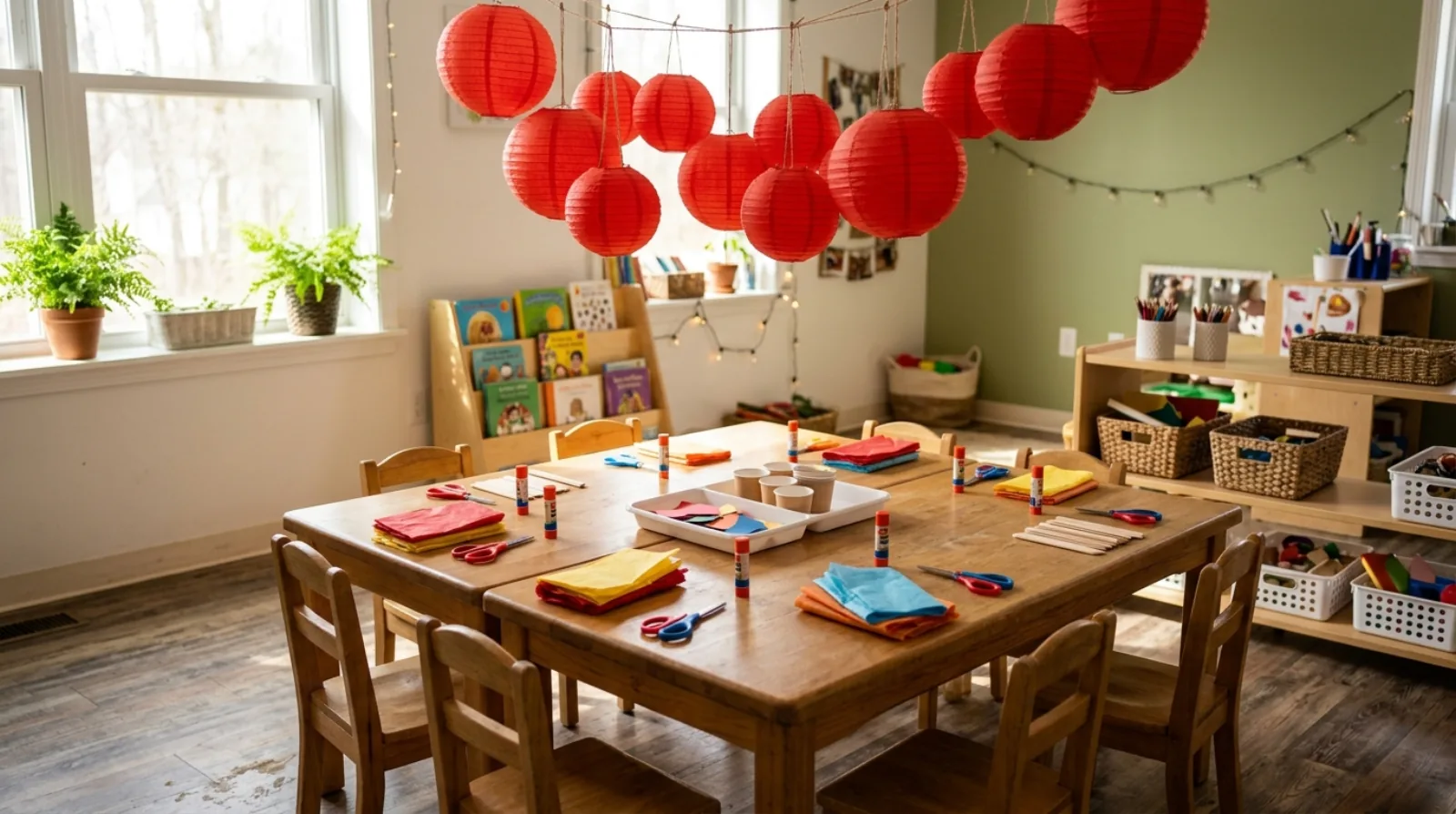
A mother asked me during a tour, in the careful voice people use when they expect the answer to be awkward, whether her family's holiday would be a problem here.
She had been somewhere before where it was handled as an exception. Her son had been brought to the front of the room as the representative of an entire culture for about fifteen minutes, everyone had clapped, and then the room went back to its ordinary business. She could see that it had been meant kindly. She could also see what it had taught the other children, which was that his family was a visiting topic and theirs was the background.
She did not want that again. She was right not to.
The distinction that actually matters
There are two ways a centre can handle culture, and they look similar from the outside.
The first is to treat celebrations as content. A holiday arrives on the calendar, there is a craft, the craft goes home, and the room returns to normal. Done this way, some cultures are the everyday setting and others are occasional guests. Children pick this up fast, well before they could describe it.
The second is slower and photographs badly. The materials in the room reflect the families in the room all year round. The books have children in them who look like the children reading them. The languages visible on the walls are the languages spoken at pick-up. Celebrations then arrive as part of something already present rather than as a special visit.
The second approach does not produce as many good photographs, because most of it is not an event. It is what is on the shelf in February when nothing in particular is happening.
What the provincial framework asks for
This is not only an opinion about good practice. It is written into the guidance BC uses.
The British Columbia Early Learning Framework, published by the Ministry of Education in its revised 2019 edition, organises early years practice around four living inquiries. Two of them speak directly to this.
Well-being and belonging has pathways that include joy in relationships with people, place, materials and ideas; culture and worldviews; Indigenous voices and perspectives; diversity and difference; family composition and gender orientation; and safety and respect.
Identities, social responsibility and diversity has pathways that include family origins, cultural background, place of origin, allegiance and affiliation, citizenship and other identities, alongside democratic practices.
Notice where those sit. They are not a unit to be delivered in a particular week. They are named inside the structure of how a room is supposed to work, all the time.
One clarification, because it gets muddled in marketing. The framework is provincial guidance about pedagogy and carries no legal force. What is legally binding on a licensed centre in British Columbia is the Child Care Licensing Regulation, including section 44 and the five program standards in Schedule G. Our guide to the Early Learning Framework explains the difference properly, because a centre that describes the framework as a rule it must follow has told you something inaccurate.
Language and culture arrive together
This centre runs French, Mandarin and English as separate language programmes. They are taught separately, so educators can give focused, age-appropriate instruction in the selected language, rather than all three being mixed in one group. Parents can say which programme they prefer and the centre tries to accommodate it, subject to scheduling and availability.
What follows from that, and is easy to overlook, is that a language programme is never only vocabulary. The songs belong to somewhere. The stories come from a tradition. The celebrations that matter to a language community come with the language, and a child learning Mandarin encounters the things Mandarin speakers do as well as the words.
That is one of the honest advantages of a multilingual setting. The culture is not being introduced as a topic. It is arriving attached to something the child is already doing every day.
Our post on what learning two languages actually does for a toddler covers the language side in more depth, and our guide to raising a bilingual child goes further into how families manage this at home.
What we ask families for, and why the specific version helps
The single most useful thing a family can tell us is what they actually do at home.
Not what a background is supposed to involve. What happens in your house, in your family, in whichever language, with whichever relatives, on whichever day. Families from the same country do wildly different things, and a centre working from the generic version will reliably get it wrong in a way your child will notice immediately.
So: what do you do. Who comes. What does your child look forward to. Is there a food, a song, a phrase, an object your child would recognise. Is there anything you would rather we did not do.
That last question is as important as the others. Some families do not observe holidays that others do, for reasons that range from religious to personal to nobody else's business. That is entirely ordinary and requires no explanation. Telling an educator is enough.
How non-participation is handled
A child who is not taking part in something connected to a celebration is doing something else in the same room, and the something else is genuinely interesting rather than a consolation.
This sounds small and it is the whole thing. A child sitting to one side while everyone else does an activity has been marked out. A child absorbed in a different activity has not. The difference is planning, and it is the responsibility of the adults rather than the child.
No child is put in front of the group to explain their family. If a family wants to come in and share something, that is welcome, and it is the family's decision rather than an expectation. The default is to build the material into the room.
The practical details
Food. Families provide all food at this centre, and the whole facility is nut-free. That applies to anything brought in for a celebration exactly as it applies to a Tuesday lunch. Talk to an educator before sending anything in, so allergies in the room can be checked. Our post on packing lunches for a nut-free daycare covers what that means day to day.
Artwork. Holiday-themed artwork usually goes home the same day. Other selected pieces may be displayed at the centre first, then returned to families or gathered into a personalized art book given to the family. Timing varies with the activity.
Outings. Annual field trips may include blueberry picking in summer and a pumpkin patch in October, and other community outings may be arranged depending on interests, weather and availability. These are possibilities rather than a fixed schedule, and written permission is required before any trip.
Music. The centre has drums, tambourines, rhythm sticks, shakers, bells and xylophones, used under an educator's supervision. Songs from different traditions are one of the least self-conscious ways culture moves through a room, because children will sing anything if the tune is good.
Why the home language matters here too
There is a connection between this and something the Canadian Paediatric Society's resource for children new to Canada is direct about.
It states that parents should not feel pressured to speak a second language for fear they are risking their child's language development, success in school or integration into Canadian society, and that when parents use their first language they are offering the best language models to their child, modelling a rich, diverse vocabulary and appropriate grammatical structures.
It also names a cost that is not linguistic. As a second language begins to prevail, children may lose their first language skills, and that loss can affect relationships with parents who feel they can no longer communicate fully with their children, alongside concerns about erosion of cultural identity.
That is why a centre treating a family's language and traditions as ordinary rather than exotic is doing something with real stakes. A child who reads their home language as the thing you leave at the door will start leaving it. Our post on speaking a second language at home deals with this directly.
What I told the mother on the tour
That her son would not be brought to the front of the room.
That we would ask her what her family actually does, and would take the specific answer rather than the general one.
And that the measure of whether we had got it right is not what happens during her holiday. It is whether, in an ordinary week in March with nothing on the calendar, the room still looks like somewhere her family belongs.
She enrolled. I am reasonably confident we have kept to it, and if we ever have not, I would want to hear about it at pick-up rather than a year later.
Frequently asked questions
Which holidays does the centre mark?
The ones that belong to the families in the rooms, which changes as enrolment changes. Because the centre runs French, Mandarin and English language programmes and draws families from a range of backgrounds, the calendar in any given year reflects who is there rather than a fixed list decided in advance. Families are asked what they observe at home, and that shapes what appears in the room.
What if our family does not celebrate a holiday that others do?
That is ordinary and nothing has to be explained or justified. No child is required to take part in an activity connected to a celebration, and an alternative is always available in the room. Tell the educators what your family does and does not observe, and that gets respected without it becoming a conversation your child has to have.
Does my child have to be the one who explains our traditions?
No. Putting a single child in front of a group as the representative of a whole culture is uncomfortable for the child and teaches the group the wrong lesson. If a family wants to share something, that is welcome and it is the family's choice. What educators do by default is build the material into the room rather than asking a child to perform it.
Do the language programmes cover culture as well as vocabulary?
Language and culture arrive together, because you cannot really separate them. The French, Mandarin and English programmes are taught separately so educators can give focused, age-appropriate instruction in the selected language, and songs, stories and celebrations from those language communities are part of what comes with that.
What does the BC Early Learning Framework say about this?
The Province's 2019 framework organises practice around four living inquiries. Well-being and belonging includes pathways for culture and worldviews, Indigenous voices and perspectives, diversity and difference, and family composition and gender orientation. Identities, social responsibility and diversity includes pathways for family origins, cultural background, place of origin and other identities. It is built into the structure rather than added as a topic.
What about food at celebrations?
Families provide all food at this centre, and the centre is a nut-free facility. That applies to anything brought in for a celebration exactly as it applies to a daily lunch. If you would like to send something connected to a family tradition, talk to an educator first so allergies in the room can be checked and the nut-free policy is not breached.
How do you handle a holiday that some families find difficult?
By keeping participation genuinely optional and by not making a child's non-participation visible as an absence. A child who is not doing one activity is doing another one that is equally interesting, in the same room. If a holiday is difficult for your family for any reason, telling an educator is enough and no further explanation is needed.
What happens to holiday artwork?
Holiday-themed artwork usually goes home the same day. Other selected pieces may be displayed at the centre first, then returned to families or collected in a personalized art book that is given to the family. Timing varies with the activity.
Are there field trips connected to seasonal events?
Annual outings may include a blueberry-picking trip in summer and a pumpkin-patch visit in October, and other community outings may be arranged during the year depending on interests, weather and availability. These are possibilities rather than a guaranteed schedule. Families receive full details in advance and written permission is required before any trip.
How do I tell you about our family's traditions?
Tell an educator at drop-off or pick-up, or raise it during the enrolment conversation. What helps most is the specific version rather than the general one, meaning what your family actually does in your house, in which language, and what your child would recognise. A family can also request a private meeting at any time for a longer conversation.
Before you visit
If this is something you want to ask about directly, ask it on a tour. Tours run about thirty minutes by appointment and you are encouraged to bring your child. Contact us to arrange one, or read about our language programs first.
Copies a ready-written post, then opens LinkedIn.