Part 1 of 6
The BC Early Learning Framework, explained for parents
A plain reading of British Columbia's Early Learning Framework for parents. Covers the nine principles, the four living inquiries and their pathways, the 2019 change from areas of learning to living inquiries, and how the framework differs from the licensing rules a centre must meet.
By Tracy, Owner and Principal
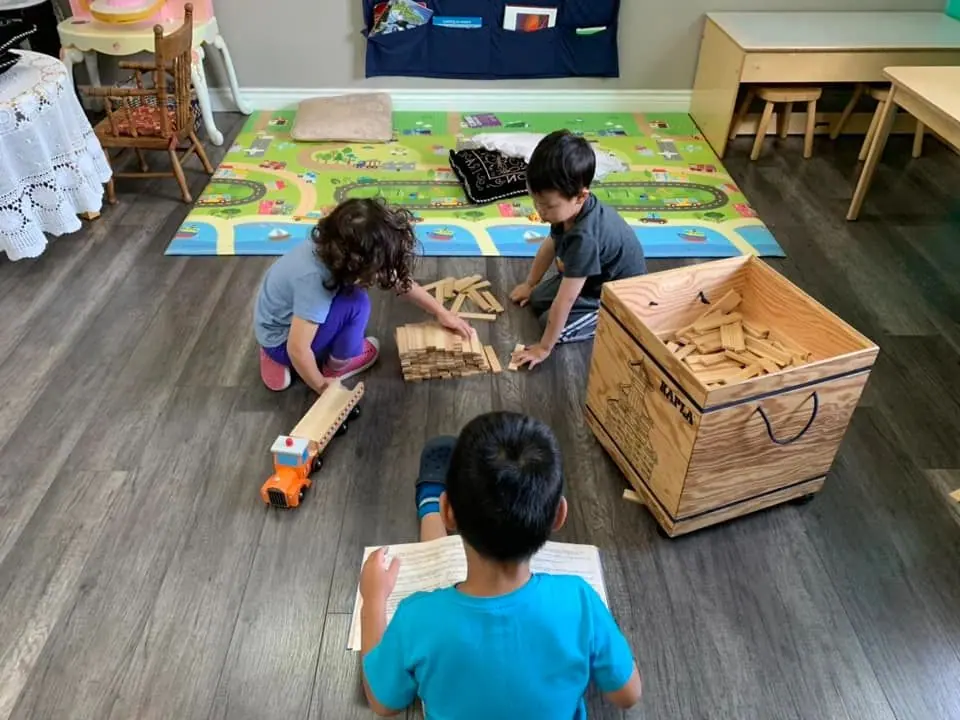
Most parents meet the Early Learning Framework as a phrase on a centre's website, somewhere between the photo of the play yard and the enrolment form. It sounds official, which invites the assumption that it is a syllabus and that a centre either follows it or does not.
It is something stranger and more interesting than that. It is a document written to change how adults look at children.
What it is, and what it is not
The framework is published by the Province through the Ministry of Education. The current revised edition dates from 2019 and covers children from birth to age eight, widened from the birth to five range of the original 2008 document.
It has no legal force. No licensing officer arrives with a copy and checks a centre against it. The binding rules are elsewhere, in section 44 of the Child Care Licensing Regulation and the five program standards in Schedule G, covered in what a licensed daycare programme must cover.
So a centre can meet every legal requirement in British Columbia without ever opening the framework, and a centre can quote it fluently on its website while running a thin programme. The framework's value to a parent is not as a certification. It is as a vocabulary for asking better questions.
Nine principles
The framework sets out principles that underpin its vision of respectfully living and learning together:
- Children are strong, capable in their uniqueness, and full of potential.
- Families have the most important role in contributing to children's well-being and learning.
- Educators are researchers and collaborators.
- Early years spaces are inclusive.
- People build connection and reconnection to land, culture, community and place.
- Environments are integral to well-being and learning.
- Play is integral to well-being and learning.
- Relationships are the context for well-being and learning.
- Learning is holistic.
Read as a list these look like sentiments. Read as commitments they have teeth. "Families have the most important role" places the centre second, which is a genuine claim about hierarchy. "Educators are researchers" implies an educator who does not already know what will happen. And "environments are integral" makes the room itself a teaching decision rather than a container for the teaching.
The framework also embeds the First Peoples Principles of Learning, developed in partnership with the First Nations Education Steering Committee and the Ministry of Education, and articulating shared wisdom of Elders from Indigenous communities throughout British Columbia. Among them: learning is holistic, reflexive, reflective, experiential and relational; learning involves recognizing the consequences of one's actions; learning is embedded in memory, history and story; learning involves patience and time; and learning requires exploration of one's identity.
"Learning involves patience and time" is worth a parent's attention on its own. It is a direct answer to the pressure to accelerate a four year old.
The image of the child
One principle gets extended treatment, and the framework calls it a key concept: the image of every child as a gift, as strong and capable in their uniqueness and full of potential, living and growing in complex interdependence with humans and all world relations.
The argument attached to it is the useful part. Everyone carries images of children drawn from their culture, knowledge and personal history. Those images strongly influence how adults engage with children and what intentions inform the choices they make. So the framework asks adults to make the image explicit, on the grounds that an unexamined one operates anyway.
The practical difference shows up in how a room reads a difficult moment. An adult holding an image of the child as empty and in need of filling sees a three year old refusing to join circle as a compliance problem. An adult holding the framework's image sees a child communicating something and asks what.
The four living inquiries
The framework describes four living inquiries:
1. Well-being and belonging. Nurturing a sense of well-being and belonging supports children as they learn about and investigate the world around them. Its pathways include joy in relationships with people, place, materials and ideas; culture and worldviews; Indigenous voices and perspectives; diversity and difference; family composition and gender orientation; safety and respect; nourishment, sleep and physical activity; emotions, thoughts and views; every child is a gift; and interests and inquiries.
2. Engagement with others, materials, and the world. Children construct meaning as they engage with materials, other children and adults, the environment, the community and the world. Its pathways include knowledge and theories; spaces, objects and materials; reconnection to land and place; time for engagement; and local community connections.
3. Communication and literacies. Children use multiple modes of expressive languages to communicate ideas, participate in relationships and make meaning in their homes and communities. Its pathways include multiple modes of communication; culture, family, traditions and knowledge; language and communication; vocabulary, symbols and written language; sound and word play; and technology.
4. Identities, social responsibility, and diversity. A positive personal and cultural identity is the awareness, understanding and appreciation of all the facets that contribute to a healthy sense of oneself. Its pathways include family origins, cultural background, place of origin, allegiance and affiliation, citizenship and other identities; democratic practices; individual differences; social responsibility and justice; reconciliation with Indigenous peoples; and the interrelationship of humans and their common worlds.
Two things stand out for a parent reading this list. "Time for engagement" is named as a pathway, which makes uninterrupted time a resource an educator is expected to protect rather than a gap in the schedule. And sleep and nourishment sit inside well-being and belonging, so a centre's nap routine is part of its learning programme, not a pause in it.
Why the words changed
The 2019 edition renamed things, and the renaming is the clearest window into what changed.
What the 2008 framework called areas of learning became living inquiries. What it called learning goals became pathways.
The framework explains both choices. "Living" suggests that these processes are ongoing and always evolving. "Inquire" means to pay attention in multiple ways, to study, explore, experiment and ask questions. "Pathways" evokes a sense of movement that is not linear. The section introducing them says the new terms reflect learning processes that are rhizomatic, unpredictable and dynamic.
Strip the vocabulary and the claim is simple. An area with a goal has an edge and an end, and a child is either inside it or not yet. An inquiry with pathways is something a child is moving through, and the adult's job is to notice the direction rather than to check arrival.
A practical warning. Search for the BC areas of learning and you will find current-looking pages listing names from the 2008 framework, including "Exploration and Creativity" and "Social Responsibility and Diversity". Those are superseded. The four above come from the 2019 document. If a centre's website lists the old four, it tells you when the page was written, which may be all it tells you.
Pedagogical narration
The framework describes a practice worth knowing about because parents sometimes encounter its output and misread it.
Pedagogical narration is the documenting of a moment of children's learning, a photo, a transcript of what children said, a sequence of what they did, which educators then interpret together, often disagreeing. The point is not to record an achievement. The point is to make an educator's own assumptions visible so a group of adults can examine their practice.
So a wall display of children's work with a paragraph of educator commentary is doing something quite different from a report card. It is closer to a research note. If your centre produces this kind of documentation, the interesting question is not what it says about your child but what the educators concluded and changed.
Two related practices the framework names: a pedagogy of listening, and critical reflection. Both describe an educator who treats their own certainty as the thing to interrogate.
At La Vie Est Belle, families get verbal updates at pick-up covering the child's development, participation, routines, achievements and anything needing support. The centre does not issue formal progress reports on a fixed schedule, and a private meeting can be arranged at any point by either the family or the centre.
Using the framework as a parent
You are not going to audit a centre against a 110-page document, and you should not try. Three uses are realistic.
As a translator. When a centre says it is child-led or emergent, the framework tells you what that tradition means: a flexible response to children's interests, educators as researchers, time protected for engagement.
As a source of better questions. "What are the children curious about at the moment, and what did you change because of it?" is a framework question. It is hard to answer without a real practice behind it.
As reassurance. If you are worried that your child is playing rather than being taught, the provincial guide to early learning states that play is integral to well-being and learning, and puts it among nine principles rather than in a footnote.
The companion Guide for Families published alongside the framework is a shorter read than the full document and is written for exactly this purpose.
Questions parents ask
Frequently asked questions
Early learning and play