Part 6 of 6
School readiness and milestones, what actually matters before kindergarten
What school readiness means in British Columbia. Covers the Early Development Instrument and its five domains, why there is no kindergarten entry test, what the CDC developmental milestone checklists are and are not, and how to raise a concern about a child's development.
By Tracy, Owner and Principal
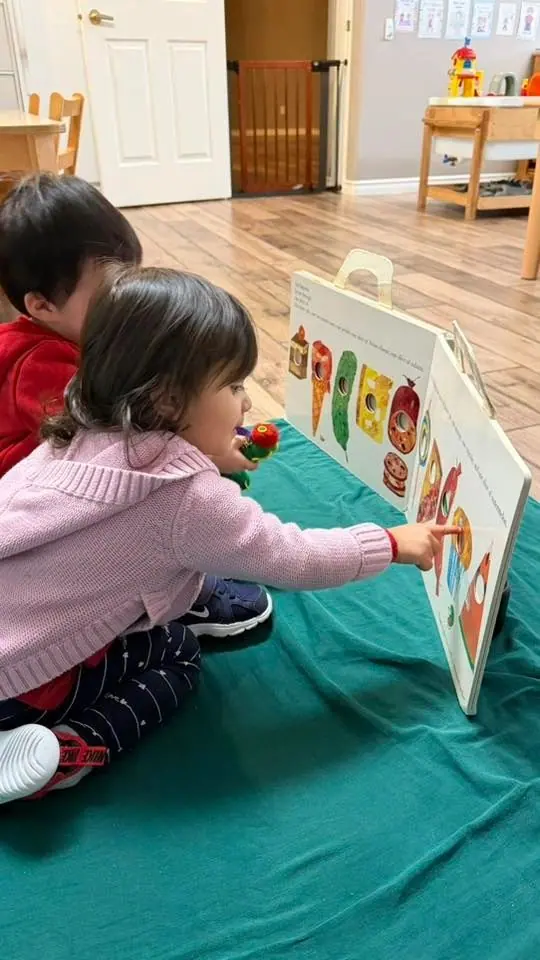
The question arrives some time in a child's fourth year, usually from a relative. Will they be ready for school?
Underneath it is a picture of readiness as a checklist of academic skills, and a worry that a child who is playing in a sandpit is falling behind a child who is being drilled on letters. It is worth replacing that picture with what British Columbia actually measures.
There is no test
No child in British Columbia sits an entrance assessment for kindergarten. No child is turned away for not knowing letters, numbers, colours or how to write their name.
Kindergarten is where those are taught. A child arriving already able to read is not ahead in any durable sense, and a child arriving unable to is not behind. Registration is an administrative process about age and catchment.
What exists instead is a measurement that runs after children are already there, and it is worth understanding because it is the closest thing the province has to a definition of readiness.
The Early Development Instrument
The Early Development Instrument is a questionnaire completed by kindergarten teachers, each February, about the children already in their classrooms. In British Columbia it is administered by the Human Early Learning Partnership at the University of British Columbia, working with public school districts, independent schools and First Nations schools.
Three features of that description do most of the work.
A teacher fills it in, not a tester. Nobody sits the child down. It records what an adult who has spent months with a child observes about them.
February, not September. The child has been in school for roughly half a year. So it describes how a cohort has arrived and settled, not what they carried through the door on day one.
It reports on populations. Results describe neighbourhoods and communities so that services can be planned where they are needed. No individual result is returned to a family, and there is no EDI score for your child to worry about.
The five domains, and what they reveal
The instrument measures five domains:
- Physical health and well-being
- Social competence
- Emotional maturity
- Language and cognitive development
- Communication skills and general knowledge
Count them. Three of the five are about a child's health, their capability with other people, and their emotional development. Only two touch anything a parent would recognise as academic, and one of those is about communication in the ordinary sense of making yourself understood.
That distribution is the answer to the relative's question. The province's own measure of how children arrive at school is weighted toward whether a child can function as a person in a room full of other people.
What readiness looks like in practice
Translated into a Tuesday morning in September, a ready child can mostly:
- separate from a parent and recover within a reasonable time
- join a group of children they do not know
- follow a routine somebody else set
- ask an adult for help
- cope with not getting the thing they wanted
- manage their own coat, shoes, lunch and toilet needs
Asking for help deserves its own line. A kindergarten teacher has many children and cannot detect silent confusion. A child who says "I don't know what to do" has solved most of their own problem.
Notice how much of that list is practised in ordinary group care rather than taught. Section 5 of Schedule G requires an environment for children to work independently and to share and work cooperatively in small groups, opportunities for social interactions that build relationship skills, and experiences that give a child a feeling of belonging. Section 1 requires activities promoting self-help skills. The legal minimum for a licensed centre covers most of what readiness turns out to mean.
Milestones, and what a checklist is for
Readiness is about the year before school. Milestones are the broader question underneath it, and they run from infancy.
The United States Centers for Disease Control and Prevention publishes free milestone checklists describing what most children do by a given age. There are checklists at 2, 4, 6, 9, 12, 15, 18, 24, 30, 36, 48 and 60 months, timed to line up with recommended health supervision visits so a parent can bring one to an appointment.
The checklists were revised in 2022 through a collaboration between the CDC and the American Academy of Pediatrics, published as a peer-reviewed paper by Zubler and colleagues in Pediatrics.
The important limit is stated by the CDC itself: these resources are not a substitute for standardized, validated developmental screening tools. They are a monitoring aid. Their purpose is to help a parent notice something and start a conversation, and the CDC's own instruction is to talk with the child's doctor and ask about developmental screening.
So a milestone a child has not reached is a prompt for a question. It is not a finding, a diagnosis, or a verdict, and a checklist read at midnight is not capable of producing one.
If you are worried
Do the same three things, in any order, and do them sooner than feels necessary.
Tell your health care provider. They can screen properly with validated tools and refer onward. This is the step that leads anywhere, and it is the only one that can produce an actual answer.
Tell the centre. Educators see your child in a setting you never do: in a group, with peers, under demands that do not exist at home. They may have observations that sharpen the question, or reassurance that changes it.
Ask the centre what they have noticed. Here, educators give families verbal updates at pick-up covering development, participation, routines, achievements and anything needing support. The centre does not issue formal progress reports on a fixed schedule, and a private meeting can be arranged at any point, requested by either the family or the centre. If you want a longer conversation, ask for one.
Two things not to do. Do not wait for a scheduled moment, because there is not one and the calendar is not doing anything useful for you. And do not go looking for a diagnosis on the internet, where the material is written for every child in the world rather than yours, and where the confident pages are usually the least reliable.
Why "behind" is usually the wrong word
Parents reach for a single axis: ahead or behind. Development does not run on one.
A child of four has a vocabulary, a set of fine motor skills, a level of physical confidence, a capacity to wait, an ability to read other children, and a tolerance for having plans interrupted. These are separate systems that mature on separate schedules, and almost every child is strong in some and slower in others. A child who talks early and climbs late is not ahead and behind at once. They are ordinary.
The five EDI domains encode this. They are reported separately because a population can be doing well on language and poorly on emotional maturity, and collapsing them into one number would hide the thing worth knowing.
The First Peoples Principles of Learning embedded in the BC Early Learning Framework state that learning involves patience and time. The framework's own 2019 revision replaced fixed learning goals with pathways, a word chosen to evoke movement that is not linear. Both are saying that a child in motion cannot be usefully described by a position.
There is a real distinction to hold onto, though. "Not yet, and moving" is different from "not moving". A child who is slower at something but is visibly progressing is on a pathway. A child who has stopped, or who has lost a skill they previously had, is a reason to call the doctor this week rather than to wait and see. Losing a skill is the specific pattern worth acting on quickly, and the CDC's checklists exist to help a parent notice it.
What group care contributes
There is no requirement to attend child care before kindergarten, and children arrive from home care every September and do fine.
What a group setting supplies that a home cannot easily replicate is volume and variety of social practice. A child at home with a devoted adult gets excellent one-to-one attention, and an adult accommodates a child in ways another four year old never will. The other four year old wants the digger, does not care about the tower, and is not interested in taking turns.
That friction is the curriculum. It is where a child learns that other people hold different intentions, and it is exactly the ground the EDI weights most heavily across social competence and emotional maturity.
Group care also supplies a routine set by somebody else, which is most of what a school day is. At La Vie Est Belle children are typically organised into three groups across three classrooms by age, developmental needs and daily attendance, each with a designated educator and additional educators supporting through the centre, with four to five educators generally present each day and licensing ratios always maintained.
The transition to kindergarten is a real change even so: a bigger room, a longer day away from a familiar adult, and less individual attention. A child who has practised separating, joining and asking for help has done the preparation that matters.
The year before school
If you want to spend the year usefully, the highest-value activities are unglamorous.
Read together every day. It builds vocabulary, attention and the idea that print carries meaning, and it does more than letter drills. The framework's communication and literacies inquiry names sound and word play among its pathways, which is what rhyming books are doing.
Let them do things slowly. Coats, buckles, pouring, carrying. Every occasion an adult takes over for speed is practice removed.
Arrange time with other children. The social domains are where the weight sits, and they need other children to develop against.
Talk, and leave gaps. Ask questions with no answer you already have in mind, then wait longer than is comfortable. Schedule G requires modelling of good language and listening skills, and the listening half is the part adults skip.
Follow the letters if the child brings them. A four year old who wants to write their name should absolutely be helped. The difference between supporting an interest and imposing a schedule is whose idea it was.
For why unstructured play does more of this work than it looks like, see what play actually builds. If your child is about to start care for the first time, starting daycare covers the settling-in period.
Questions parents ask
Frequently asked questions
Early learning and play