Part 2 of 6
What a licensed daycare programme must cover, by law
A clause-by-clause reading of Schedule G of British Columbia's Child Care Licensing Regulation, the five program standards covering physical, intellectual, language, emotional and social development that every licensed child care centre must meet, and how to recognise each one in practice.
By Tracy, Owner and Principal
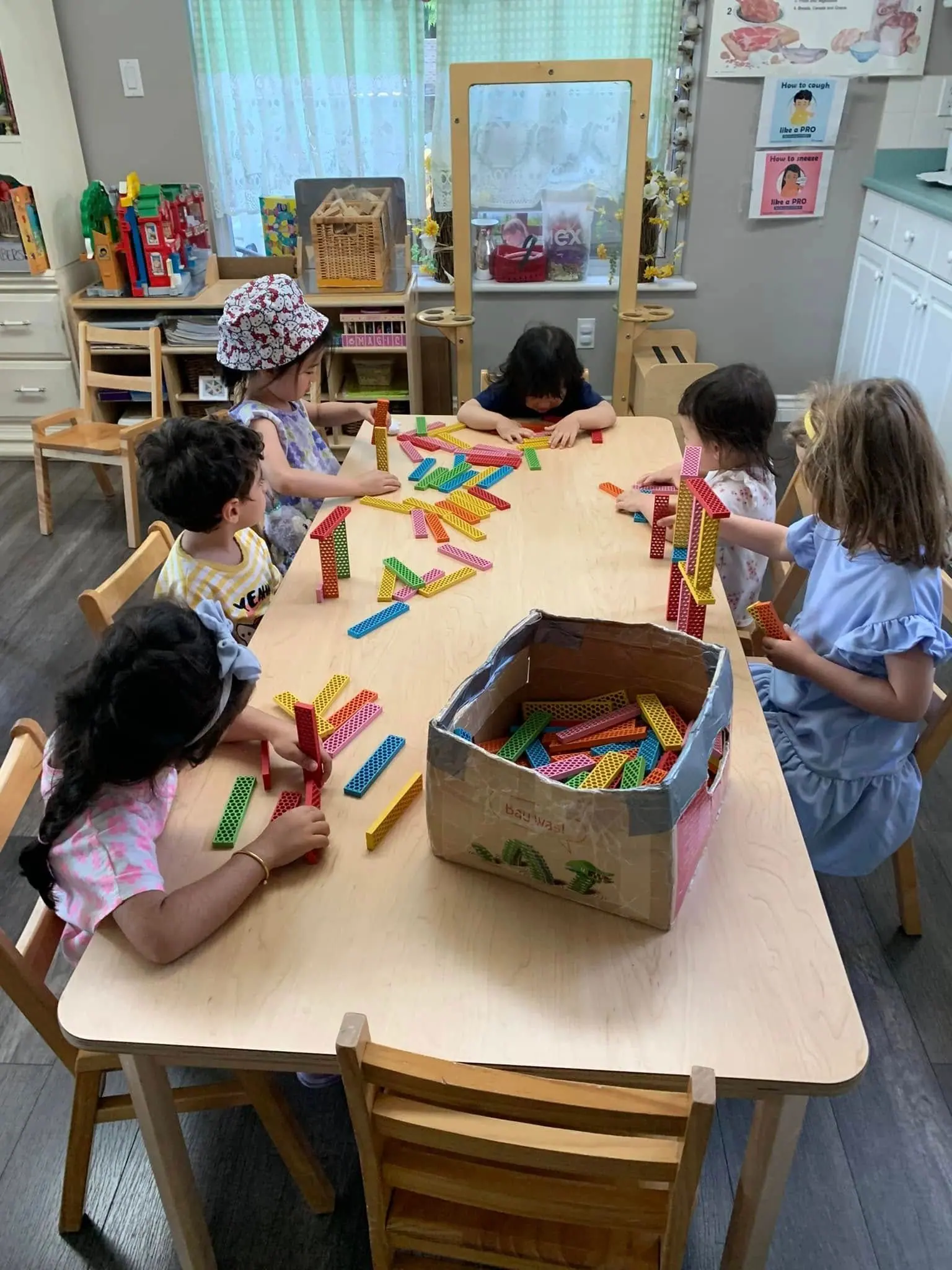
Every licensed child care centre in British Columbia runs a programme that has to satisfy the same five requirements. They are not guidelines and they are not a philosophy. They sit in Schedule G of the Child Care Licensing Regulation, and a licensing officer can inspect against them.
Most parents have never read them. They are short, and they are more specific than you would expect.
The clause that makes them binding
Section 44(1) of the regulation requires a licensee to provide to children a comprehensive and coordinated program of indoor and outdoor activities that is designed for the development and care of children, is appropriate for the age and development of children in each group in the facility, and complies with the program standards set out in Schedule G.
Three constraints hide in that sentence. Comprehensive and coordinated rules out a collection of disconnected activities. Indoor and outdoor makes both mandatory. Appropriate for the age and development of children in each group means the standard is applied per group, so a centre running three age groups is meeting it three times over, differently.
Section 1: physical development
The regulation requires a program encouraging physical development, including:
- indoor and outdoor activities that encourage the development of large and small muscle skills appropriate to each child's level of development
- activities that promote the development of self-help skills
- activities that encourage good health and safety habits
Large muscle skills are the obvious ones: running, climbing, throwing. Small muscle skills are the fine motor work of scissors, tongs, threading, and the pincer grip that later holds a pencil.
Self-help skills is the clause parents overlook. A child putting on their own boots, washing their own hands, carrying their own cup, and packing their own bag is doing work the regulation requires the centre to provide for. This reframes the slow parts of a daycare day. The fifteen minutes it takes a room of three year olds to get their coats on is not lost time before the real activity. It is the activity.
The corollary matters at home: a well-meant adult who does it faster removes the practice.
Section 2: intellectual development
The longest of the five. It requires:
- a flexible daily program that responds to the needs and interests of the children
- an environment that facilitates the development of curiosity, reasoning and problem-solving skills
- age-appropriate activities that encourage development of concept-building skills such as classifying, ordering, determining direction and perceiving spatial relationships
- activities and materials that encourage creative endeavours such as art, music, movement, imaginative play, story-telling and construction
- activities and materials that foster a greater understanding of the environment
Two clauses are worth pressing on.
"A flexible daily program that responds to the needs and interests of the children." This is a legal requirement for responsiveness. A centre running an identical week regardless of who is in the room is not meeting it. The regulation sets no percentage of child-led time, so what you are looking for on a tour is evidence that the programme has ever changed because of a child.
"Classifying, ordering, determining direction and perceiving spatial relationships." This is what sorting, stacking, lining up and building actually are. When a two year old puts every red thing in one basket, that is classifying. When a four year old works out that the ramp needs another block under it, that is spatial reasoning and problem-solving in the same move. Nothing on that list requires a worksheet, and the regulation names imaginative play and construction directly.
Section 3: language development
The regulation requires:
- modelling of good language and listening skills
- providing opportunities for children to develop receptive and expressive language skills
- providing activities that encourage communication
Receptive language is understanding. Expressive language is producing. The regulation names them separately because they develop on different timelines, and a child can be strong in one and behind in the other. A quiet two year old who follows a two-step instruction has receptive language that is working fine.
Modelling puts the requirement on the adults. It is about how educators speak and, specifically, how they listen. An educator who waits through a child's slow sentence instead of finishing it is meeting this standard in a way that is invisible on a schedule.
At La Vie Est Belle this sits alongside the language programmes. French, Mandarin and English run as separate programmes so educators can give focused, age-appropriate instruction in the selected language, and each language educator speaks two or more languages. Families can state a preference, which the centre tries to accommodate subject to scheduling and availability.
Section 4: emotional development
The regulation requires:
- helping children develop a positive self-concept and an accurate perception of self
- helping children express positive and negative feelings in appropriate ways
- providing a comfortable atmosphere in which children can feel proud of their cultural heritage and in which cultural sharing is encouraged
Read the exact words. "Accurate perception of self" sets a different target from maximum self-esteem. A child who believes they are wonderful at everything has been badly served. The standard asks for a positive self-concept alongside an accurate one, which is a harder and more useful thing.
"Positive and negative feelings" is in the regulation. A programme where children are permitted to be frustrated, disappointed and angry, and are helped to express it appropriately, is meeting the standard. One where every difficult feeling is redirected into cheerfulness is not. So on a tour, "what do children do here when they are upset?" is a compliance question wearing ordinary clothes, and a described process is a better answer than an assurance that the children are happy.
Section 5: social development
The regulation requires:
- an environment for children to work independently and to share and work cooperatively in small groups
- an environment that fosters positive behaviour in children
- helping children appreciate differences and respect the personal feelings and property of others
- opportunities for social interactions that help children develop appropriate skills for social relationships
- experiences that facilitate a child's feeling of belonging to family, community and the world at large
Independently and cooperatively, both named. A child who can play alone is not failing socially, and the regulation treats solitary capability as something the environment must allow for.
"Fosters positive behaviour" is phrased as an environmental duty rather than a disciplinary one. The regulation asks what the room makes likely. A single popular toy in a group of twelve produces conflict that is a design problem before it is a behaviour problem.
"Belonging to family, community and the world at large" is where field trips and community outings earn their place. Here those may include blueberry-picking in summer and a pumpkin-patch visit in October, with other community outings arranged during the year depending on interests, weather and availability. Families get full details and give written permission in advance.
Outdoors, and the weather clause
Section 44(3) requires a licensee, other than one providing Occasional Child Care, to provide each child with daily outdoor play periods unless weather conditions would make it unreasonable to do so.
That final clause is part of the rule. A centre keeping children in during heavy rain, snow or poor air quality is exercising the regulation rather than breaching it. At La Vie Est Belle outdoor time generally runs one to two hours a day depending on weather, air quality and the schedule, and on rainy or snowy days the children stay in while educators run indoor movement and gross-motor activities.
If a centre has no outdoor play area at all, Schedule B requires the applicant to provide an activity plan describing how the Schedule G physical development standards will be met and which community services will be used, including visits to parks, pools or recreation centres. So the absence of a yard is a documented plan rather than a silent gap, and it is a fair thing to ask about.
Checking compliance
The five standards are inspectable, which means there is a public record. Fraser Health licenses and inspects child care facilities in Port Coquitlam and publishes inspection reports. A report records whether requirements were met and lists contraventions.
Read more than one. A single item on a single report is ordinary. The same item across successive reports is a pattern, and a pattern is the thing worth asking about.
These standards apply to licensed facilities. A licence-not-required provider operates outside this regime and is not inspected against Schedule G, which is one of the substantive differences between the two arrangements. That distinction is covered in licensed, registered and unlicensed care, and how to read an inspection report covers what a licensing officer checks.
For the philosophy that sits alongside these legal minimums, see the BC Early Learning Framework.
Questions parents ask
Frequently asked questions
Early learning and play