Part 4 of 6
Movement, sleep and screens, the numbers for children under five
What Canadian health authorities recommend for children aged nought to four: daily physical activity by age band, sleep hours, limits on being restrained or sitting, and the Canadian Paediatric Society's screen time guidance including the bedtime rule and co-viewing.
By Tracy, Owner and Principal
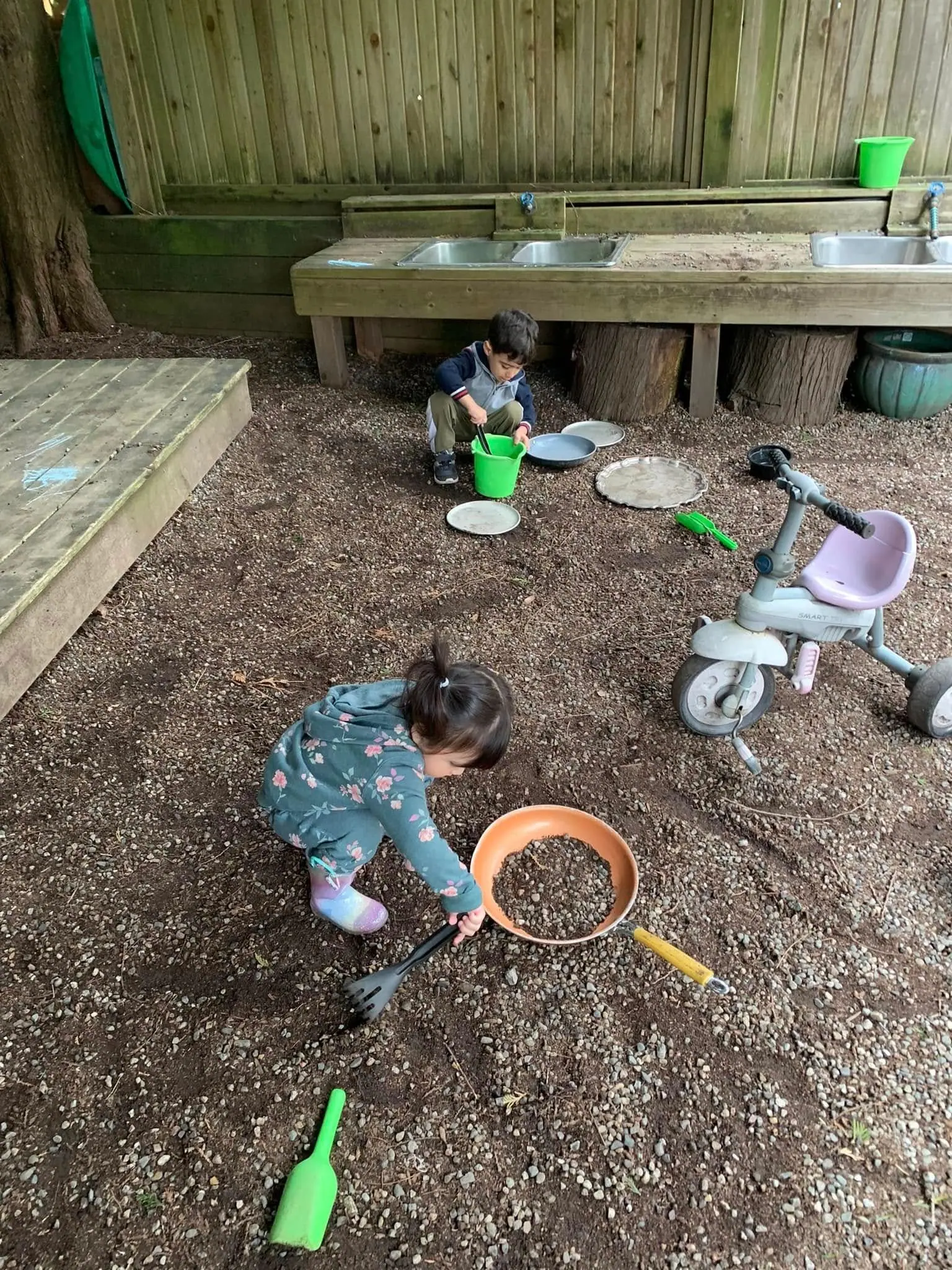
Three things compete for the same 24 hours: moving, sitting and sleeping. The Canadian 24-Hour Movement Guidelines for the Early Years, published by the Canadian Society for Exercise Physiology, treat them together for exactly that reason. An hour gained in one place is an hour lost somewhere else.
Here are the figures for children aged nought to four, followed by the screen guidance, which comes from a different body and is worth reading separately.
Infants under one
Movement. Physically active several times a day in a variety of ways, particularly through interactive floor-based play. More is better.
Tummy time. For those not yet mobile, at least 30 minutes spread through the day while awake. Assembled from short spells, not one sitting.
Sitting and restraint. Not restrained for more than one hour at a time, for example in a stroller or high chair.
Sleep. 14 to 17 hours for nought to three months, 12 to 16 hours for four to eleven months, including naps.
Screens. Not recommended.
Toddlers aged one and two
Movement. At least 180 minutes in a variety of physical activities at any intensity, including energetic play, spread through the day. More is better.
"Any intensity" is the part that surprises parents. Walking to the corner, climbing the stairs, carrying a bag, pushing a toy trolley across a room, all of it counts. Three hours sounds enormous until you notice that a toddler left free to move produces it without anybody organising anything.
Sitting and restraint. Not restrained for more than one hour at a time, and no extended periods of sitting.
Sleep. 11 to 14 hours of good-quality sleep including naps, with consistent bedtimes and wake-up times.
Screens. For those younger than two, sedentary screen time is not recommended.
Preschoolers aged three and four
Movement. At least 180 minutes of physical activity spread through the day, of which at least 60 minutes is energetic play. More is better.
Energetic play is the part that raises breathing and heart rate: running, chasing, climbing, dancing hard. The other 120 minutes is ordinary movement.
Sitting and restraint. Not restrained for more than one hour at a time, and no extended sitting.
Sleep. 10 to 13 hours, which may include a nap, with consistent bedtimes and wake-up times.
Screens. No more than one hour of sedentary screen time, and less is better.
The restraint limit
Of everything above, the recommendation parents have heard least is the one about not being restrained for more than an hour at a stretch.
It is easy to breach without noticing. A car seat to the shops, then straight into the stroller, round three errands, back to the car. The child has been safely contained the entire time and has been strapped in for well over an hour. Nothing bad has happened. But the guideline exists because the early years are when a body learns what it can do, and a body that is held still is not learning it.
The fix is small: unclip and let them walk part of the way, even when carrying them would be faster.
Screens, by age
Screen guidance comes from the Canadian Paediatric Society's position statement, posted 24 November 2022.
Under two. Screen time is not recommended, apart from video-chatting with caring adults. Video-chatting is carved out because a live person who responds in real time is a conversation. The child says something and something happens because of it, which is the opposite of passive viewing.
Two to five. Limit routine or sedentary screen time to about one hour or less per day.
That hour is the whole day, everywhere, across every device. It is a household budget rather than a per-setting allowance, which is worth remembering when a centre runs a screen-light day. That does not create an hour of headroom for the evening. It just means the budget is intact when the child gets home.
Three things that matter more than the hour
The Canadian Paediatric Society's statement contains three further points that, in practice, change more than the number does.
The hour before bed. Avoid screens for at least one hour before bedtime, because of the stimulating and melatonin-suppressing effects. Melatonin is the hormone that signals the body toward sleep. A screen in the final hour works directly against the process that is supposed to be starting, which is why a child can be exhausted and wired at the same time. This rule is separate from the daily limit and applies even on a day with almost no screen time.
Screen-free times. Maintain daily screen-free times, and the statement names family meals and book-sharing specifically. Those two are named because they are where conversation and shared attention live, and they are the first things a screen displaces. For most families this is a more workable rule than counting minutes.
Company and content. Choose media together and purposefully. The statement notes that educational content watched with an engaged adult can become a positive learning experience. An adult who talks about what is happening turns watching into a shared activity. The same minutes alone are a different activity with the same clock reading.
How a centre day contributes
At La Vie Est Belle, outdoor time generally runs one to two hours a day, depending on weather, air quality and the schedule. On rainy or snowy days the children stay in, and educators run indoor movement and gross-motor activities instead.
That is the honest version, and it is what section 44(3) of the Child Care Licensing Regulation contemplates when it requires daily outdoor play periods "unless weather conditions would make it unreasonable to do so". Any Lower Mainland centre claiming children go out in all weather is describing an intention rather than a November.
For a parent doing the arithmetic: one to two hours outdoors, plus indoor movement, plus the walking and climbing that fills an ordinary day, is a large share of the 180 minutes. It is not automatically all of it, and the guideline covers 24 hours rather than the hours a centre is open. Evenings and weekends are the family's part of the same total.
Why the three are counted together
The guidelines could have been published as three separate documents. They were not, and the reason is in the name: 24 hours is a fixed quantity, so the three behaviours are in competition.
This changes how a parent should read a problem. A four year old who will not settle at bedtime is usually treated as a sleep problem, and the response is to adjust the bedtime routine. But sleep sits in the same 24 hours as movement and sitting. A child who has had very little energetic play, and a long stretch in a car seat, and a screen in the hour before bed, has three contributing factors and only one of them is happening at bedtime.
The practical version: when one of the three is off, look at the other two before changing the one that is visibly failing.
It also explains why the restraint limit sits in a document about movement. Time strapped into a stroller comes straight out of the 180 minutes, and on a busy day it can quietly take most of them.
Making the numbers survive an ordinary week
Three hours of movement a day reads as an impossible target for a working family. It is not, because almost none of it needs organising.
Count what already happens. Walking from the car, climbing the stairs at home, carrying their own bag, helping to put groceries away, dancing in the kitchen. The guidance says a variety of physical activities at any intensity, which is a much lower bar than "exercise". For toddlers, all 180 minutes can be this.
Protect the energetic hour for preschoolers. The only part with an intensity requirement is the 60 minutes of energetic play for three and four year olds. That is running, chasing and climbing, and it usually needs space rather than equipment. A park after pick-up covers a large share of it.
Watch the transitions. The restraint hour is breached during travel and errands, not at home. Parking further away, or unclipping for the last stretch, converts dead time into counted time.
Treat the daycare day as a contribution, not a total. One to two hours outdoors plus indoor movement is a large share of the requirement, and the rest belongs to evenings and weekends.
None of this needs to be measured. The point of knowing the figures is to notice when a week has drifted, not to run a stopwatch.
What a rainy week actually looks like
Port Coquitlam supplies long stretches where outdoor play is not reasonable, and a centre's honest answer about those weeks tells you a lot.
Here, children do not go outside in rainy or snowy weather. Educators run indoor movement and gross-motor activities instead: the kind of active play that uses large muscles inside a room. That is a deliberate substitution rather than an admission that the day is a write-off, and it maps onto section 1 of Schedule G, which requires indoor and outdoor activities encouraging the development of large and small muscle skills.
For families, a run of indoor days at the centre is worth knowing about, because it shifts where the energetic play has to come from. A child who has been inside all day is not being difficult at five o'clock. They have an unspent allocation.
Sleep at the centre
Rest is part of the day here, and the framework treats it as part of learning rather than a pause in it: nourishment, sleep and physical activity appear together as a pathway inside well-being and belonging.
Children who no longer nap still get a quiet rest period and then move to calm table activities such as reading, puzzles or drawing with an educator supervising. Rest is not the same as sleep, and a four year old who has dropped the nap at home is not made to lie awake on a mat.
Naps at the centre affect the total in the guidelines above, which is one reason a bedtime that worked at two stops working at three. If your child's sleep has shifted, the centre can tell you what happened at rest time, and that conversation is usually more useful than adjusting bedtime blind.
Rest time is covered in more detail in naps and rest at daycare. For what the movement itself is building, see what play actually builds.
Questions parents ask
Frequently asked questions
Early learning and play