October 4, 2026
Your child's first month at daycare, week by week
A realistic picture of the first four weeks, including the protest that often arrives in week three after a calm start, why illness is common early on, and why eating and sleeping at the centre usually lag behind settling socially.
By Tracy, Owner and Principal
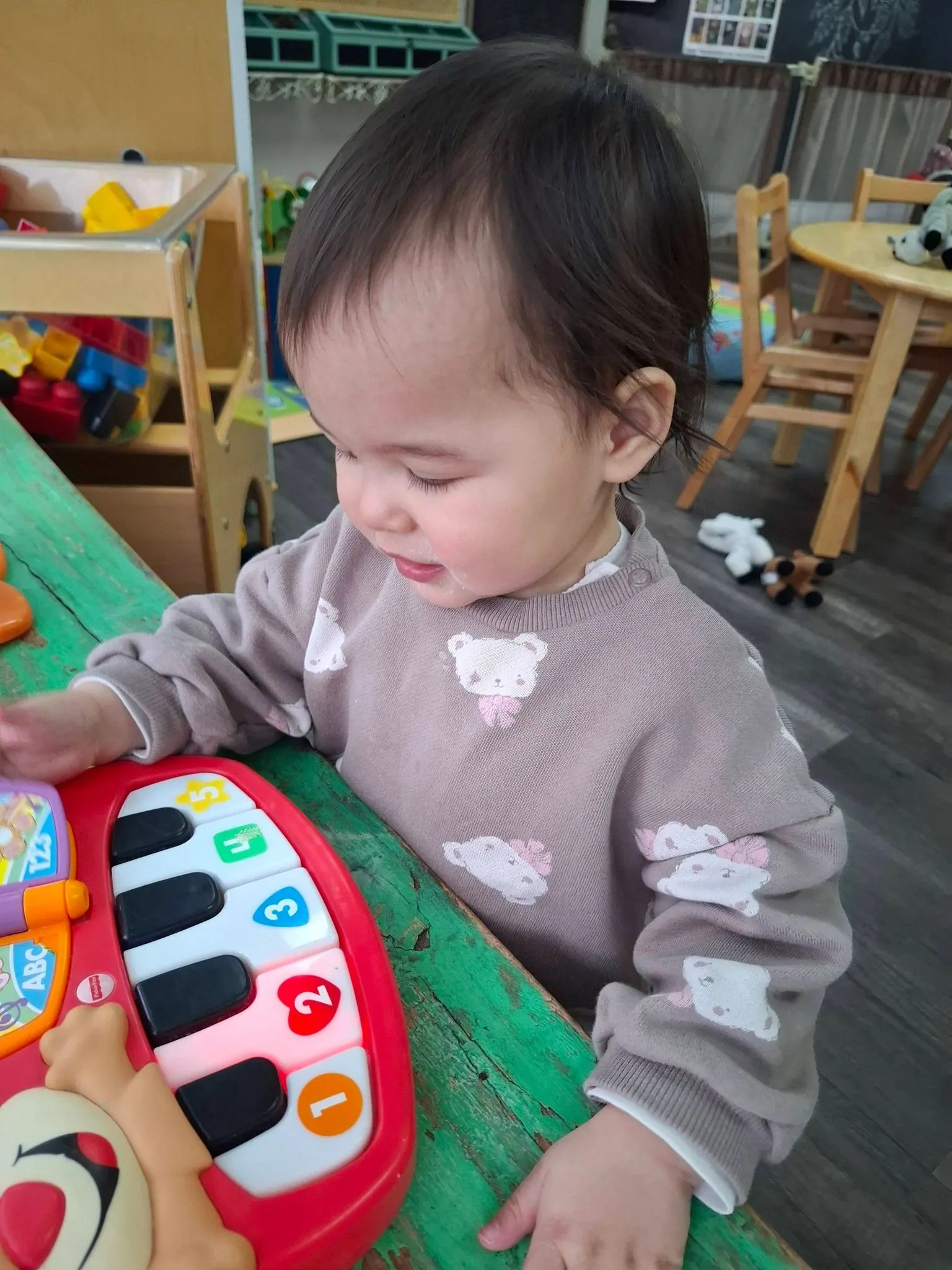
Most of what families are told about starting daycare covers the first day. The bag, the goodbye, the tears, the drive to work afterwards. Very little of it covers the three weeks after that, which is where the actual settling happens and where families most often start to doubt their decision.
This is a realistic account of a first month. Every child differs, and some move through it in a week while others take considerably longer. The pattern below is common enough that recognising it usually helps.
Before the first day
The settling-in period here is flexible and tailored to each child rather than run to a fixed number of days. Where it suits the child, families may begin with shorter visits and gradually increase the hours until the child is comfortable with a full day.
Families are also welcome to arrange a visit with their child before the official start date, to get familiar with the educators, the classrooms and the daily environment. That visit does a specific job. It converts the centre from an idea into a place with a smell, a sound and a set of faces, which makes the first real morning less of a leap.
The Canadian Paediatric Society gives the same advice, recommending a gradual transition into child care so that things are familiar before a child's first full day, and noting that this will be an emotional time for both parent and child.
Before day one, educators want to know the child's daily routine, sleep and eating habits, allergies or medical needs, toileting or diapering needs, interests, comfort items, preferred language, and any developmental or emotional support they may require. The small details are often the most useful. Knowing what a child calls their blanket, or which song settles them, is what lets an educator comfort them on a hard morning.
Our what to pack for daycare checklist covers the physical side of getting ready.
Week one: novelty carries a lot of children
The first week is not usually the hardest, which surprises people. Novelty does a lot of work. Everything is new, nothing is yet a routine, and many children are genuinely interested in the toys, the other children and the unfamiliar room.
On the first day we encourage a warm but brief goodbye. That phrase does real work in both directions. Warm, because a child who is hurried out of a parent's arms without acknowledgement learns that goodbyes are unsafe. Brief, because a farewell that stretches on gives a child more time to build distress and communicates that the parent is uncertain too.
Some children cry. Educators comfort the child and gently engage them in a familiar activity, and many settle within a short time after the parent leaves. You will hear from us by SMS or phone, and we will contact you if your child stays distressed or needs extra support.
There are four things we ask families not to do, and each has a reason. Do not leave without saying goodbye, because a child who looks up and finds you gone starts watching you instead of playing. Do not prolong the farewell. Do not come back repeatedly after leaving, because each return restarts the separation. And try not to appear anxious in front of your child, because young children read adult faces closely. The Canadian Paediatric Society makes the same point about fears generally, noting that any sign a parent is worried can send a fearful child into a panic.
Expect exhaustion in week one. A full day of new faces, new noise and new rules is genuinely tiring, and the evening may be harder than the day was.
Week two: the routine starts to take shape
By the second week a child usually recognises the sequence of the day. They know that after outdoor play comes lunch, and after lunch comes rest. That predictability is what settling actually consists of.
Some children have a smoother second week than first. Others have a harder one, and it goes either way often enough that neither is a signal on its own.
This is also the week when a child's own version of the day starts appearing at home. Names of other children. A song. A complaint about a specific thing. That is a good sign even when the content is negative, because it means the child is processing the place rather than blocking it out.
Eating and sleeping are usually still behind at this stage, and that is expected. Both ask more of a child than playing does. A child can look socially settled, chatting with educators and joining activities, and still eat very little and nap poorly at the centre. Most make up the difference at home in the evening.
Week three: the week nobody warns you about
This is the one worth preparing for. A child who did well for two weeks may suddenly refuse to get out of the car, cling at the door, or cry in a way they did not cry on day one.
Parents read this as a step backwards, or as evidence they chose the wrong centre. It is usually neither.
In the first fortnight the child was managing novelty. By week three the newness has gone, and the child understands something new: this is not a visit. It happens again tomorrow, and the day after that. Recognising a permanent arrangement is a genuine step forward in a young child's understanding of time, and the protest that arrives with it is the child working through what they now know.
There are other contributors. The exhaustion of the first two weeks accumulates. A first cold often lands around now. And a child who has been holding themselves together at the centre may start releasing that tension at home.
What helps is consistency rather than change. Keep the same routine, the same handover, the same words at goodbye. Changing the drop-off pattern in response to a hard week tends to prolong it, because the child now has two things to adapt to instead of one.
Our post on crying at drop-off and what helps goes into the mechanics of a difficult goodbye in more detail.
Week four: things usually start to level
By the fourth week many children have found their footing. The goodbye gets shorter. Educators become people the child seeks out rather than tolerates. Some children start asking to go.
Naps and meals often improve around here too, lagging a week or two behind the social settling, which is the usual order.
It is rarely a clean finish. Mondays are frequently harder than Thursdays, because two days at home resets something. A holiday, an illness or a family disruption can produce a short return to earlier behaviour. That is normal, and it usually resolves faster the second time.
The starting daycare guide covers the practical preparation across the whole period, and what happens on your child's first day covers day one specifically.
Illness in the first months
This deserves saying plainly, because it catches families out more than anything else on this list.
A child entering group care meets viruses they have not met before, and a run of colds in the first months is the ordinary result. Some families have a child home sick two or three times in the first two months. It is exhausting, it collides with work, and it can feel like a sign that something is wrong.
It generally eases as the months pass. The first winter is usually the hardest stretch. The Canadian Paediatric Society asks families to respect a centre's illness policy and keep an unwell child home, which is the part that protects everyone else's children in turn.
Practically, this means having a backup plan before you need one. A family member, a partner's flexible day, or an understanding with an employer. Working it out in advance is much easier than working it out at 7 a.m. with a feverish child.
How you will hear how it is going
During the day, we update families by SMS or phone, and we will contact you if your child stays distressed or needs extra support.
At pick-up, an educator gives you a verbal update on the day: how your child was, what they joined in with, how they ate and slept, and anything worth knowing. If you want a longer conversation, a private meeting can be arranged whenever it would help, requested by either you or us.
When to raise a concern
Watch the trend across a fortnight rather than judging a single morning. Most first months contain at least one bad day that means nothing.
Raise it sooner if your child is distressed at pick-up as well as at drop-off, if they seem withdrawn or unlike themselves at home over a sustained period rather than for an evening, if a specific thing they say worries you, or if you simply feel uneasy and cannot pin down why.
The Canadian Paediatric Society notes that by three years old a child should be able to separate with little clinging or crying, and that even a fearful three year old should adapt to a new situation within a few weeks. If your three year old is still severely distressed well beyond that, it is worth a conversation with us and with your family doctor.
A conversation early is easier than one after weeks of worry, for you and for us. We would far rather hear a small concern in week two than a large one in month three.
Frequently asked questions
Why does my child protest in week three after a fine first week?
In the first week a child is managing novelty, and curiosity carries many children through it. By the third week the newness has gone and the child understands that this happens again tomorrow, and the day after. Recognising the pattern is a step forward in understanding, and the protest that arrives with it usually reflects that new understanding rather than a problem with the centre.
How does the settling-in period work at this centre?
It is flexible and tailored to each child rather than run to a fixed number of days. Where it suits the child, families may begin with shorter visits and gradually increase the hours until the child is comfortable with a full day. Families are also welcome to arrange a visit with their child before the official start date.
Why does my child eat so little at the centre at first?
Eating and sleeping usually settle after the social side does, because both need a deeper kind of comfort than playing alongside other children. A child may look happy and engaged in week two and still eat very little there. Most children make up the difference at home in the evening during that period.
Is it normal for naps to be short or skipped in the first weeks?
It is common. Sleeping in a new place, with unfamiliar sounds and other children nearby, asks more of a child than playing there does. Short naps or none at all in the early weeks often mean a tired, difficult evening at home, which is worth planning around rather than being surprised by.
Why does my child get sick so often after starting?
A child entering group care meets viruses they have not met before, and a run of colds in the first months is the ordinary result. Most of it is common childhood illness rather than anything unusual. It generally eases as the months pass, though the first winter is often the hardest stretch.
What are we asked not to do at drop-off?
Do not leave without saying goodbye, do not prolong the farewell, do not come back repeatedly after leaving, and try not to appear anxious in front of your child. A consistent, confident drop-off routine helps a child feel secure, and slipping away without a goodbye tends to make the next drop-off harder rather than easier.
How will I hear how my child is doing during the day?
The centre updates families by SMS or phone, and will contact you if your child stays distressed or needs extra support. At pick-up an educator gives you a verbal update about the day. If you want a longer conversation, a private meeting can be arranged whenever it would help.
Should I choose a shorter day to start with?
Shorter visits that gradually lengthen suit many children, and the settling-in period here is built to allow exactly that. Whether it is right for your child depends on their age, their temperament and your own schedule, so it is worth discussing before the start date rather than deciding on the first morning.
When should I raise a concern rather than waiting it out?
When the trend across a fortnight is going the wrong way rather than a single hard morning. Also raise it if your child is distressed at pick-up as well as at drop-off, if they seem withdrawn at home over a sustained period, or if something specific worries you. A conversation early is easier than one after weeks of worry.
What should we tell the educators before the first day?
The child's daily routine, sleep and eating habits, allergies or medical needs, toileting or diapering needs, interests, comfort items, preferred language, and any developmental or emotional support they may need. The small details help most, because knowing what a child calls their blanket is what lets an educator comfort them on a difficult morning.
Before you visit
A visit with your child before the start date makes the first morning easier, and we are glad to arrange one. If you would like to talk through how a settling-in plan might work for your child's age and temperament, or ask anything about the first month, contact us and we will find a time.
Copies a ready-written post, then opens LinkedIn.